A Glimpse into the Cinematic Dawn
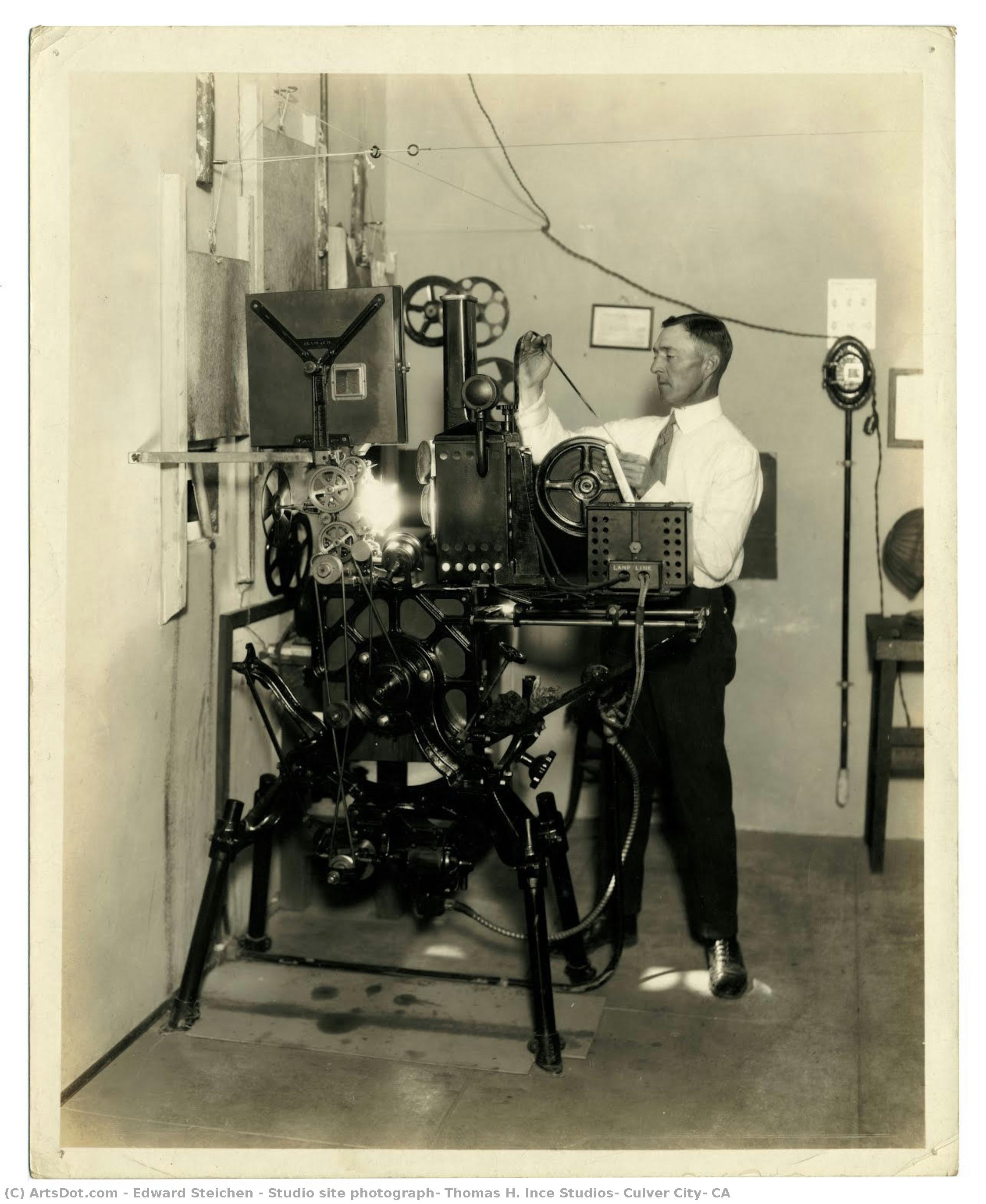
In this evocative black and white photograph from 1922, we are transported back to the industrial heart of early Hollywood. The image captures a profound moment within the Thomas H. Ince Studios in Culver City, California, serving as a silent witness to the burgeoning era of motion picture magic. At the center of this mechanical landscape stands a figure of quiet authority, dressed in the formal attire of the period—a suit and tie that suggests the gravity and professionalism inherent in the studio's operations. He stands beside a formidable apparatus of early cinematography, a complex arrangement of metal, levers, and dials that represents the cutting edge of 1920s technology. The scene is not merely a documentation of equipment, but a portrait of an era where the boundaries between industrial labor and artistic creation were being forged in real-time.
The composition is masterfully balanced by the interplay of light and shadow, a hallmark of Edward Steichen’s ability to find drama within the mundane. The high, cavernous ceilings of the studio, crisscrossed with exposed pipes and wires, lend an atmospheric, industrial weight to the frame. Artificial lighting casts deep, velvety shadows that dance across the mechanical surfaces, adding a sense of three-dimensional depth and mystery. This chiaroscuro effect does more than illuminate the subject; it imbues the technical environment with a soulful, almost cinematic quality, turning a workspace into a stage. The presence of film reels and playback devices scattered throughout the background whispers of the countless stories that have been captured and projected from this very location.
The Artistry of the Industrial Lens
Technically, the photograph exemplifies the transition of photography from a purely documentary tool to a sophisticated medium of fine art. Through his lens, Steichen captures the textures of the era—the cold sheen of metal, the heavy fabric of a gentleman's suit, and the gritty, utilitarian atmosphere of a working studio. The monochromatic palette strips away the distractions of color, forcing the viewer to focus on form, contrast, and the rhythmic patterns of the machinery. This stylistic choice elevates the photograph from a simple site record to a piece of historical art that resonates with the aesthetic of the early 20th-century avant-garde.
For the discerning collector or interior designer, this piece offers much more than historical interest; it provides a sophisticated focal point for any curated space. The image carries an emotional weight of nostalgia and reverence for the pioneers of film. It evokes a sense of focused concentration and the quiet dignity of craftsmanship. Whether placed in a modern gallery setting or integrated into a classic study, this reproduction serves as a window into a lost world of celluloid dreams. It is an invitation to contemplate the intersection of human ingenuity and the mechanical wonders that forever changed how humanity perceives reality.