エゴン・シーレ(1890-1918):大胆な肖像画、心理的テーマ、そして独特の線が生み出す、感情に訴えかける表現主義の世界。死と生、人間の内面を深く掘り下げた傑作たちを発見してください!
ウィーンのアルベルティーナ美術館で、美術史の宝を探索! ドゥーラーの「ハレ」からクリムトの研究まで、何世紀にもわたる傑作プリントや素描を発見。建築も必見です!
オーストリア
ウィーン
アルベルティーナ美術館
ドゥーラーの作品
36万 (2020年)
65,000点の素描、100万点以上の版画
版画美術館
1805年
古代エジプトの遺物
2
アルベルティーナ美術館のコレクションの中心は何ですか?
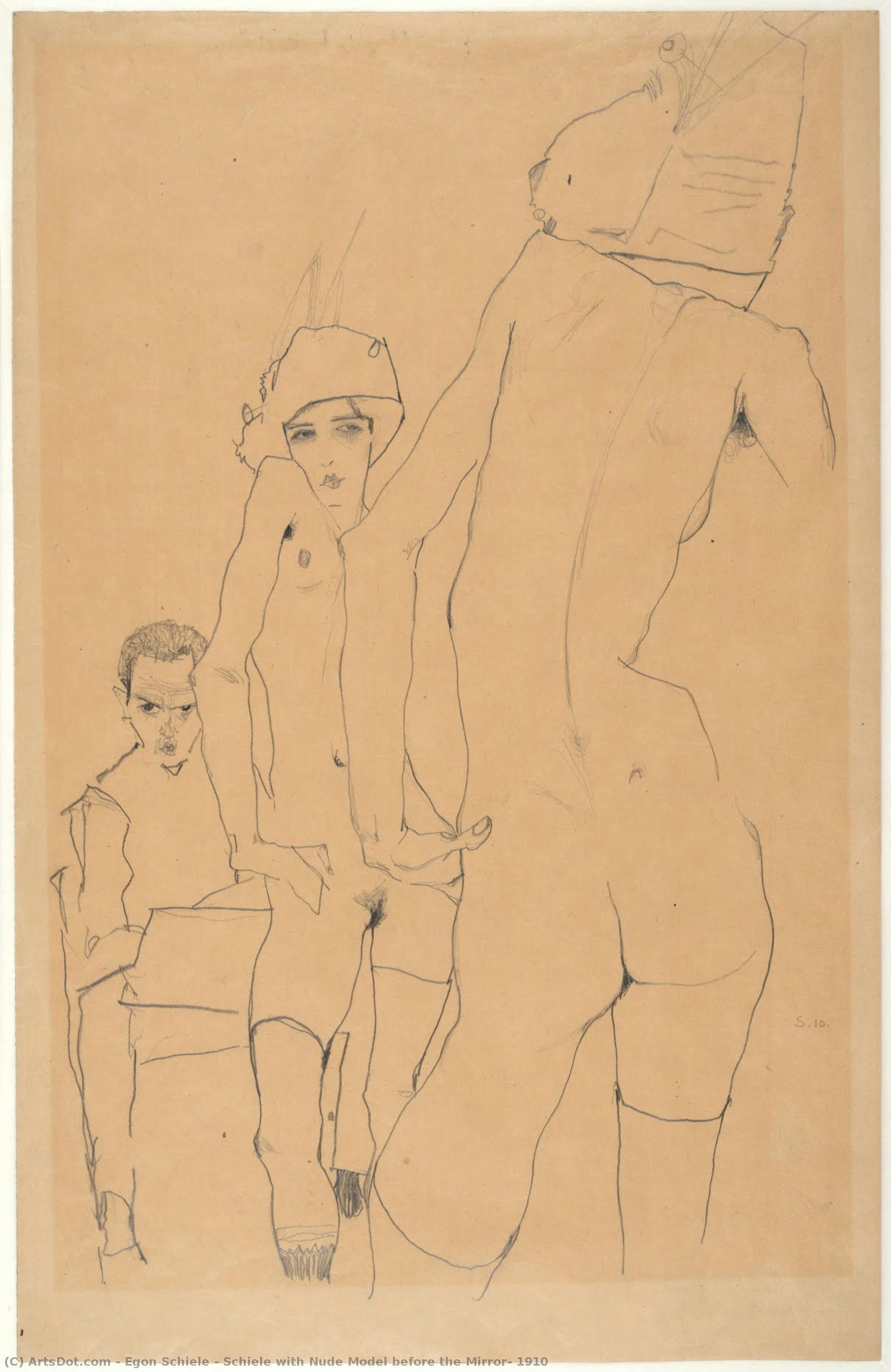
A Portrait of Vulnerability: Egon Schiele’s “Schiele with Nude Model before the Mirror”
Egon Schiele's "Schiele with Nude Model Before The Mirror," created in 1910, stands as a haunting testament to the artist’s preoccupation with themes of mortality and psychological exploration—a hallmark of Expressionist art. More than just a depiction of a nude figure posed before a reflective surface, this drawing delves into the complexities of human emotion and confronts viewers with an unsettling honesty rarely found in artistic representations of its time. The artwork captures a moment frozen in contemplation, radiating an aura of palpable tension and vulnerability that continues to resonate powerfully today.
The Style and Technique: Expressionist Precision
Schiele’s stylistic approach firmly anchors itself within the Expressionist movement, rejecting academic conventions in favor of raw emotion and distorted forms. Unlike Impressionists who sought to capture fleeting impressions of light and color, Schiele prioritized conveying inner turmoil through deliberate distortions—particularly evident in the elongated limbs and stylized musculature of both figures. The artist employed a meticulous hatching technique, painstakingly layering lines to build up tonal values and create an illusion of depth that belies the drawing’s simplicity. This painstaking process underscores Schiele's commitment to capturing not just what he saw but how he *felt*, transforming observation into visceral expression. The stark black and white palette amplifies this emotional intensity, stripping away any distractions from color and focusing solely on the contours and textures of the scene.
Historical Context: Vienna’s Artistic Crucible
Vienna at the turn of the century was a vibrant hub of artistic innovation, fueled by intellectual ferment and societal anxieties surrounding rapid industrialization and shifting social mores. Schiele emerged during this period as part of a burgeoning avant-garde movement that challenged established norms and interrogated the human condition. The Expressionist aesthetic mirrored the psychological landscape of the era—characterized by disillusionment, uncertainty, and a profound awareness of existential dread. Artists like Schiele sought to depict not idealized beauty but rather the darker recesses of the human psyche, confronting viewers with uncomfortable truths about desire, fear, and suffering. Influenced by artists such as Edvard Munch and Gustav Klimt, Schiele’s work reflects a broader trend toward exploring psychological states and rejecting sentimental representations.
Symbolism Within The Frame: Mirror Reflections and Fragile Beauty
The inclusion of the mirror is arguably the most significant symbolic element within “Schiele with Nude Model Before The Mirror.” Mirrors have long served as metaphors for introspection, representing both self-awareness and the inescapable gaze of judgment—themes central to Schiele’s artistic vision. The nude model confronts her own reflection, suggesting a confrontation with vulnerability and an acknowledgment of mortality. This gesture speaks to the anxieties prevalent in Expressionist art about confronting one's inner demons and accepting the inevitability of death. Furthermore, the posture of both figures – slightly off-kilter, almost hesitant – conveys a sense of unease and fragility, mirroring Schiele’s own personal struggles with illness and loss. The chair positioned near the model reinforces this feeling of stillness and contemplation, emphasizing the psychological drama unfolding before the viewer's eyes.
Emotional Impact: A Disturbing Elegance
Ultimately, “Schiele with Nude Model Before The Mirror” transcends mere visual representation; it evokes a profound emotional response in the observer. Schiele’s masterful use of hatching creates an unsettling yet undeniably beautiful image—a disturbing elegance that captures the essence of human vulnerability and psychological torment. It compels us to confront uncomfortable truths about desire, fear, and mortality, mirroring the artist's own preoccupation with these themes. The drawing’s stark simplicity serves as a powerful conduit for conveying emotion, demonstrating Schiele’s ability to distill complex psychological states into arresting visual form. Reproductions of this artwork offer an opportunity to experience firsthand the enduring power of Expressionist art—a testament to Schiele’s unflinching gaze and his unwavering commitment to exploring the darkest corners of human consciousness.