A Divine Encounter: Exploring El Greco’s *Holy Family with St Anne*
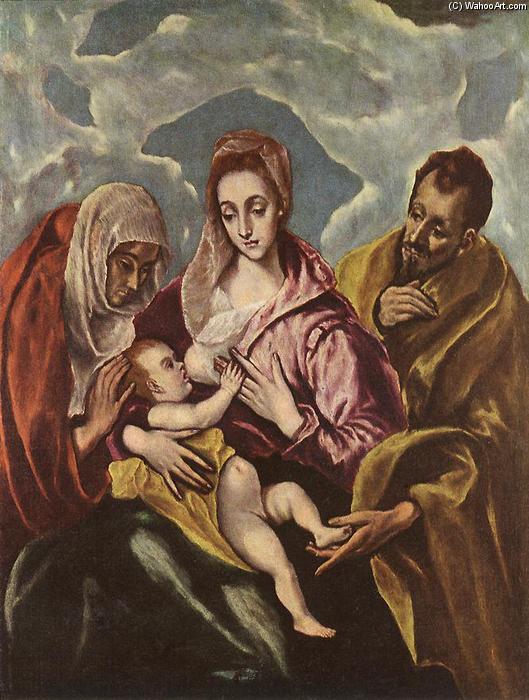
El Greco's *Holy Family with St Anne*, painted in 1600 and currently residing at the Szépmûvészeti Múzeum in Budapest, is a profoundly moving depiction of familial piety and spiritual grace. This oil on canvas (138 x 103 cm) transcends a simple religious scene; it’s an intimate portrayal of generations connected by faith, rendered with El Greco's signature dramatic flair.
Composition and Symbolic Weight
The painting centers around the Virgin Mary tenderly holding the infant Jesus, with St Anne – Mary’s mother – standing protectively beside them. Joseph is positioned to the left of Mary, completing the core Holy Family grouping. Two additional figures flank this central triad, subtly deepening the composition and drawing the viewer's eye inward. The arrangement isn’t merely aesthetic; it emphasizes lineage and divine continuity. St Anne represents the bridge between the Old and New Testaments, highlighting the fulfillment of prophecy through Mary’s motherhood. The subtle inclusion of a chair in the background hints at domesticity, grounding the sacred scene in relatable human experience.
El Greco's Unique Artistic Vision
Doménikos Theotokópoulos – known as El Greco – developed a highly individual style that blended Byzantine traditions with Western Renaissance and Mannerist influences. His work is instantly recognizable for its *elongated figures*, vibrant, often otherworldly color palettes, and an intense spiritual energy. In *Holy Family with St Anne*, these characteristics are powerfully evident. The figures possess a graceful, almost ethereal quality, their forms stretching upwards as if aspiring towards the divine. El Greco’s masterful use of light and shadow – chiaroscuro – creates dramatic contrasts that heighten emotional impact and emphasize the sacred nature of the scene. His brushwork is loose and expressive, contributing to the painting's dynamic energy.
Historical Context & Artistic Influences
Born in Crete, El Greco’s artistic journey took him through Venice and Rome before settling in Toledo, Spain. This exposure to diverse artistic traditions profoundly shaped his style. While initially influenced by Venetian masters like Titian and Tintoretto, he ultimately forged a unique path, rejecting strict realism in favor of emotional intensity and spiritual expression. The late 16th and early 17th centuries were periods of religious fervor and Counter-Reformation zeal, and El Greco’s art resonated with this climate, offering viewers a deeply personal and emotive experience of faith.
Emotional Resonance & Lasting Legacy
*Holy Family with St Anne* evokes a sense of profound reverence, tenderness, and peaceful contemplation. The serene expressions on the figures' faces invite viewers to share in their quiet devotion. The painting’s emotional power lies not just in its religious subject matter but also in El Greco’s ability to convey universal themes of family, love, and faith.
Exploring More Works by El Greco
- Apostle St Andrew: A striking portrait showcasing El Greco's mastery of figure painting.
- Holy Family with St Anne (detail): An opportunity to appreciate the intricate details and expressive brushwork within this masterpiece.
- Holy Family with St Anne: Another version of this iconic composition, offering a comparative study of El Greco’s variations.
- Mary Magdalen in Penitence: A powerful depiction of repentance and spiritual transformation.
The Szépmûvészeti Múzeum: A Treasure Trove of Art
Located in Budapest, Hungary, the Szépmûvészeti Múzeum (Museum of Fine Arts) is a stunning architectural landmark housing an exceptional collection of international art. Built between 1900 and 1906 in an eclectic-neoclassical style, the museum provides a fitting home for El Greco’s *Holy Family with St Anne* and other masterpieces from around the world.