A Vision of Dignity Amidst Darkness: Exploring El Greco’s Portrait of a Man
Doménikos Theotokópoulos, universally known as El Greco – “the Greek” – stands apart from his contemporaries not merely as an artist but as a figure embodying spiritual fervor and artistic innovation. Born in Crete in 1541, during the turbulent Venetian dominion, his creative journey traversed Venice and Rome before anchoring him firmly in Spain’s Toledo, where he forged a style that would resonate across centuries – anticipating Expressionism's emotive depth and Cubism’s fragmented aesthetic. His formative years steeped in Byzantine iconography instilled within him an unparalleled precision of detail and a profound understanding of religious representation; this bedrock wouldn’t constrain his ambition to transcend convention. He proudly declared his Cretan heritage by signing his canvases with “Krḗs,” demonstrating a defiant assertion of identity amidst artistic currents reshaping Europe. The genesis of El Greco's distinctive style lies in a deliberate rejection of prevailing Mannerist tendencies, prioritizing psychological intensity over mere stylistic imitation.
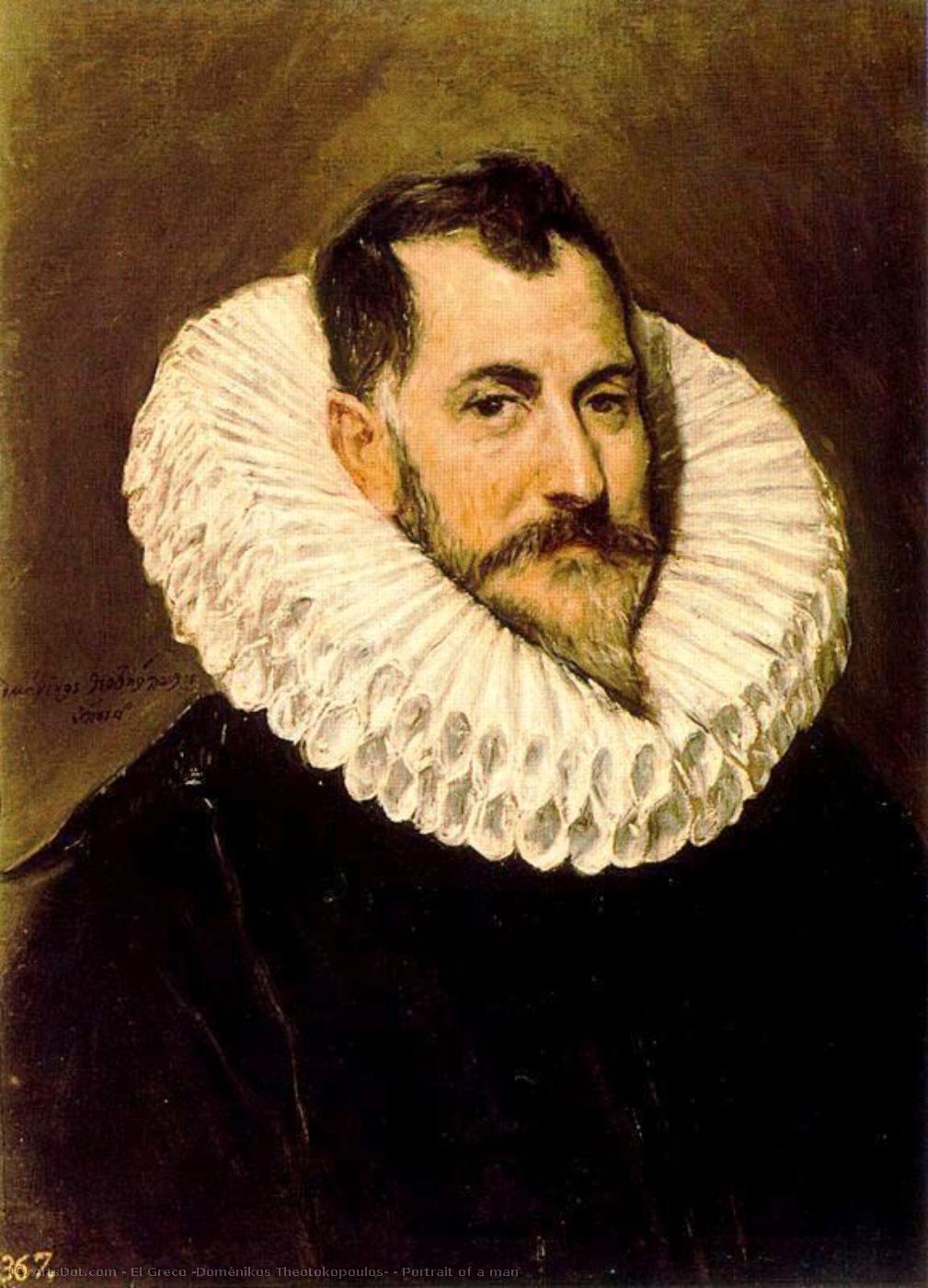
- Subject Matter: The portrait depicts a man presented with an arresting gaze directly confronting the viewer. This unflinching stare conveys not just observation but palpable emotion – a solemn contemplation that speaks to the core of human experience.
- Style & Technique: El Greco’s oeuvre is characterized by elongated figures, dramatically stylized poses, and luminous chiaroscuro—the masterful interplay of light and shadow—techniques borrowed from Byzantine art yet adapted with unprecedented boldness. The artist employs oil paint on canvas, achieving a velvety texture that enhances the sense of depth and conveys an ethereal quality.
- Historical Context: Created in 1600 during the Spanish Renaissance, this portrait reflects the humanist ideals prevalent at the time while simultaneously delving into profound spiritual concerns. Toledo, El Greco’s adopted home, served as a crucible for religious fervor, influencing his artistic vision and contributing to the painting's solemn atmosphere.
Symbolism & Emotional Resonance
The elongated form of the sitter is not accidental; it symbolizes transcendence – an aspiration beyond earthly limitations—a motif frequently found in El Greco’s work reflecting the artist’s devout Catholic faith. The muted palette, dominated by whites and browns, reinforces this sense of solemnity and spiritual contemplation. Furthermore, the man's gaze embodies introspection and unwavering resolve, inviting viewers to contemplate their own inner lives. It is a portrait that transcends mere likeness, conveying an emotional depth rarely achieved in his era.
Comparative Analysis: Echoes of Byzantine Tradition & Foreshadowing Modern Movements
As demonstrated by the Laocoön (El Greco) painting and Portrait of Cardenal Tavera, El Greco’s artistic approach aligns with Byzantine iconography's meticulous detail and spiritual solemnity. However, his stylistic innovations—particularly the dramatic use of light and elongated figures—anticipate movements like Expressionism and Cubism, signaling a pivotal moment in art history where artists sought to convey emotion and challenge conventional representation. The Cau Ferrat Museum showcases similar artistic explorations, highlighting Catalan Modernisme’s commitment to capturing emotive expression.
Conclusion: An Enduring Legacy of Artistic Genius
El Greco's Portrait of a Man remains an unforgettable testament to his singular vision—a masterpiece that continues to captivate audiences today with its psychological complexity and spiritual resonance. Its enduring appeal underscores the artist’s ability to distill profound human experience into a single, arresting image – a legacy cemented in art history as one of unparalleled artistic brilliance.