St John the Evangelist: A Portrait of Faith and Reflection
Doménikos Theotokópoulos, universally known as El Greco (1541 – 1614), stands as one of the most singular figures in the history of Western art. His distinctive style—characterized by elongated figures, dramatic chiaroscuro, and a palpable sense of emotion—transcended stylistic boundaries and cemented his place among the foremost artists of the Spanish Renaissance.
El Greco’s oeuvre is marked by an unparalleled fusion of Byzantine tradition with innovations drawn from Venetian Mannerism and early Baroque aesthetics. This confluence resulted in a visual language that was both deeply rooted in religious iconography and strikingly expressive, capturing the spiritual fervor of his time.
The Painting's Composition and Symbolism
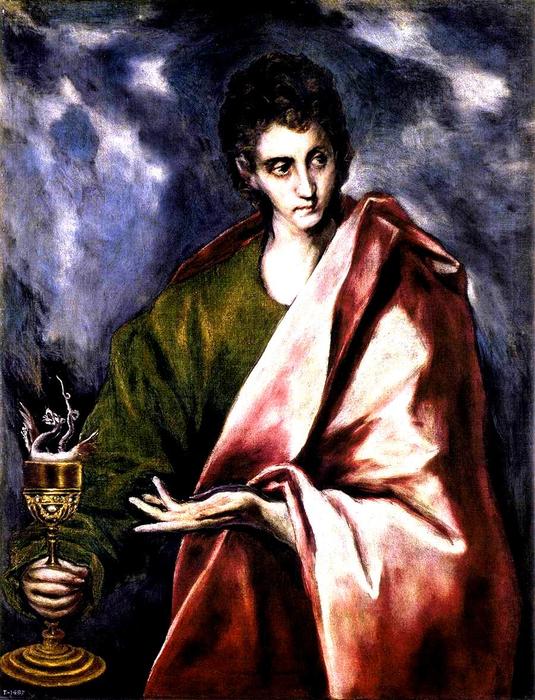
“St John the Evangelist,” painted in 1595, exemplifies El Greco’s masterful command of form and color. The central figure—Saint John himself—dominates the canvas, positioned against a dark background that intensifies the luminosity of his robe and halo. This deliberate contrast serves to draw the viewer's gaze directly to the face of the saint, where El Greco meticulously renders subtle details conveying profound contemplation.
The chalice held in John’s hand is not merely an object but a potent symbol—representing Christ’s blood and thus embodying divine grace. The artist’s use of elongated proportions contributes to the painting's expressive power, conveying a sense of solemnity and spiritual yearning. Furthermore, the halo above John’s head signifies his sanctity and elevates him beyond earthly concerns.
El Greco’s Style: Dramatic Expressionism
El Greco’s artistic approach departed significantly from prevailing stylistic conventions of his era. He rejected the idealized forms favored by Renaissance artists, opting instead for figures that appear to strain against the constraints of space—a technique known as “elongation.” This stylistic choice wasn't merely an aesthetic preference; it reflected El Greco’s profound engagement with spiritual themes.
His expressive style—often described as dramatic expressionism—was fueled by a deeply personal vision of faith and spirituality. Influenced by Byzantine icon painting, El Greco employed bold colors and unsettling perspectives to convey intense emotion and psychological depth. This distinctive approach resonated powerfully with audiences of his time and continues to inspire artists today.
A Legacy Enduring Through Reproduction
ArtsDot.com offers exceptional reproductions of “St John the Evangelist” by El Greco, crafted by skilled artisans using only the finest materials. These meticulously executed prints capture the essence of the original masterpiece—preserving its luminous colors and evocative composition for discerning collectors and interior designers alike.
Explore the captivating artistry of El Greco and bring a timeless symbol of faith into your home with a beautifully reproduced version of this iconic painting. Visit ArtsDot.com to discover more about El Greco’s artistic achievements and experience the beauty of his enduring legacy.