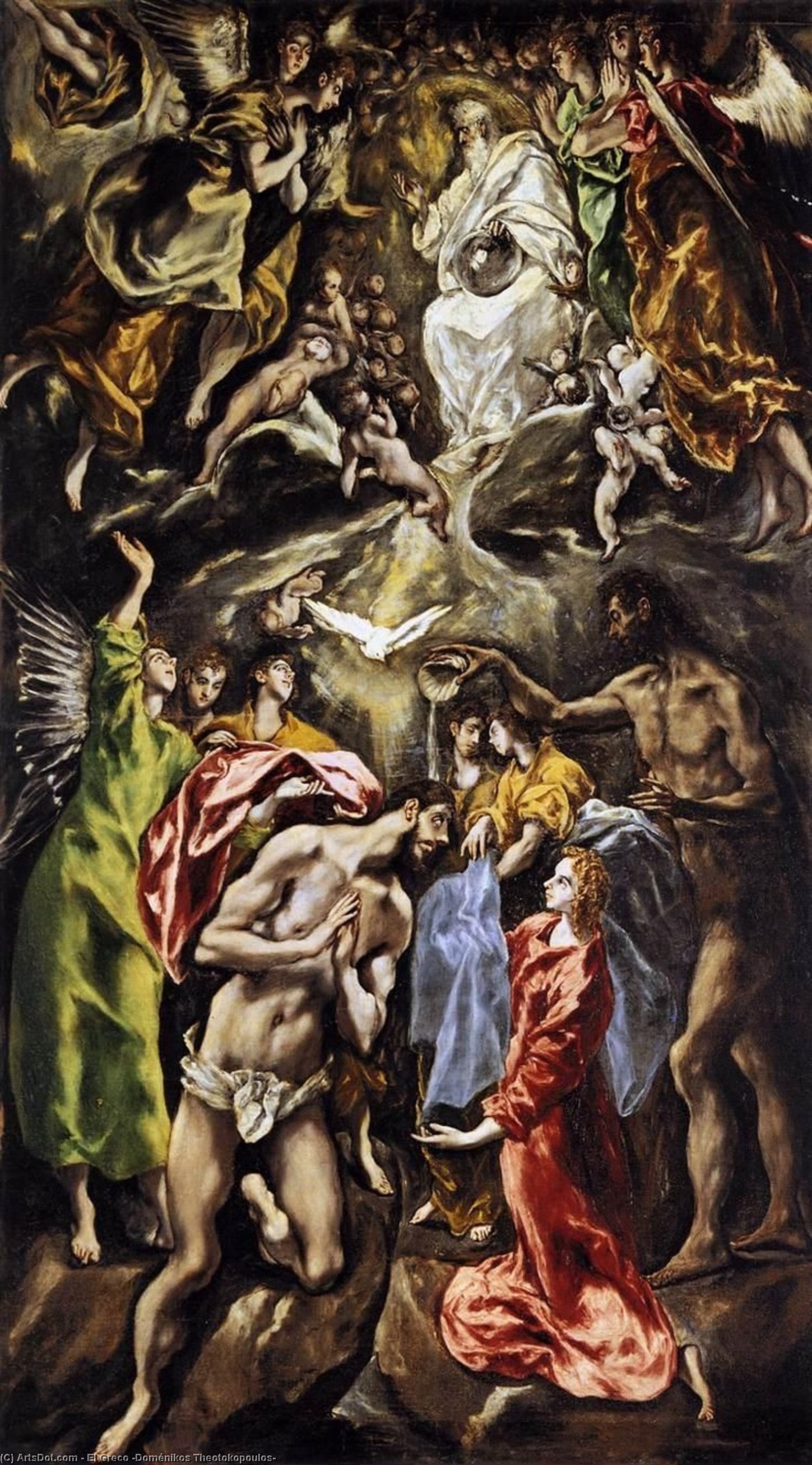
Doménikos Theotokópoulos, known as El Greco (1541–1614), revolutionized European art with his distinctive style—characterized by elongated figures and vibrant hues. This analysis delves into ‘The Baptism of Christ’ (1608–1614), examining its composition, stylistic elements, technique, historical context, and significance within El Greco's oeuvre.
The Baptism of Christ – A Symphony of Byzantine Spirit and Renaissance Innovation
Doménikos Theotokópoulos, universally known as El Greco (1541–1614), stands as one of the most singular figures in European art history. His distinctive style—characterized by elongated figures, vibrant hues, and a palpable sense of otherworldly drama—continues to captivate audiences centuries after his death. Among his prolific output, The Baptism of Christ (1608–1614), housed at the Hospital Tavera in Toledo, Spain, exemplifies this unparalleled artistic vision.
This monumental canvas—measuring 330 x 211 cm—immediately draws the eye with its luminous palette and dynamic composition. El Greco’s masterful use of chiaroscuro – dramatic contrasts between light and dark – imbues the scene with an ethereal glow, reminiscent of Michelangelo’s frescoes in the Sistine Chapel. The artist skillfully blends Byzantine iconography with Renaissance techniques, resulting in a visual experience that transcends stylistic boundaries.
- Composition: The painting depicts Jesus Christ being baptized by John the Baptist in the Jordan River. Numerous figures—angels and witnesses—populate the canvas, creating a complex tapestry of interconnected narratives.
- Style: El Greco’s signature elongated figures convey an emotional intensity rarely achieved in his time. His vibrant colors – particularly blues and reds – heighten the dramatic effect and contribute to the painting's spiritual atmosphere.
- Technique: Executed in oil on canvas, The Baptism of Christ showcases El Greco’s meticulous attention to detail and his mastery of perspective—though subtly distorted—to heighten the sense of depth and grandeur.
Historically situated at the cusp of the Baroque era, The Baptism of Christ reflects El Greco’s profound engagement with religious themes and his desire to express spiritual truths through visual language. Jorge Manuel Theotocópuli, El Greco's son, played a crucial role in completing the painting shortly before 1624, ensuring its preservation for posterity.
Beyond its formal qualities, The Baptism of Christ resonates with viewers on an emotional level. The depiction of Jesus’s baptism symbolizes purification and divine grace—themes central to Christian faith. El Greco's artistic innovation continues to inspire artists and scholars alike, cementing his legacy as a visionary artist who reshaped the landscape of European art.
For more information about El Greco and this masterpiece, visit: Painting by 'El Greco (Doménikos Theotokopoulos)' | El Greco (Doménikos Theotokopoulos):The Baptism of Christ The Museum Hospital Tavera (Toledo, Spain) - A Comprehensive Guide