The Unveiling Gaze: An Encounter with Di Cavalcanti's "Woman"
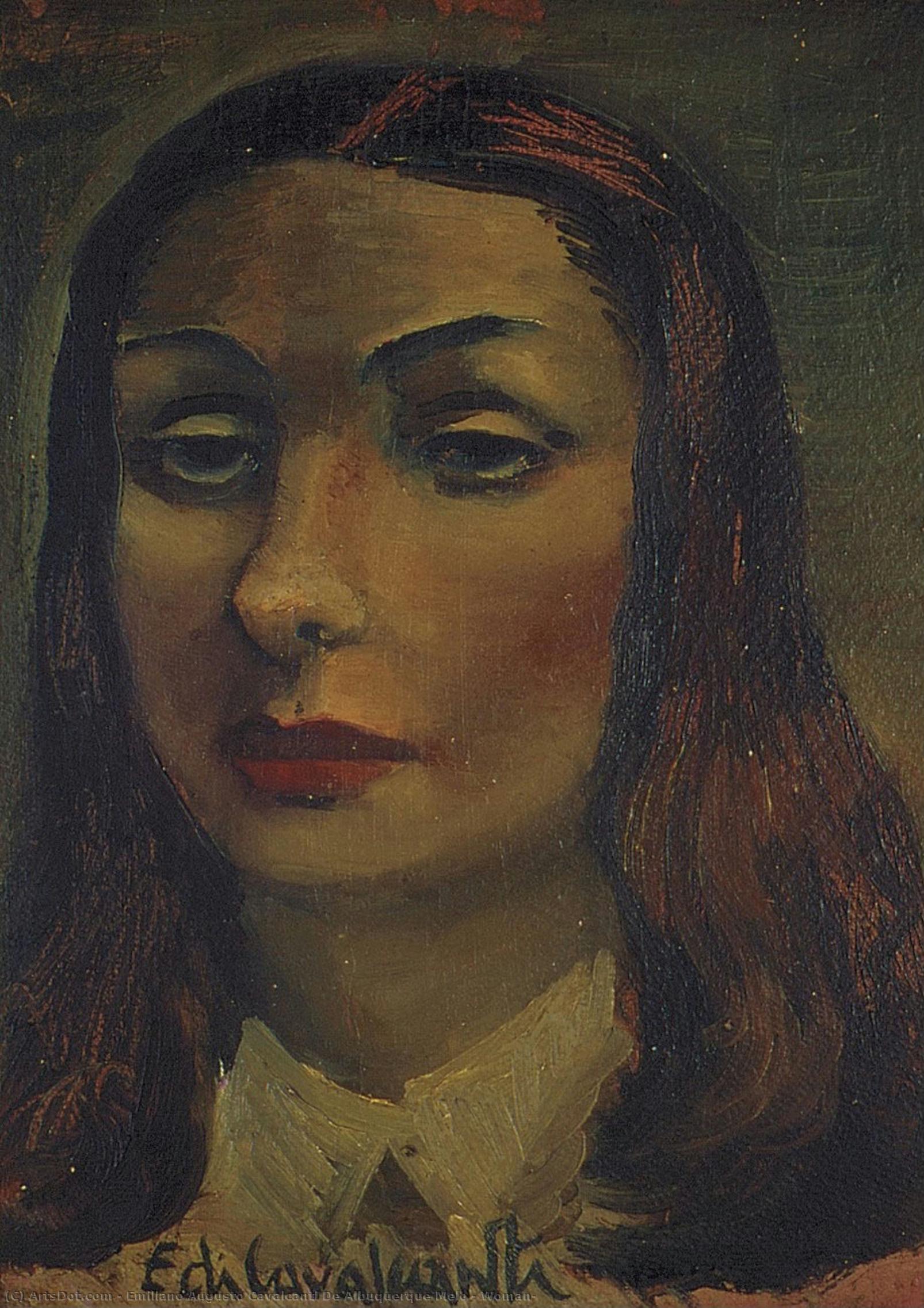
To stand before Emiliano Augusto Cavalcanti de Albuquerque Melo’s Woman is not merely to observe a portrait; it is to confront an intense, unwavering gaze. Painted in 1940, this work captures the essence of Brazilian modernism filtered through a deeply personal and arresting vision. The subject, rendered with striking immediacy, dominates the composition. She emerges from a background of bold, saturated red—a color that vibrates with unspoken narrative energy—while her figure is clad in a simple, luminous white shirt. This stark contrast between the vibrant backdrop and the purity of her attire immediately draws the eye into the mystery surrounding her expression.
Mastery of Form and Emotional Depth
Di Cavalcanti, known for his passionate engagement with Brazilian identity, imbues this portrait with a palpable sense of psychological depth. The technique employed suggests a confident handling of paint, allowing the smooth planes of skin to contrast beautifully with the texture implied in her long, dark hair. Her expression is one of profound seriousness; she does not invite conversation but rather demands attention. This direct stare at the viewer creates an immediate intimacy, forcing us into a silent dialogue with the painted subject. It speaks to a period of transition, both for Brazil and for modern art itself, where identity was being fiercely debated on canvas.
Symbolism in Color and Composition
The choice of the red wall is crucial to understanding the painting’s emotional resonance. In art history, red often symbolizes passion, power, or even impending drama. Here, it acts as a dramatic foil, pushing the figure forward into the viewer's space. Coupled with the stark white of her garment, the composition establishes a powerful visual tension—a dialogue between raw, visceral energy (the red) and quiet, contained selfhood (the white). This interplay suggests that the woman herself is a nexus point for these opposing forces: passion held in check by profound contemplation.
Bringing Modern Brazilian Soul Home
For collectors and designers alike, this piece offers more than mere decoration; it offers a cultural anchor. Reproducing Woman allows one to incorporate a vital piece of early 20th-century Brazilian artistic fervor into a contemporary setting. The painting’s inherent drama elevates any space, whether it be a formal drawing-room or a thoughtfully curated modern gallery nook. It is an artwork that does not whisper its beauty but rather articulates it with the confident resonance of a master at his peak.