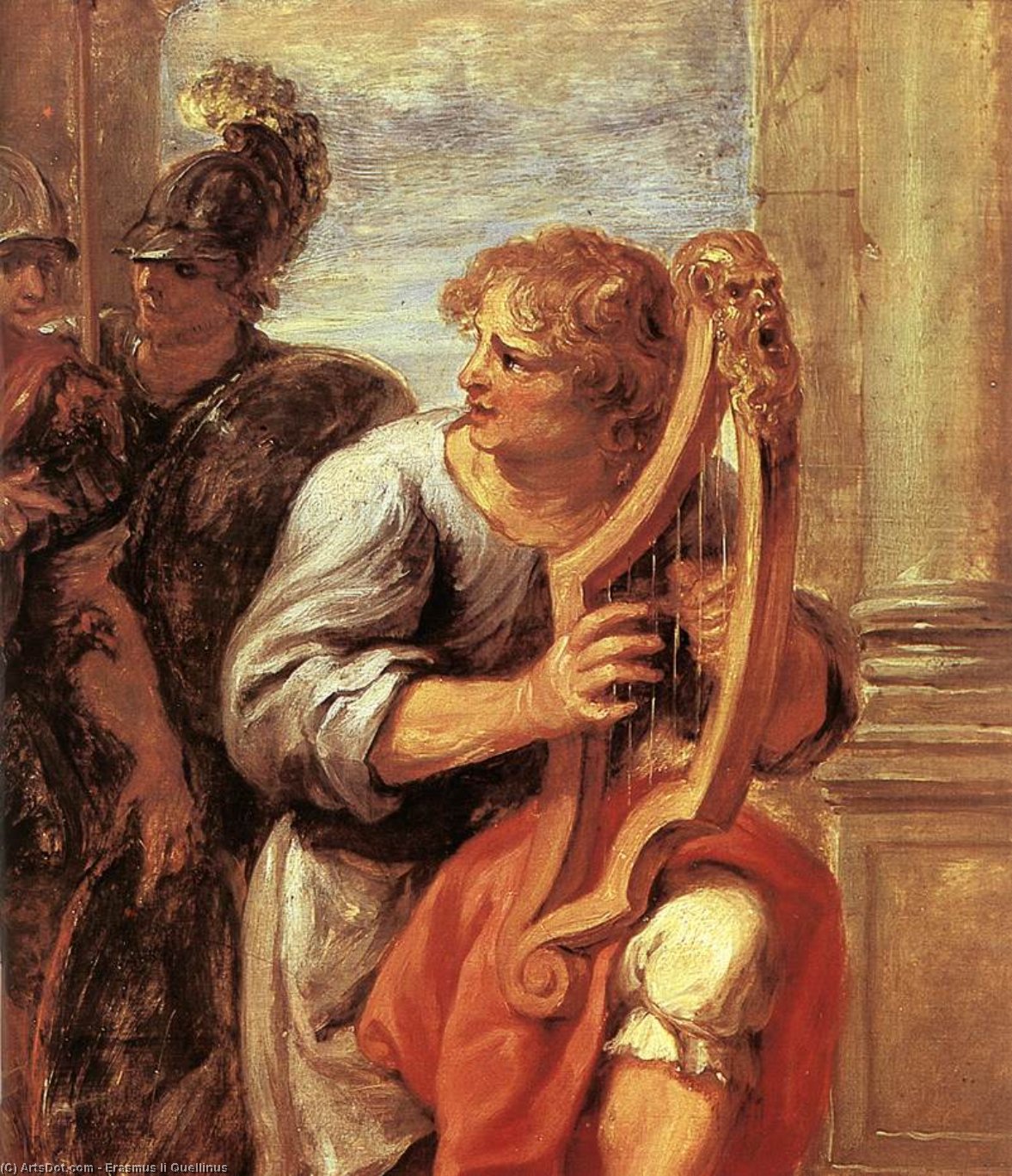
A Moment of Harmony Amidst Biblical Narrative
Erasmus Quellinus II’s “Saul and David (detail)” stands as a testament to the Baroque aesthetic flourishing in Antwerp during the mid-17th century, firmly rooted within the artistic mentorship of Peter Paul Rubens. This captivating depiction captures a pivotal scene from the Old Testament – King Saul offering his harp to David – transforming religious storytelling into an exquisite exercise in visual artistry.
Rubensian Influence and Composition
Quellinus’s apprenticeship under Rubens instilled within him a profound understanding of dramatic composition and masterful use of color. Like many works produced during Rubens's era, “Saul and David” prioritizes dynamism and emotional intensity over strict realism. The artist skillfully arranges the figures – Saul, David, and an unnamed attendant – within a shallow space dominated by rich hues of crimson and gold, mirroring the opulent grandeur characteristic of Rubens’s studio.
Technique: Oil Paint on Canvas
Executed in oil paint on canvas, Quellinus employed a technique that allowed for nuanced tonal gradations and luminous effects—a hallmark of Baroque painting. Careful layering of brushstrokes builds up texture and depth, capturing the subtle nuances of light and shadow. The artist’s meticulous attention to detail is evident in the rendering of the harp’s intricate carvings and David's expressive gaze, conveying a palpable sense of serenity amidst the regal setting.
Historical Context: Antwerp’s Artistic Zenith
"Saul and David" emerged during Antwerp’s Golden Age—a period marked by unparalleled artistic productivity and commercial success. Rubens’s studio served as a crucible for innovation, attracting talented artists from across Europe who embraced his stylistic principles. This painting exemplifies the broader trend toward portraying biblical narratives with heightened emotionalism and theatrical grandeur, reflecting the spiritual fervor of the time.
Symbolism: Offering and Acceptance
Beyond its formal beauty, “Saul and David” resonates with profound symbolic meaning. The harp symbolizes Saul’s humility and devotion to God, while David’s acceptance represents faith and reconciliation—themes central to Christian theology. The inclusion of the attendant underscores the importance of companionship and support in spiritual pursuits.
Emotional Impact: Tranquility Amidst Royalty
Ultimately, Quellinus's masterpiece evokes a feeling of contemplative tranquility—a striking contrast to the turbulent political landscape of 17th-century Europe. The harmonious interplay of color and form invites viewers to immerse themselves in the scene’s serene atmosphere, prompting reflection on themes of piety, generosity, and divine grace.