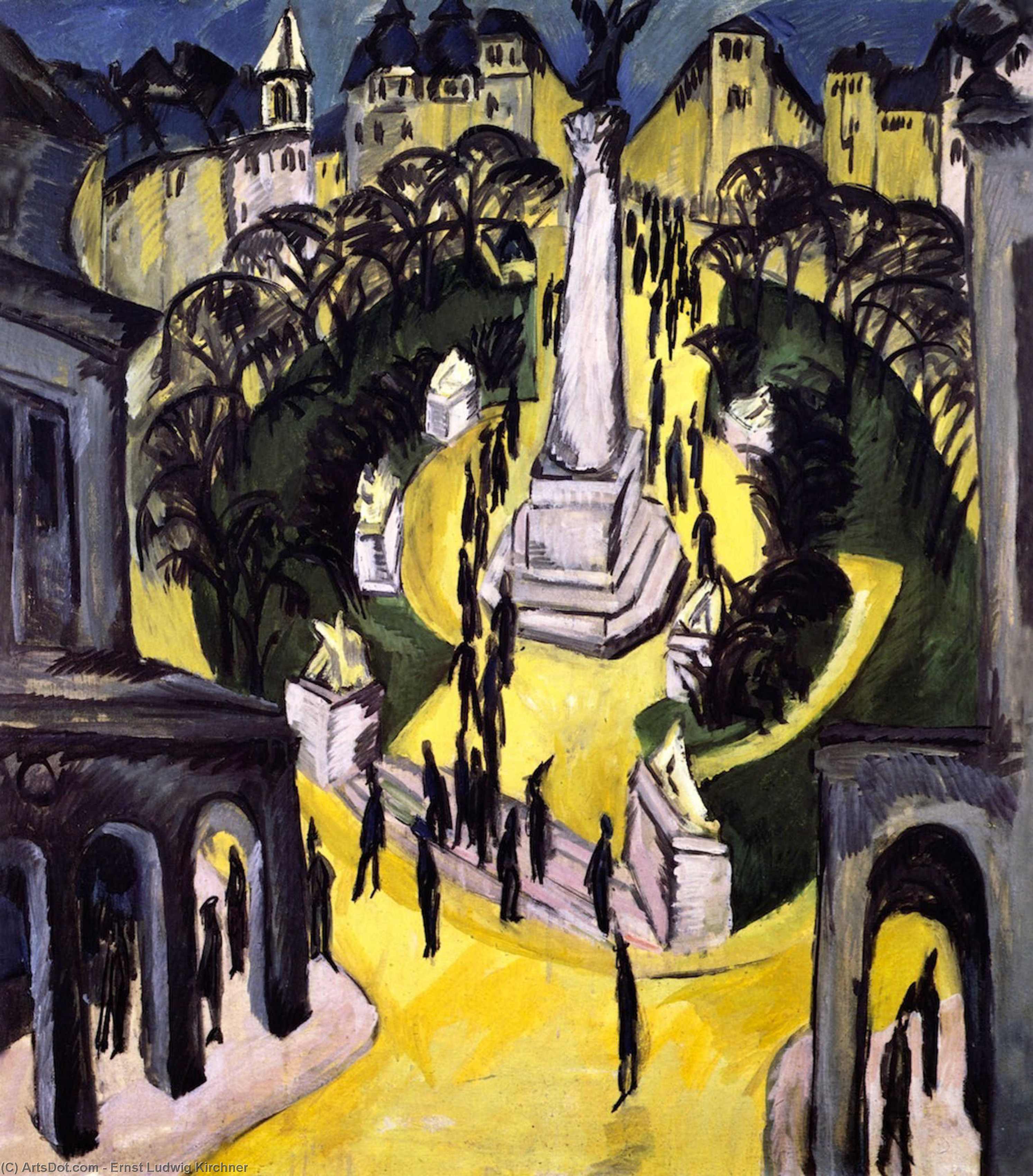
Experience Ernst Ludwig Kirchner's iconic Expressionist masterpiece, Der Belle-Alliance-Platz, Berlin (1914), a dynamic black and white depiction of urban life brimming with emotional intensity. Explore this pivotal work and discover its captivating story.
Der Belle-Alliance-Platz, Berlin: A Night of Urban Anxiety
Ernst Ludwig Kirchner’s “Der Belle-Alliance-Platz, Berlin,” painted in 1914, is more than just a depiction of a Berlin street; it's a visceral embodiment of the anxieties simmering beneath the surface of pre-war Europe. This oil on panel, measuring 96 x 85 cm, captures a nocturnal scene with an arresting intensity that defines Kirchner’s signature Expressionist style – a style born from personal struggle and a profound engagement with the rapidly changing world around him.
- Subject Matter: The painting focuses on Belle-Alliance-Platz, a prominent square in Berlin, rendered not as a tranquil public space but as a hive of activity, pulsating with an almost unsettling energy.
- Composition: Kirchner masterfully employs a dynamic composition, drawing the viewer’s eye towards the central monument while simultaneously immersing them within the throng of figures navigating the street. The placement of the horse on the right edge adds a subtle yet powerful element of disruption and unease.
The Language of Expressionism
Kirchner's artistic vocabulary is entirely rooted in the tenets of Expressionism. He rejects naturalistic representation, instead prioritizing the conveyance of emotion and psychological state. The figures are elongated and distorted, their forms echoing the turbulence within Kirchner himself. Bold lines dominate the canvas, creating a sense of jaggedness and urgency. The vibrant, almost jarring, color palette – dominated by blues, greens, and ochres – amplifies this emotional intensity, rejecting the muted tones favored by earlier artistic movements.
- Technique: Kirchner’s brushwork is characterized by a restless energy, applied with short, choppy strokes that contribute to the painting's overall sense of agitation. The use of impasto – thick layers of paint – further emphasizes this tactile quality and adds to the dramatic effect.
- Influence: While influenced by Fauvism’s bold color choices and Cubism’s fragmented forms, Kirchner forged his own unique path, synthesizing these influences into a powerfully expressive style that remains profoundly influential today.
A Window into 1914 Berlin
Painted in the tumultuous year of 1914 – a period marked by rising nationalism and impending war – “Der Belle-Alliance-Platz, Berlin” offers a poignant glimpse into the social and psychological landscape of pre-war Germany. The painting reflects the anxieties and uncertainties that permeated society at the time, mirroring Kirchner’s own personal struggles with alienation and disillusionment. The scene feels charged with unspoken tension, hinting at the impending catastrophe that would soon engulf Europe.
Historical Context: The painting serves as a powerful document of its era, capturing the spirit of a city on the brink – a city grappling with rapid industrialization, social upheaval, and the looming threat of war. Kirchner’s work is not merely a record of a street scene; it's a profound meditation on the human condition in times of crisis.
Symbolism and Emotional Resonance
Beyond its historical significance, “Der Belle-Alliance-Platz, Berlin” possesses a potent symbolic resonance. The monument itself remains ambiguous, perhaps representing authority or tradition – yet feels strangely disconnected from the chaotic energy surrounding it. The figures, lost in their individual pursuits, embody a sense of isolation and alienation, reflecting the broader anxieties of modern life. The painting’s enduring power lies in its ability to evoke a deep emotional response—a feeling of unease, disorientation, and perhaps even dread – that continues to captivate viewers over a century later.