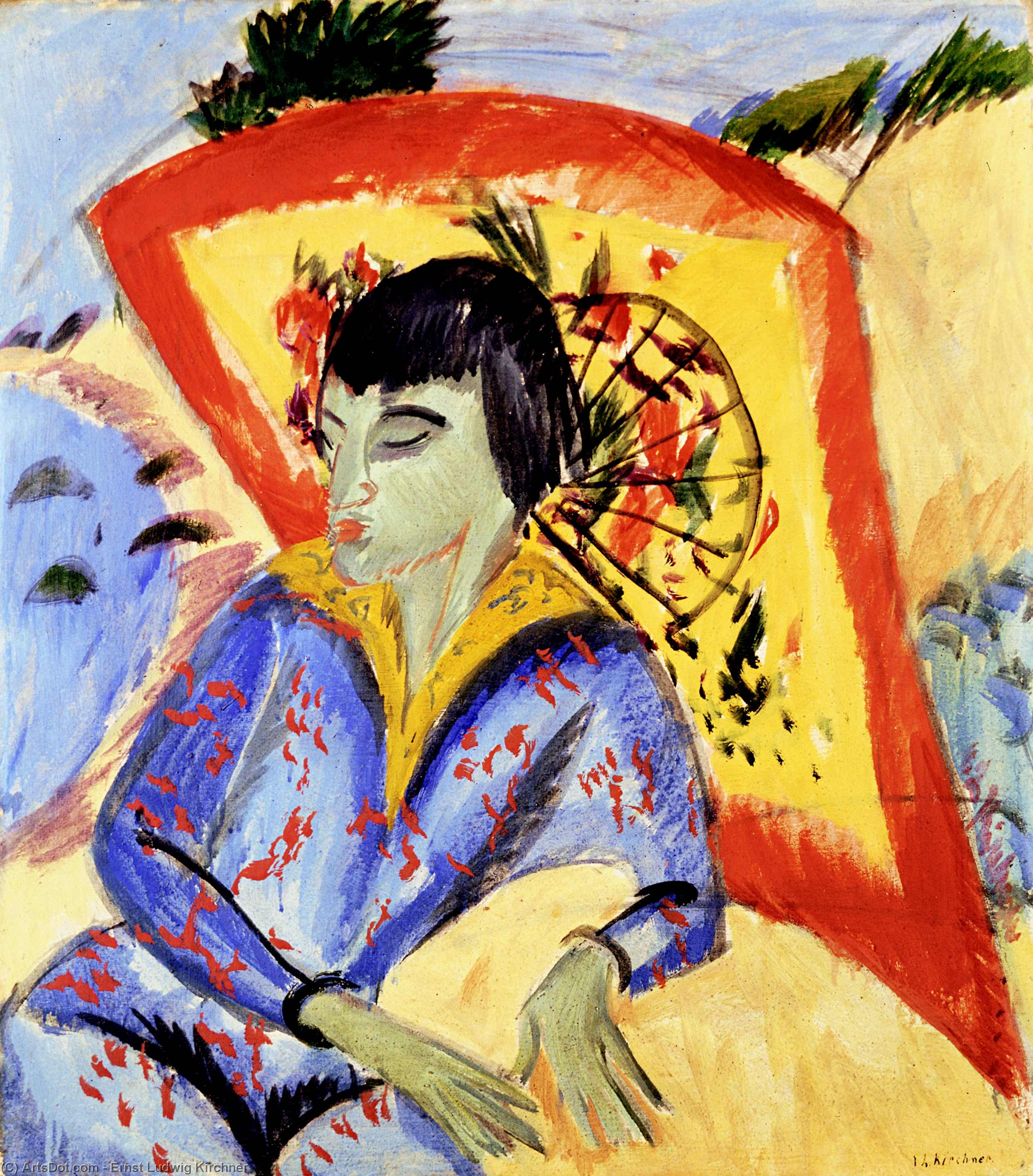
Experience Ernst Ludwig Kirchner’s ‘Japanese,’ a captivating Expressionist portrait of a woman under a red umbrella, capturing serene emotion and modern anxieties from 1913. Discover this iconic artwork and elevate your space.
A Portrait of Anxiety Beneath a Crimson Canopy
This arresting portrait, titled “Japanese,” painted in 1913 by Ernst Ludwig Kirchner, offers a profound glimpse into the anxieties simmering beneath the surface of early 20th-century Germany. Measuring 80 x 71 cm, the work immediately commands attention with its stark composition and emotionally charged subject matter. The central figure – a woman seated serenely under a vibrant red umbrella – is not presented as an idyllic beauty but rather as a vessel for unspoken tension. Her dark hair, her expression subtly shadowed, and the slightly unsettling stillness of her pose speak to a deeper unease, reflecting the turbulent period in which Kirchner was creating.
- The Expressionist Style: Kirchner was a pivotal figure in the German Expressionist movement, rejecting the representational accuracy favored by academic art. Instead, he sought to convey inner emotions and psychological states through distorted forms, jarring colors, and unsettling subject matter. “Japanese” exemplifies this approach perfectly, prioritizing emotional impact over realistic depiction.
- Color as a Weapon: The dominant red of the umbrella is particularly significant. Red, in Kirchner’s palette, rarely represents simple warmth or joy; it often symbolizes danger, passion, and even violence – potent visual metaphors for the anxieties prevalent at the time. The blue dress of the woman provides a cool counterpoint, further intensifying the emotional drama.
- Compositional Tension: The arrangement of figures within the painting contributes to this sense of unease. While the woman under the umbrella is the focal point, the presence of other individuals – rendered with less detail and positioned in the background – suggests a crowded, overwhelming social environment, mirroring the anxieties of urban life.
Technique and Materials: A Window into Kirchner’s Process
Kirchner employed a distinctive technique characterized by bold brushstrokes and a deliberate lack of blending. The paint is applied with a forceful energy, creating a textured surface that amplifies the emotional intensity of the work. He favored oil paints for their ability to capture rich color and create dramatic effects. The visible brushwork isn’t merely a stylistic choice; it's a testament to Kirchner’s commitment to conveying raw feeling directly onto the canvas. The use of impasto – thick layers of paint – adds further physicality, emphasizing the artist’s deliberate engagement with the medium.
- Dürer’s Influence: Despite his rejection of academic conventions, Kirchner was deeply influenced by Albrecht Dürer, particularly his mastery of line and composition. This influence can be observed in the careful rendering of the woman's features and the overall structure of the painting.
- Palette Knife Application: Evidence suggests Kirchner frequently utilized a palette knife alongside brushes to build up layers of paint and create textured surfaces, adding another layer of complexity to his technique.
Historical Context and Symbolism
"Japanese" was created during a period of immense social and political upheaval in Germany. The rise of industrialization, rapid urbanization, and the increasing influence of modern ideas were challenging traditional values and creating widespread anxiety. Kirchner’s interest in Japanese art – particularly woodblock prints – reflected a broader European fascination with this culture at the time, but he transformed these influences into expressions of his own psychological state rather than simply replicating them. The inclusion of the "wheel" element, though seemingly minor, could be interpreted as a symbol of progress and modernity, perhaps viewed with suspicion or even dread by Kirchner.
Emotional Impact and Artistic Legacy
Kirchner’s “Japanese” is more than just a portrait; it's a visceral exploration of human emotion. The painting’s unsettling atmosphere and distorted forms invite viewers to confront their own anxieties and uncertainties. As a key work in the Expressionist movement, Kirchner’s influence extends far beyond his immediate contemporaries. This piece exemplifies the movement's commitment to psychological realism and its willingness to challenge conventional notions of beauty and representation. A hand-painted reproduction offers an unparalleled opportunity to experience the raw power and emotional depth of this iconic artwork.