Winter Landscape by Moonlight: A Descent into Expressionist Emotion
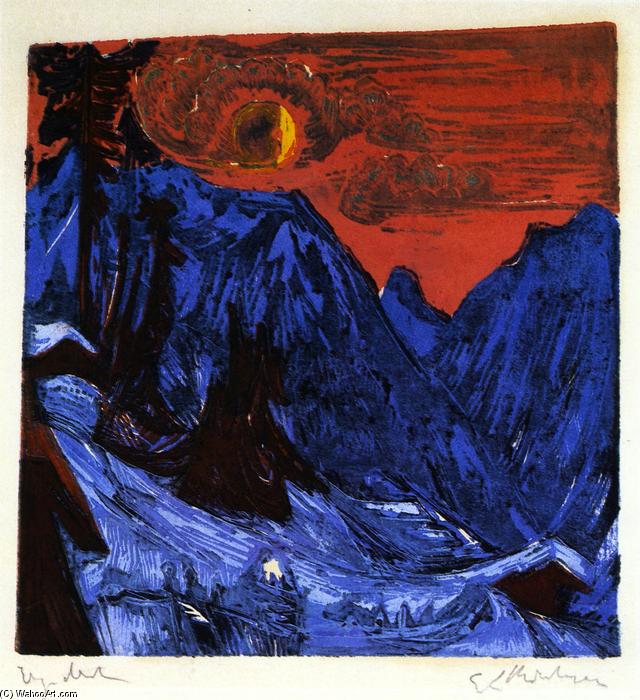
Ernst Ludwig Kirchner’s “Winter Landscape by Moonlight” is more than just a depiction of a snowy mountain scene; it's a visceral plunge into the heart of German Expressionism. Painted in 1919, this oil on canvas work captures a moment suspended between twilight and night, imbued with an unsettling beauty that speaks to the anxieties and emotional turbulence of the era. Kirchner, a pivotal figure in the movement, wasn’t interested in faithfully representing reality; instead, he sought to translate his inner experience onto the canvas, utilizing bold colors and distorted forms to evoke powerful feelings.
- Subject Matter: The painting presents a starkly beautiful winter landscape dominated by towering, dark blue mountains. A warm glow emanates from the setting sun, casting long shadows across snow-covered peaks – a visual paradox that immediately draws the viewer into its enigmatic atmosphere.
- Color Palette: Kirchner’s masterful use of color is central to the work's impact. Deep blues and reds clash dramatically, creating a sense of unease and tension. The vibrant hues are applied with thick, expressive brushstrokes, contributing to the painting’s raw energy.
- Composition: The composition itself feels deliberately unbalanced, reflecting the emotional instability that characterized Expressionist art. Figures scattered throughout the scene add to this feeling of disorientation and heighten the sense of isolation.
The Language of Light and Shadow
Kirchner’s understanding of light is crucial to interpreting “Winter Landscape by Moonlight.” He doesn't employ light to simply illuminate a scene; rather, he uses it as a powerful tool for emotional expression. The moonlight, depicted with an almost hallucinatory intensity, casts long, distorted shadows that seem to writhe and shift across the landscape. This manipulation of light and shadow is not merely aesthetic; it’s a deliberate attempt to evoke feelings of dread, loneliness, and perhaps even a sense of impending doom – common themes within Expressionist art.
As explained by experts in painting techniques, light fulfills several objectives: both plastic and aesthetic. The play of light and shadow is the basis of drawing and, in its interaction with color, is the primordial aspect of painting. Light has a great aesthetic value, since its combination with shadow and with certain lighting and color effects can determine the composition of the work and the image that the artist wants to project.
Historical Context and Artistic Intent
Created in 1919, “Winter Landscape by Moonlight” emerged during a period of profound social and political upheaval in Germany. The aftermath of World War I had left the nation scarred and disillusioned, and Kirchner’s art reflects this sense of disorientation and despair. As an Expressionist, he sought to capture not just what he saw, but how he *felt* about it – a reaction against the prevailing artistic conventions of realism and naturalism.
Kirchner's work aligns with the broader Expressionist movement’s rejection of traditional representation. Artists like Kirchner emphasized the subjective emotional experience of the viewer, aiming to provoke a strong emotional response through distorted forms and intense colors. This painting is a prime example of this approach, inviting the observer to confront their own anxieties and uncertainties.
Symbolism and Emotional Resonance
"Winter Landscape by Moonlight" transcends a simple landscape depiction; it’s a powerful meditation on human emotion. The solitary figures within the scene suggest isolation and vulnerability, while the dramatic lighting amplifies the sense of unease. The painting's enduring appeal lies in its ability to tap into universal feelings of loneliness, fear, and the sublime – emotions that resonate deeply with viewers across generations.