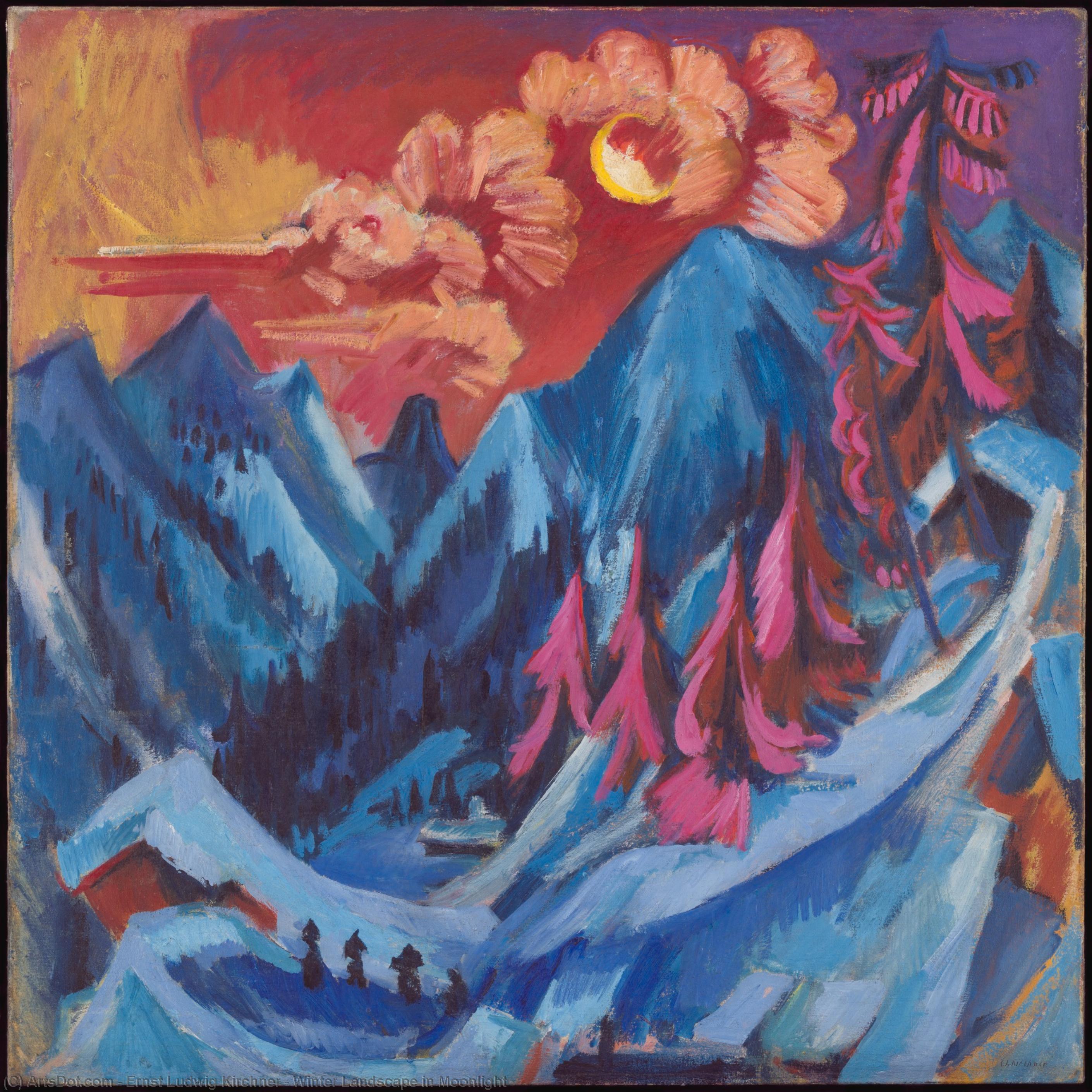
Experience the haunting beauty of Ernst Ludwig Kirchner’s Winter Landscape in Moonlight – a pivotal Expressionist masterpiece capturing serene stillness amidst palpable tension. Explore this evocative depiction of snowy mountains and figures bathed in moonlight, inviting you to immerse yourself in German art history.
A Moment Frozen in Moonlight: Exploring Ernst Ludwig Kirchner’s Winter Landscape
The painting “Winter Landscape in Moonlight” by Ernst Ludwig Kirchner stands as a cornerstone of Expressionist art, capturing not merely a visual depiction but an emotional resonance that continues to captivate audiences today. Created in 1919 amidst the turbulent backdrop of post-war Germany, this oil on canvas piece transcends mere representation; it embodies the anxieties and uncertainties of its time while simultaneously offering a profound meditation on solitude and beauty. Kirchner’s distinctive style—characterized by jarring color palettes and deliberately distorted forms—immediately distinguishes itself from the prevailing artistic conventions of the era. He wasn't striving for photographic accuracy but rather to convey inner feelings, mirroring the psychological landscape of his own experience.
- Style & Technique: Kirchner’s approach was revolutionary. Rejecting academic realism, he employed bold brushstrokes and flattened perspectives to create a sense of immediacy and unease. The artist utilized vibrant hues—particularly blues and yellows—contrasting sharply against the muted tones of the snowscape, amplifying the emotional intensity of the scene.
- Historical Context: Painted shortly after the horrors of World War I, “Winter Landscape in Moonlight” reflects the pervasive disillusionment felt by many artists and intellectuals. The Expressionist movement sought to express subjective experience rather than objective reality, responding to the trauma of war and societal upheaval with visceral honesty.
- Composition & Symbolism: The painting’s composition is deliberately unsettling. Figures walk along a snow-covered path, dwarfed by towering mountains—a visual metaphor for humanity's insignificance against the vastness of nature. The solitary dog adds to this sense of isolation, symbolizing vulnerability and longing.
Light as Emotion: Kirchner’s Mastery of Atmospheric Perspective
Kirchner’s masterful manipulation of light is arguably the painting's most compelling element. As discussed in scholarly analyses of Impressionist techniques—specifically concerning how artists like Claude Monet utilized light to capture fleeting moments—Kirchner similarly sought to evoke emotion through color and tonal gradation. The moonlight casts a silvery luminescence across the snow, creating depth and highlighting textures with remarkable precision. This technique isn’t merely descriptive; it actively contributes to the painting's psychological impact, fostering a feeling of melancholy and contemplation.
Beyond Representation: Capturing Inner Turmoil
“Winter Landscape in Moonlight” is more than just a depiction of a winter scene. It’s an exploration of human emotion—specifically anxiety and loneliness—expressed through Kirchner's signature stylistic choices. The distorted forms of the mountains and figures convey a sense of instability, mirroring the psychological anxieties prevalent during the period. This deliberate departure from traditional artistic conventions solidified Kirchner’s position as a pioneer of Expressionism and ensured that his work would continue to resonate with viewers for generations.
Kirchner's Legacy & Inspiration
Inspired by artists like Albrecht Dürer, Ernst Ludwig Kirchner bravely challenged the established order of artistic expression. His unwavering commitment to conveying inner experience paved the way for subsequent movements in art history and continues to inspire contemporary artists seeking authenticity and emotional depth. The painting’s enduring appeal lies in its ability to communicate profound feelings—a testament to Kirchner's genius as a painter and his contribution to the broader cultural landscape of the early 20th century.