Barbarous Tales - A Journey Through Gauguin’s Vision
Paul Gauguin, a French Post-Impressionist artist, is renowned for his innovative use of color and the Synthetist style. His painting
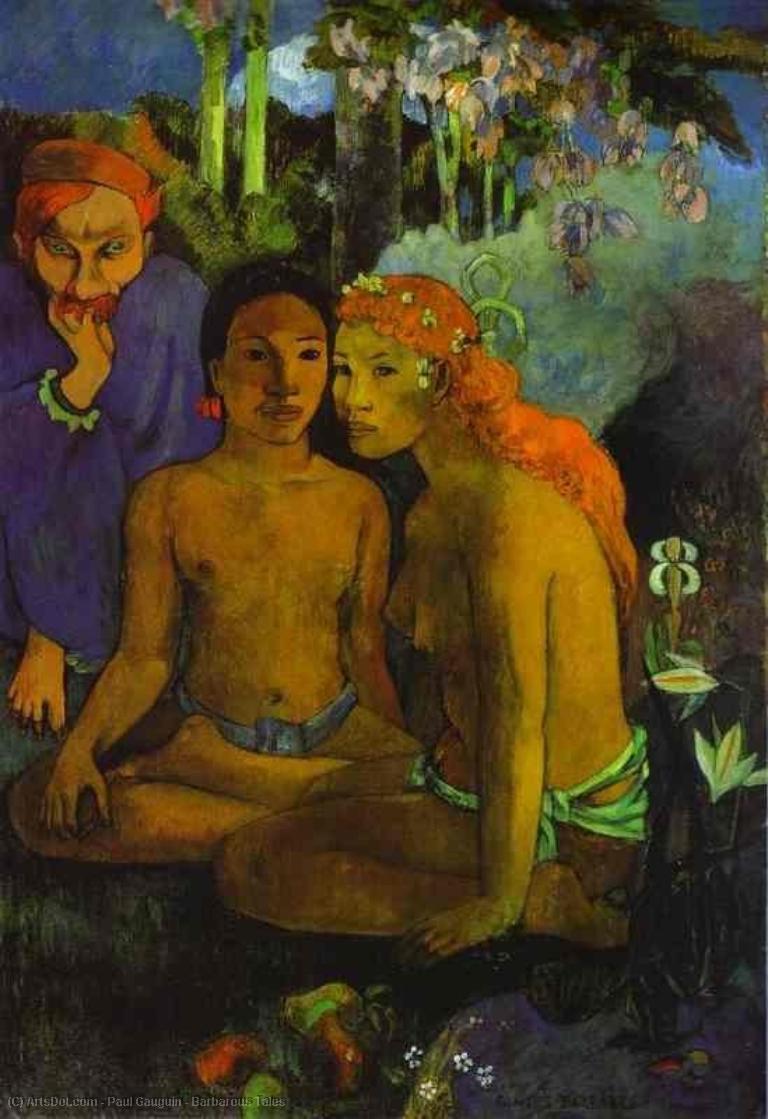
Barbarous Tales (1902) exemplifies this unique approach to art, inviting viewers on an extraordinary journey through human emotions and experiences. It’s a canvas brimming with vibrant hues—deep reds, ochres, greens—that don't merely depict the landscape but actively communicate its spirit. Gauguin deliberately eschewed realistic representation in favor of conveying feeling; he sought to capture the primal essence of Tahiti and its inhabitants.
Artist and Title Analysis
Paul Gauguin’s artistic journey was marked by a quest for new inspirations, leading him to French Polynesia. This period significantly influenced his work, including
Barbarous Tales, which showcases his fascination with the local culture and people. The title itself—"Barbarian Tales"—is deliberately provocative. Gauguin wasn’t interested in portraying Tahiti as idyllic paradise; instead, he aimed to depict its raw beauty alongside its unsettling contradictions – a confrontation between civilization and untamed nature. He believed that true artistic expression resided in embracing these primal impulses.
Media and Style
Created with oil paint on canvas,
Barbarous Tales is a prime example of Post-Impressionism. Gauguin’s distinctive style—characterized by bold outlines and expressive color palettes—was revolutionary for its time. Rejecting Impressionist optical realism, he prioritized emotional impact over accurate depiction. Thick brushstrokes dominate the composition, layering colors to create an illusionistic depth that transcends mere visual observation. This technique lends a palpable sense of movement and energy to the scene.
Composition Analysis
The painting presents three figures in an exotic landscape—a man, a woman, and a child—seated amidst lush vegetation. Gauguin meticulously arranged these elements to heighten their symbolic significance. The two prominent figures are adorned with decorative floral motifs, mirroring Polynesian ornamentation and hinting at fertility and abundance. Their gaze is direct, confronting the viewer, suggesting a profound connection between humanity and the natural world. The enigmatic third figure stands behind them, shrouded in shadow, adding an element of mystery and perhaps representing the unseen forces shaping human experience.
Subject Matter
Barbarous Tales explores themes of spirituality and storytelling—the narratives that shape our understanding of life and death. Gauguin’s intention was to capture not just what he saw but also what he felt – a yearning for connection with the ancient traditions of Tahiti. The painting embodies his belief that art should transcend mere representation, tapping into universal emotions and conveying profound truths about human existence. It's a visual meditation on the complexities of faith and the enduring power of myth.
Experience the magic of Barbarous Tales up close, and delve into the world of
Museum Folkwang in Essen, Germany.
The
Barbarous Tales painting is a testament to Gauguin’s innovative style and his ability to capture the essence of human emotions. As a masterpiece of Post-Impressionism, it continues to inspire art enthusiasts worldwide.
Museum Folkwang in Essen, Germany houses a stunning reproduction of
Barbarous Tales, allowing visitors to appreciate Gauguin’s artistic vision in a captivating setting.