The Essence of Rural Tranquility: Exploring Gauguin’s Cattle Drinking
Paul Gauguin's
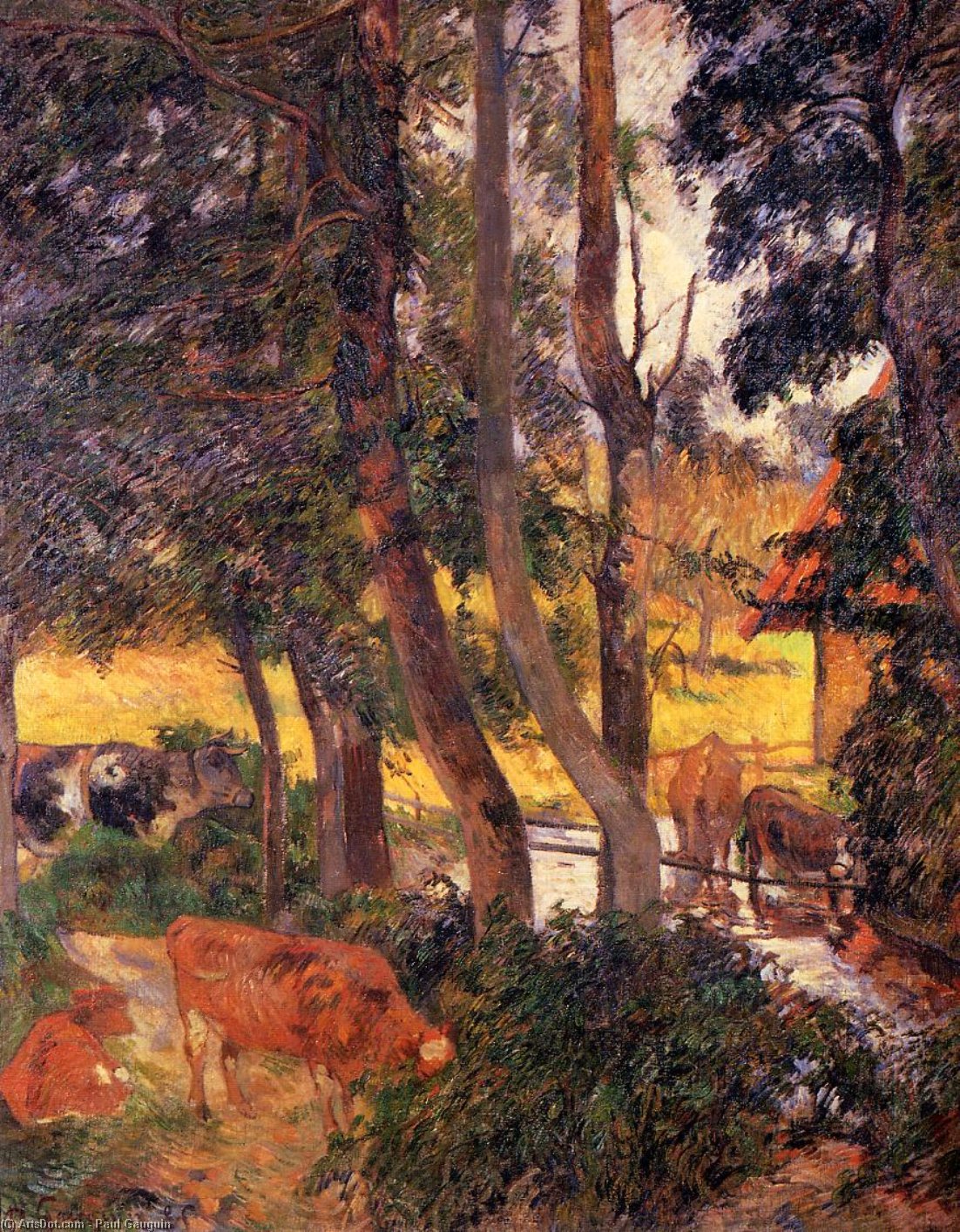
Cattle Drinking (also known as Edge of the Pond or Cows at the Watering Place) stands as a cornerstone of Post-Impressionism, embodying Gauguin’s singular artistic vision and his profound connection to the natural world. Created in 1885 during his formative years in French Polynesia, this oil on canvas masterpiece—measuring 81 x 65 cm and housed in the Civica Galleria d'Arte Moderna in Milan—captures a deceptively simple scene: three cows peacefully drinking from a pond or stream amidst lush foliage. Yet, beneath its serene surface lies a complex tapestry of artistic innovation and symbolic resonance.
Composition and Color Palette
Gauguin’s masterful composition prioritizes balance and visual harmony. The cows occupy the central axis of the canvas, drawing immediate attention while allowing the surrounding trees—painted in bold hues of green and brown—to complement their forms and contribute to the overall atmosphere. Gauguin eschewed Impressionist techniques focused on capturing fleeting light effects; instead, he employed a deliberate flattening of perspective and a restricted color palette characterized by earthy tones punctuated by vibrant splashes of crimson and ochre. These colors aren’t merely decorative; they convey emotion—a sense of primal beauty and spiritual contemplation—reflecting Gauguin's desire to depict the world as perceived by indigenous cultures untouched by Western civilization.
Synthetist Style: Bold Forms and Flattened Space
The painting exemplifies Gauguin’s Synthetist style, a radical departure from Impressionism that emerged during his time in Tahiti. Unlike Impressionists who meticulously rendered light and shadow, Gauguin embraced bold forms and flattened space—techniques borrowed from cloisonnist art—to achieve an expressive impact akin to stained glass windows. This stylistic choice emphasizes the materiality of the paint itself, creating textured surfaces that heighten visual interest and contribute to the painting’s tactile quality. The deliberate simplification of shapes reinforces the artist's intention to communicate directly with the viewer's subconscious mind, bypassing rational thought in favor of instinctive perception.
Symbolism and Spiritual Significance
Beyond its formal innovations,
Cattle Drinking is laden with symbolic meaning. Cows are often associated with fertility, nourishment, and maternal care—themes prevalent in Polynesian mythology and reflecting Gauguin’s fascination with indigenous spirituality. The pond or stream serves as a conduit to the divine realm, symbolizing purity and renewal. Gauguin's use of color—particularly crimson—suggests passion and vitality, hinting at an underlying energy that animates the scene. He sought not merely to depict what he saw but to convey what he felt—a profound reverence for nature’s power and beauty.
Influence on Modern Art
Cattle Drinking profoundly impacted subsequent generations of artists. Its bold color choices and simplified forms paved the way for Fauvist painters like Matisse and Picasso, who embraced similar stylistic conventions to express emotion and challenge conventional artistic norms. Gauguin’s unwavering commitment to his own vision—a rejection of academic tradition in favor of subjective experience—established a precedent for artistic freedom that continues to inspire artists today.
Further Exploration
-
Three Huts, Tahiti
-
Boy by the Water
You can discover more of Gauguin’s remarkable oeuvre and explore similar Post-Impressionist masterpieces on
https://ArtsDot.com. For a deeper understanding of Paul Gauguin's life and artistic legacy, consult Wikipedia:
Paul Gauguin.