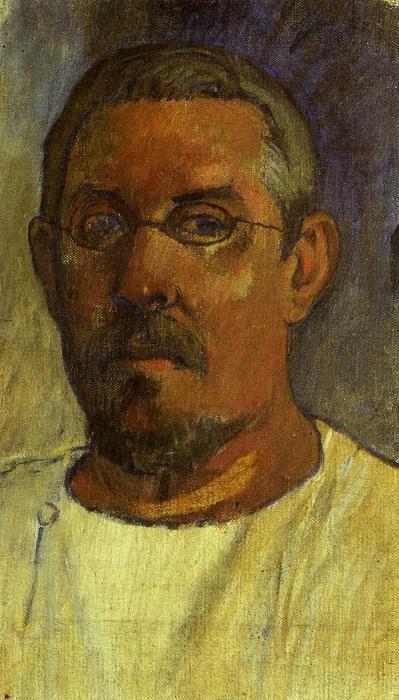
Paul Gauguin's 'Self Portrait with Spectacles' (1903) is a captivating Post-Impressionist masterpiece showcasing bold colors, expressive brushstrokes & introspective depth. Explore its light, composition & Gauguin’s legacy.
パリ
フランス
エジェーヌ・アンリ・ポール・ゴーギャン
ゴーギャン、ユージェン・アンリ・ポール・ゴーギャン、ポール・ゴーギャン
ポスト印象派の巨匠ゴーギャン。大胆な色彩とタヒチの異国情緒あふれる風景が魅力。象徴主義的な表現で、現代美術に多大な影響を与えました。
後期印象派、象徴主義
パブロ・ピカソ
カミーユ・ピサロ
1848年
1903年
エジェーヌ・アンリ・ポール・ゴーギャン
フランス人
晴天
パリ
教師
1
ポール・ゴーギャンが芸術家になる前の職業は何でしたか?
Self Portrait with Spectacles: A Window into Gauguin’s Soul
Paul Gauguin's “Self Portrait with Spectacles,” painted in 1903 during his final years in French Polynesia, is more than just a likeness; it’s a profound meditation on the artist’s own identity, aging, and the complexities of human perception. Created at a pivotal moment in his career – a time marked by both artistic experimentation and personal turmoil – this oil-on-canvas masterpiece exemplifies Gauguin's signature Post-Impressionist style while simultaneously offering a remarkably intimate glimpse into the mind of one of art history’s most enigmatic figures. The painting immediately draws the viewer in with its bold, earthy palette dominated by deep browns, ochres, and muted blues – colors that evoke the volcanic landscapes and humid atmosphere of Tahiti, yet are rendered with an almost melancholic intensity.
The composition itself is deceptively simple. Gauguin presents himself in a three-quarter pose, his head turned slightly to the side as if observing something just beyond the frame. The inclusion of spectacles—a detail often overlooked—is particularly striking. They aren’t merely an accessory; they function as a visual metaphor for introspection and perhaps even a degree of detachment from the world. Gauguin's gaze is direct, yet carries a subtle sadness, hinting at the isolation he increasingly felt amidst his adopted home. His beard and mustache, characteristic features of his appearance, contribute to a dignified, almost scholarly demeanor, contrasting sharply with the raw emotion conveyed in his eyes. The brushstrokes are deliberately expressive – thick, visible, and layered—a hallmark of Gauguin’s technique that prioritizes capturing feeling over meticulous realism. This deliberate roughness adds to the painting's sense of immediacy and emotional weight.
The use of light is a crucial element in understanding the work’s impact. As discussed within the broader context of “Light in Painting,” Gauguin masterfully employs chiaroscuro – the dramatic contrast between light and shadow – to sculpt the subject’s face and create a palpable sense of depth. The light, seemingly originating from an unseen source, highlights the wrinkles around his eyes and mouth, subtly emphasizing the passage of time and the artist's own aging process. This isn’t a celebration of youth; rather, it’s an honest portrayal of the human condition, acknowledging the inevitable marks of experience. The play of light also draws attention to the details of his attire – a simple white shirt and dark tie—grounding the portrait in a recognizable reality while simultaneously elevating it beyond mere representation.
Beyond its technical brilliance, “Self Portrait with Spectacles” resonates deeply due to Gauguin’s broader artistic context. He was a key figure in the Post-Impressionist movement, rejecting the Impressionists' focus on fleeting moments of light and color in favor of exploring deeper emotional and symbolic themes. His work, alongside that of artists like Vincent van Gogh and Henri de Toulouse-Lautrec, paved the way for modern art by prioritizing subjective experience over objective observation. The painting’s exploration of isolation, introspection, and the search for meaning—themes central to Gauguin's life and work—continues to resonate with viewers today. Considered alongside other notable works such as “The Joys of Brittany” and “Tre Tahitiani,” this self-portrait reveals a consistent thread: Gauguin’s relentless pursuit of capturing the essence of his subjects, whether they be landscapes or portraits, through bold color and emotionally charged brushstrokes.
Further enriching our understanding of Gauguin's artistic journey is his connection to other significant artists like Gustave Moreau, as evidenced by his “The Triumph of Alexander the Great.” And a visit to the Musée Réattu in Arles, France—a repository of Post-Impressionist treasures including works by Gauguin himself—provides invaluable context for appreciating the breadth and depth of his artistic vision. The museum’s collection offers a tangible link to the vibrant art scene that flourished during this period, allowing us to trace the evolution of Gauguin's style and its influence on subsequent generations of artists.