A Glimpse of Paradise: Unpacking Paul Gauguin’s “Tahitian Woman”
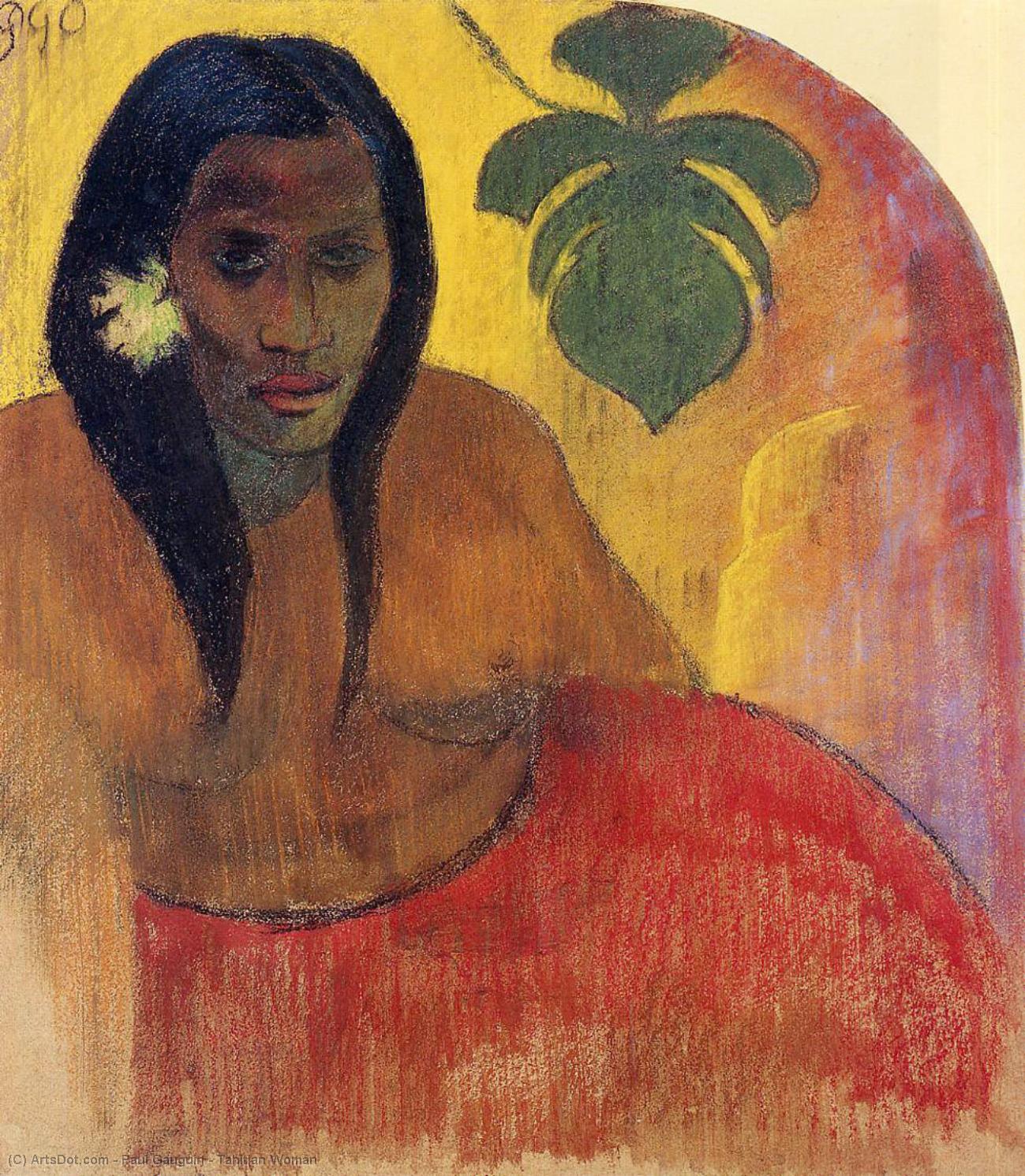
Paul Gauguin's "Tahitian Woman," painted in 1894, isn’t merely a portrait; it’s a vibrant portal into the artist’s world and his evolving vision of paradise. Housed within the Brooklyn Museum’s collection, this charcoal work offers a captivating study of a Tahitian woman adorned with a flower, seated serenely amidst a carefully constructed tableau that speaks volumes about Gauguin's fascination with indigenous cultures and his deliberate departure from the conventions of European art. The painting immediately draws the eye with its bold color palette – primarily reds, ochres, and greens – a hallmark of Gauguin’s Synthetist style, where he sought to represent the essence of things rather than their literal appearance. This stylistic choice, a direct reaction against the naturalistic tendencies of Impressionism, is evident in the flattened perspective and simplified forms, prioritizing emotional impact over meticulous detail.

The Spirit of Tahiti: Culture and Symbolism
Gauguin’s time in Tahiti profoundly shaped his artistic output, transforming him from a Parisian expatriate into an ardent advocate for the islanders' way of life. “Tahitian Woman” embodies this shift, moving beyond simple representation to capture the spirit and dignity of its subject. The woman herself, often interpreted as Vahine no te tiare (woman with a flower), is presented not as a passive object of observation but as an active participant in her own narrative. The flower she wears—a hibiscus, a common bloom in Tahiti—is laden with symbolic weight, representing beauty, fertility, and the ephemeral nature of life itself. The surrounding potted plants, carefully arranged on either side, further reinforce this connection to nature, suggesting a harmonious existence within the island’s lush environment. Notably, Gauguin deliberately avoided depicting the woman in a traditional Tahitian garment, instead choosing a European-inspired red dress, subtly highlighting the cultural exchange and tension at play during his time in the South Pacific.
A Post-Impressionist Masterpiece: Technique and Innovation
Technically, “Tahitian Woman” showcases Gauguin’s distinctive approach to charcoal. He employed a broken stroke technique, layering thin lines of varying pressure to build up color and texture. This method creates a dynamic surface that seems to shimmer with light and movement. The use of contrasting values—deep shadows juxtaposed against bright highlights—further enhances the painting's visual impact. Beyond his technical skill, Gauguin’s innovation lay in his rejection of academic conventions. He deliberately distorted perspective, simplified forms, and employed a vibrant, non-naturalistic color scheme to express his subjective experience of Tahiti. This bold departure from traditional artistic practices cemented his place as a pivotal figure in the transition from Impressionism to modern art.
Legacy and Interpretation: A Window into Gauguin’s Soul
“Tahitian Woman” is more than just a beautiful image; it's a window into Paul Gauguin’s complex psyche. It reflects his desire for authenticity, his fascination with non-Western cultures, and his struggle to reconcile European artistic traditions with the raw beauty of Tahiti. While initially met with skepticism by critics, Gauguin’s work has since been recognized as a groundbreaking contribution to modern art. Reproductions of this captivating painting offer an accessible way to experience the power and emotional resonance of Gauguin's vision – a testament to his enduring legacy as one of the most influential artists of the 20th century. Consider commissioning a hand-painted reproduction from ArtsDot.com to bring this iconic image into your home or office, capturing its vibrant spirit and timeless appeal.