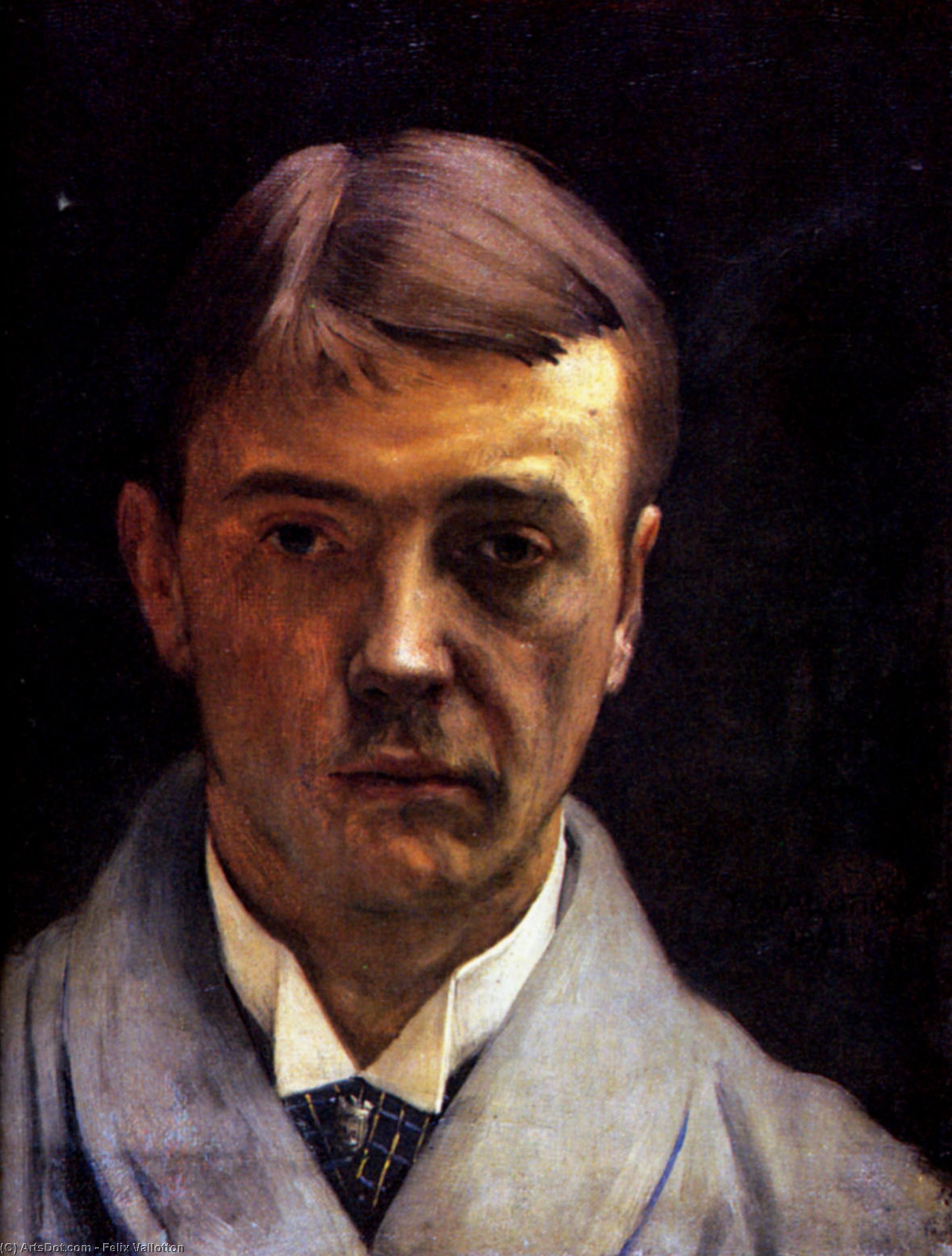
My Portrait by Félix Vallotton: A Study in Quiet Intensity
Félix Vallotton’s “My Portrait,” painted in 1891, is more than just a likeness; it's a carefully constructed meditation on identity and emotion rendered with the precision characteristic of Realism. Measuring 41 x 33 cm, this oil-on-canvas work immediately draws the viewer into the direct gaze of the sitter – a man with thoughtfully arranged brown hair, clad in a simple blue shirt and tie – an expression that speaks volumes despite its apparent stillness. Vallotton’s masterful control of texture and color creates a palpable sense of presence, inviting us to contemplate the subject's inner world.
- Style & Technique: The painting exemplifies Vallotton’s approach within the Symbolist movement, though without overt allegorical elements. He employs a restrained palette – primarily blues and browns – layered with subtle gradations of tone to build depth and form. Notice the deliberate brushstrokes, particularly in the rendering of the fabric and the man's face, which contribute significantly to the work’s realism while simultaneously hinting at an underlying emotional complexity.
- Historical Context: Created during the *fin de siècle*, a period marked by social upheaval and artistic experimentation, “My Portrait” reflects the anxieties and uncertainties of the era. Vallotton was part of a generation challenging traditional academic styles, seeking to capture not just appearances but also the psychological states of his subjects.
- The Sitter’s Gaze: The man's direct stare is particularly compelling. It isn’t confrontational, but rather imbued with a quiet intensity that suggests introspection and perhaps even a touch of melancholy. This subtle emotional charge elevates the portrait beyond a simple representation to a powerful statement about human experience.
Symbolism and the Spirit of the Age
Vallotton’s artistic choices align with the Symbolist movement's core tenets: prioritizing subjective emotion and symbolic meaning over literal depiction. While “My Portrait” lacks explicit symbols, it utilizes color and composition to evoke a mood – one of quiet contemplation and perhaps a hint of disillusionment. The limited palette reinforces this sense of restraint, mirroring the emotional reserve often associated with the *fin de siècle*. The inclusion of two secondary figures adds another layer of complexity, subtly suggesting themes of social interaction and isolation—common concerns within Symbolist art.
- Influence of Impressionism: Vallotton’s technique shows a clear debt to Impressionism, particularly in his focus on capturing fleeting moments of light and atmosphere. However, unlike the Impressionists' emphasis on optical realism, Vallotton used this approach to explore psychological states.
- The Role of the Viewer: Vallotton intentionally invites the viewer into the scene, creating a sense of intimacy and shared experience. The direct gaze of the subject establishes an immediate connection, prompting us to consider our own relationship with portraiture and representation.
A Masterpiece in its Own Right
“My Portrait” is a testament to Félix Vallotton’s skill as a painter and his profound understanding of human psychology. Its quiet intensity and masterful technique continue to resonate with viewers today, solidifying its place as a significant work within the canon of late 19th-century art. The painting's enduring appeal lies in its ability to capture a universal truth – the complexities of self-awareness and the subtle nuances of human emotion.
Size:** 41 x 33 cm
Date:** 1891
Artist:** Félix Vallotton