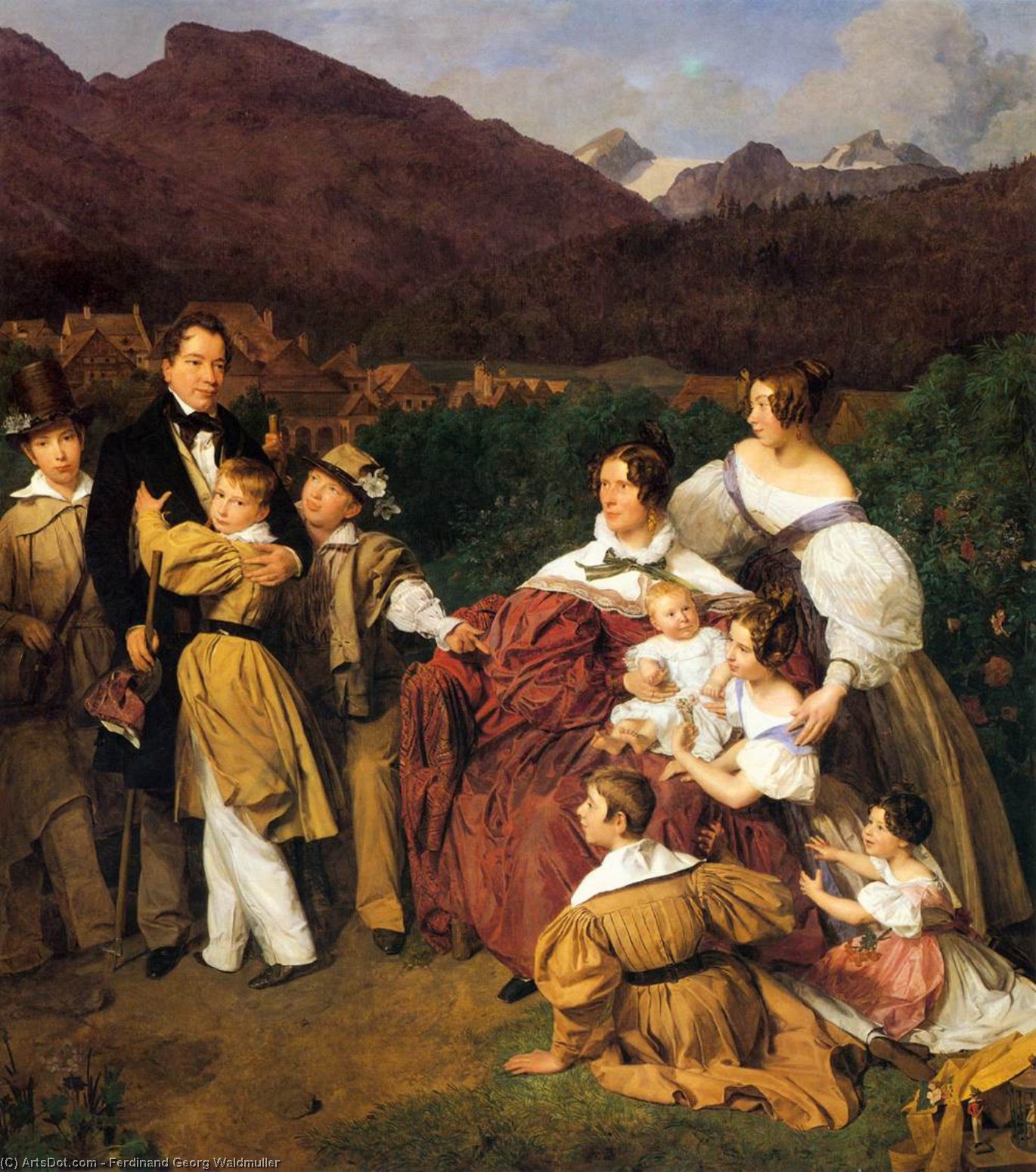
A Window Into Bavarian Aristocracy: Ferdinand Georg Waldmüller’s “The Eltz Family”
Ferdinand Georg Waldmüller's "The Eltz Family," completed in 1835, stands as a quintessential example of Biedermeier art—a movement that championed domestic tranquility and idealized depictions of rural life amidst the turbulent political landscape of mid-nineteenth century Germany. More than just a portrait commission for a wealthy Bavarian family, it’s a carefully constructed tableau designed to convey values of familial piety, social responsibility, and understated elegance – sentiments deeply ingrained in the sensibilities of its era.
- Subject Matter & Composition: The painting captures the Eltz family—a lineage tracing its roots back centuries—within the grandeur of their ancestral home nestled amongst rolling Bavarian hills. Waldmüller skillfully arranges the figures, prioritizing a sense of familial unity and portraying them in poses that convey both dignity and warmth. Notice how the patriarch dominates the frame, symbolizing authority and stability, while his wife radiates compassion and grace – archetypal roles reflecting societal expectations.
- Style & Technique: Waldmüller adhered to the tenets of Biedermeier style, prioritizing realism tempered with idealized beauty. He employed a muted palette—primarily browns, greens, and creams—creating an atmosphere of serene contemplation rather than flamboyant display. The artist’s brushwork is characterized by smooth gradations and subtle tonal variations, meticulously capturing the textures of fabric and skin, demonstrating considerable technical prowess.
Historical Context: Reflecting a Changing Nation
The painting emerged during a period of significant political reform in Germany—the July Revolutions of 1830–31 challenged autocratic rule and fueled calls for constitutional governance. Waldmüller’s depiction of the Eltz family can be interpreted as an affirmation of traditional values amidst these upheavals, representing a desire for stability and continuity within a rapidly evolving society. Furthermore, it speaks to the broader anxieties surrounding social change—the fear of losing established hierarchies and customs.
- Symbolism & Narrative Layers: Beyond its immediate visual appeal, “The Eltz Family” is laden with symbolic significance. The mountainous landscape serves as a backdrop for moral contemplation, mirroring the family’s steadfast commitment to virtue and duty. The familial embrace embodies the importance of kinship and mutual support—values considered paramount in Biedermeier culture.
Emotional Impact & Artistic Legacy
Waldmüller's masterful execution transcends mere representation; it evokes a profound sense of nostalgia for a bygone era – an idealized vision of rural Bavaria imbued with humanist ideals. The painting’s quiet dignity and understated beauty continue to resonate with viewers today, offering a glimpse into the artistic sensibilities of its time and demonstrating Waldmüller’s enduring contribution to German Romanticism. It serves as a powerful reminder that art can transcend historical boundaries, communicating timeless themes of family, faith, and human connection.