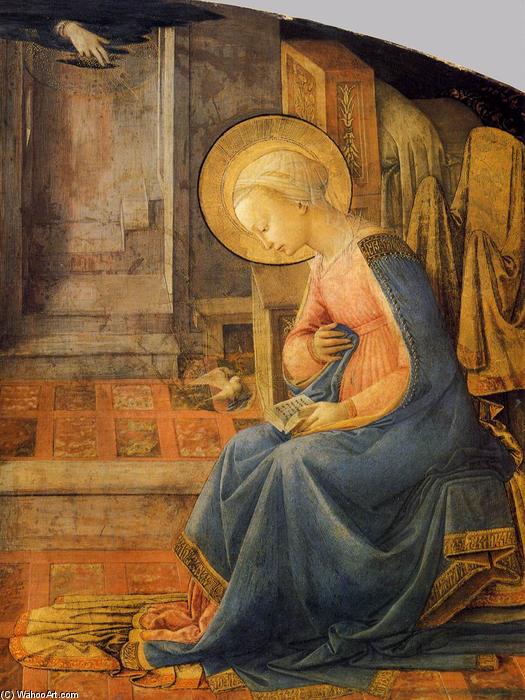
The Annunciation: A Florentine Dawn
Fra Filippo Lippi’s “Annunciation,” housed within the venerable walls of the National Gallery in London, isn't merely a depiction of a biblical moment; it’s a shimmering window into the heart of Renaissance Florence – a city pulsating with artistic innovation, religious fervor, and a touch of captivating scandal. Completed around 1450, this tempera-on-panel masterpiece transcends its subject matter to become a profound meditation on faith, divine revelation, and the burgeoning humanism that would define the era. The painting’s enduring power lies not just in its exquisite detail but also in the palpable sense of grace and serenity it conveys – a testament to Lippi's extraordinary skill as a painter and his deeply felt spirituality.
A Vision of Grace: Composition and Technique
Lippi masterfully orchestrates a scene brimming with symbolic weight. The composition is remarkably balanced, drawing the eye from the kneeling Virgin Mary, bathed in an ethereal light, towards the radiant archangel Gabriel. He stands poised, his wings outstretched – not as instruments of forceful command, but rather as symbols of divine communication and the boundless reach of God’s grace. Note the delicate rendering of Gabriel's feathers, a testament to Lippi’s meticulous attention to detail; each plume seems to catch the light with an almost tangible quality. The use of tempera paint allows for incredible luminosity and depth – the colors appear to glow from within, creating a sense of otherworldly beauty. The background architecture, reminiscent of Florentine churches, provides a grounding element while simultaneously hinting at the sacred space where this momentous event unfolds.
Symbolism Woven into the Fabric of Faith
Every element in “The Annunciation” is laden with symbolic meaning. The dove, soaring towards Mary’s expectant belly, represents the Holy Spirit – the divine messenger who brings the news of Christ's conception. The scroll held by Gabriel isn’t simply a message; it embodies sacred scripture and the unfolding plan of salvation. Mary’s modest attire and humble posture speak volumes about her acceptance of God’s will. The golden halo encircling Gabriel’s head signifies his divine status, while the subtle gesture of his hand – a blessing – underscores the profound significance of this encounter. Even the choice of colors—the rich blues and golds—are deliberate, evoking notions of divinity and wealth, respectively, reflecting the artistic conventions of the time.
A Painter’s Biography: Lippi's Complex Legacy
Filippo Lippi’s life was as vibrant and complex as his art. Born into a humble Florentine family, he entered the Carmelite order at a young age, dedicating himself to God but also harboring a rebellious spirit. His artistic talent quickly blossomed, earning him recognition from some of Florence's most prominent patrons, including Lorenzo de' Medici. However, his life was shadowed by scandal – an illegitimate birth, a brief marriage, and ultimately, a return to the priesthood after a period of unconventional behavior. Despite these personal struggles, Lippi’s artistic legacy endures, particularly in works like “The Annunciation,” which showcases his remarkable skill, innovative compositions, and profound understanding of religious symbolism. His work reflects both the constraints and freedoms of Renaissance Florence – a city where faith and art intertwined in a dynamic and often turbulent relationship.
This painting offers more than just a visual representation of a biblical story; it’s an invitation to contemplate the mysteries of faith, the beauty of divine grace, and the enduring power of human creativity. A reproduction captures much of this essence, allowing you to bring this Florentine dawn into your own space.