A Sanctuary of Light and Grace
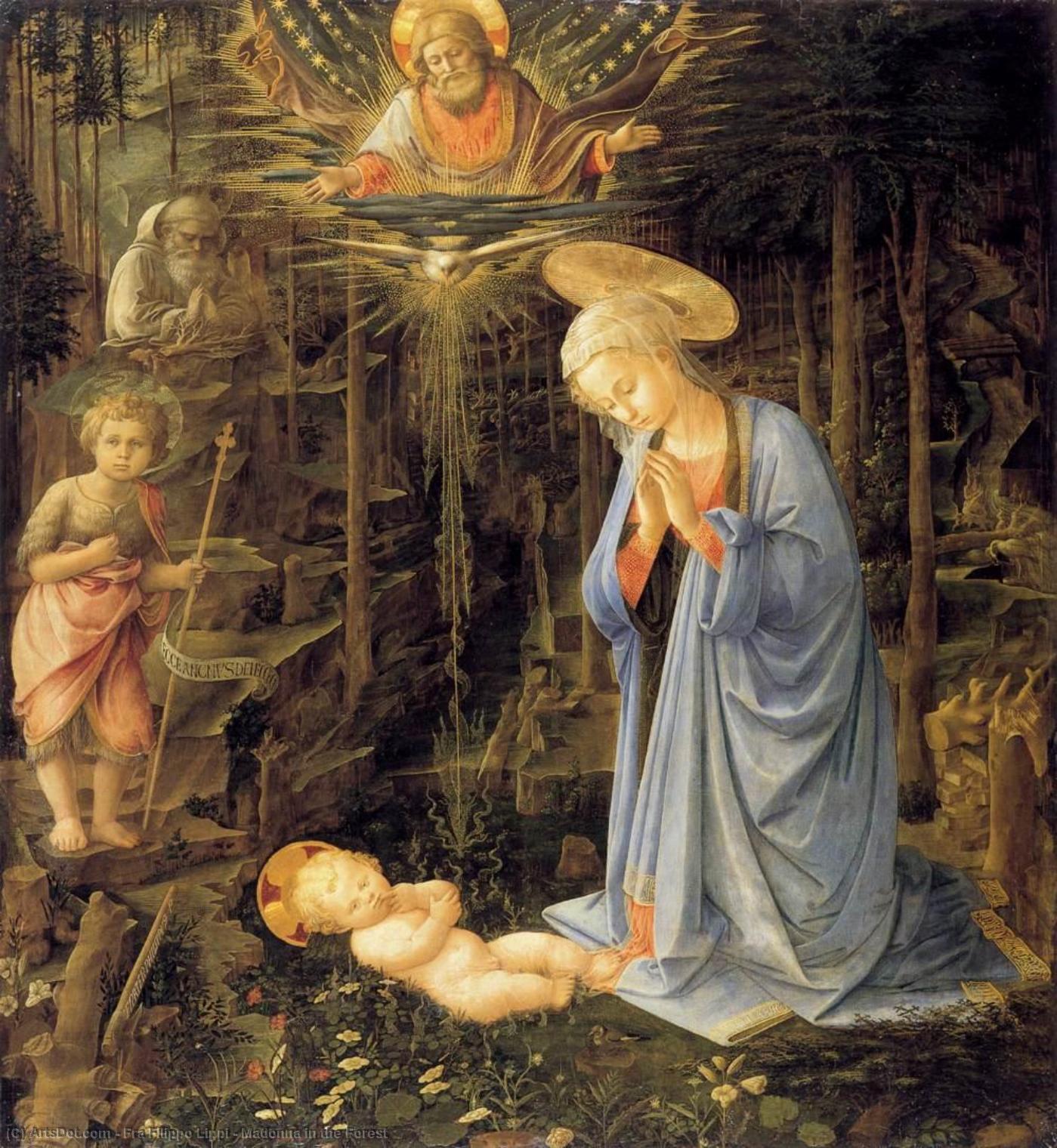
In the heart of a verdant, sun-dappled woodland, a moment of eternal stillness unfolds within Filippo di Tommaso Lippi’s Madonna in the Forest. This exquisite masterpiece, painted around 1460, transcends a mere religious depiction to become an immersive experience of peace and divine presence. The viewer is not simply observing a painting but is invited into a sacred grove where the boundaries between the earthly and the celestial blur. At the center of this tranquil composition sits the Virgin Mary, her serene countenance radiating a maternal warmth that anchors the entire scene. Clad in a deep blue mantle that seems to capture the very essence of the twilight sky, she cradles the Christ Child, whose vibrant red garment serves as a brilliant focal point against the lush greenery. The interplay of light filtering through the canopy creates a rhythmic dance of shadows and highlights, lending an ethereal, almost breathing quality to the forest itself.
Lippi, a painter whose life was as dramatic and complex as the textures he rendered, brings a profound sense of naturalism to this work. As a member of the Carmelite Order, his deep-seated spiritual devotion is harmoniously wedded to the burgeoning humanist ideals of the Early Renaissance. This duality is visible in the meticulous attention to botanical detail; every leaf and mossy bank feels tangibly real, yet they all serve a higher, symbolic purpose. The forest is not merely a backdrop but a sanctuary—a living cathedral where the natural world acts as a witness to the divine incarnation. The presence of watchful figures and a delicate bird fluttering above adds layers of narrative depth, suggesting that all of creation is held in a state of quiet adoration.
Mastery of Technique and Renaissance Spirit
The technical brilliance of Madonna in the Forest lies in Lippi’s sophisticated use of color and light to evoke emotion. Utilizing the traditional Florentine technique of tempera on plaster, he achieved a remarkable luminosity that remains captivating centuries later. Through the careful layering of pigments and delicate glazing, Lippi created a sense of depth and atmosphere that draws the eye deep into the woods. His mastery of trompe l'oeil elements—the illusion of three-dimensional space—allows the viewer to feel as though they could step directly into the frame. The way the light catches the gold embroidery on Mary’s cloak or the soft, rounded contours of the infant Jesus demonstrates a level of skill that was both revolutionary and deeply influential to later masters like Botticelli.
For the discerning collector or interior designer, this painting offers more than just aesthetic beauty; it provides a profound emotional resonance. The composition’s inherent balance and the soothing palette of forest greens, sky blues, and warm earth tones make it an ideal centerpiece for spaces designed for contemplation and elegance. Whether placed in a grand gallery or a quiet study, a high-quality reproduction of this work brings with it an aura of timelessness and sophistication. It is a piece that speaks to the resilience of beauty and the enduring power of peace, making it a soulful addition to any curated collection of fine art.