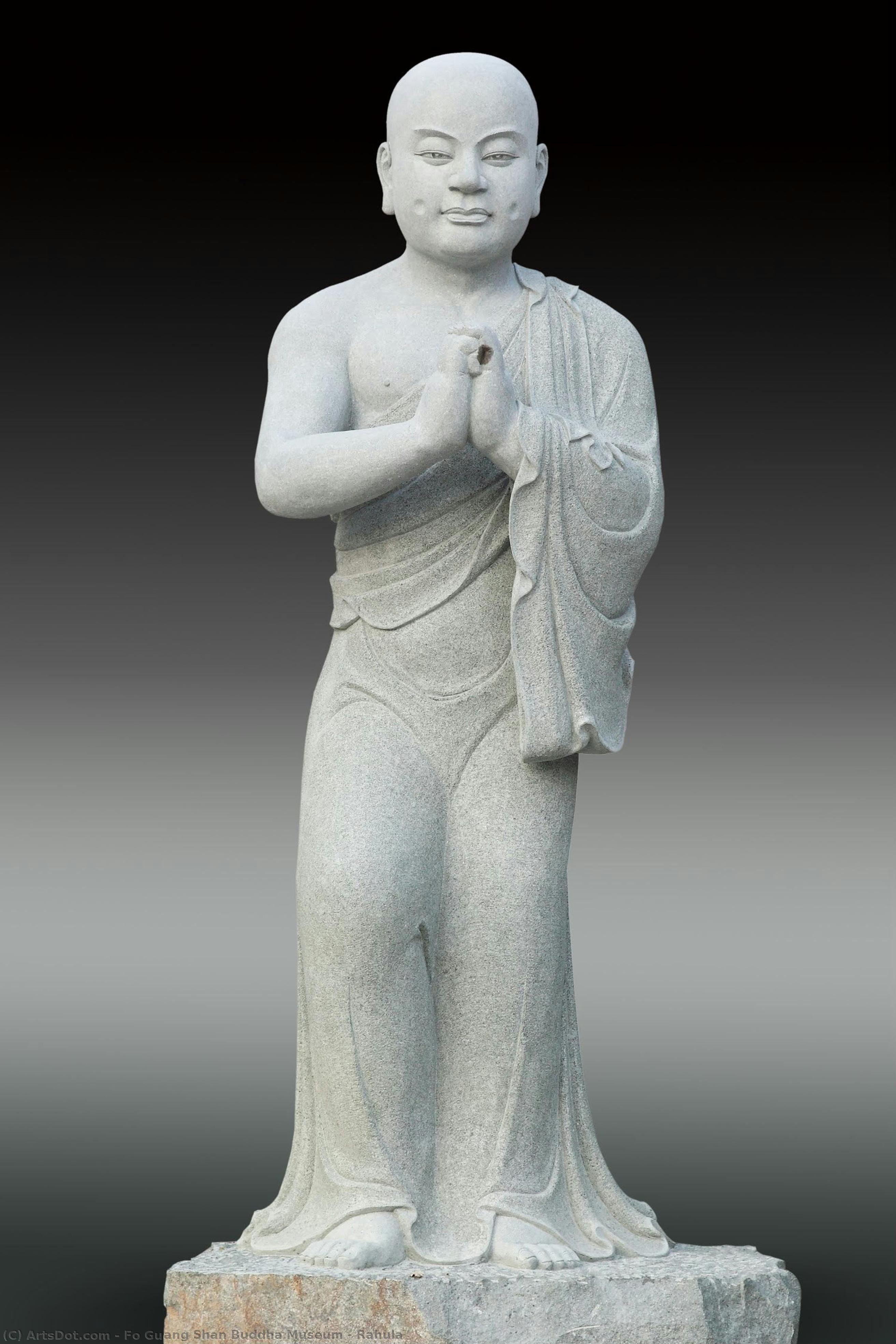
A Study in Serenity: The Essence of Rahula
In the quiet intersection of sculpture and spirituality, the depiction of Rahula stands as a profound testament to the transformative power of discipline and devotion. This evocative piece, captured through the lens of photography, presents a stone statue that transcends its material origins to tell a story of redemption. As the son of the Buddha, Rahula’s journey from a mischievous youth to a paragon of self-discipline is etched into the very texture of the sculpture. The artwork invites viewers into a meditative state, where the weight of the stone meets the lightness of spiritual enlightenment, making it an extraordinary focal point for any collection dedicated to contemplative art.
The composition is masterfully centered, utilizing a stark, obsidian-black background to isolate the figure and command absolute attention. This high-contrast approach serves to elevate the subject, stripping away the distractions of the physical world to focus entirely on the form of the novice monk. The lighting, descending softly from above and slightly to the left, plays across the granular surface of the stone, casting subtle shadows that define the rhythmic folds of the monastic robe. These shadows do more than provide depth; they breathe life into the inanimate material, creating a sense of movement within the stillness of the pose.
Symbolism and the Path of Discipline
Every element of this work is imbued with deep Buddhist symbolism. The figure’s hands, clasped together in a gesture of reverence, serve as a visual anchor for themes of prayer and meditation. This posture reflects Rahula's historical transition—from one who once sought to deceive, to one who embraced the rigors of the Sramanera life with unwavering endurance. The organic, flowing lines of the statue’s silhouette evoke a sense of peace and tranquility, mirroring the internal calm achieved through the mastery of self.
For the discerning collector or interior designer, this piece offers more than mere decoration; it provides an emotional resonance that can transform a space. The muted grey-white palette of the stone introduces a sophisticated, neutral elegance that integrates seamlessly into modern, minimalist, or Zen-inspired interiors. It acts as a silent interlocutor in a room, prompting moments of reflection and providing a sense of groundedness. Whether placed in a private study, a wellness sanctuary, or a grand gallery, the statue’s presence evokes a profound respect for the journey of the human spirit toward enlightenment.
A Legacy of Faith and Artistry
Originating from the cultural richness of the Fo Guang Shan Buddha Museum in Taiwan, this depiction carries the weight of a living tradition. The museum itself is a sanctuary where art and philosophy converge, much like the subject matter of Rahula. The technique used to capture this sculpture emphasizes the raw, tactile nature of the medium—the rough, weathered texture of the concrete or stone serves as a metaphor for the trials and tribulations that shape character. It is a masterful marriage of representational realism and spiritual stylization, offering a timeless piece that celebrates the enduring beauty of faith and the quiet strength found in discipline.