The Serene Majesty of Fra Angelico’s “Adoration and Annunciation”
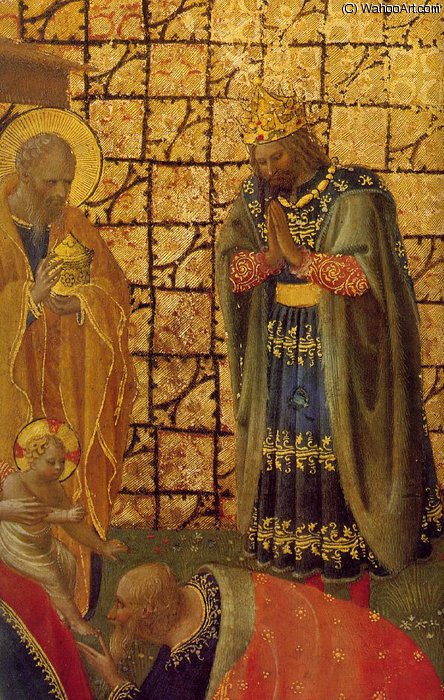
Fra Angelico’s “Adoration and Annunciation,” painted in 1420, isn't merely a depiction of biblical events; it’s an immersion into a realm of profound spiritual grace. Housed within the walls of the Convent of San Marco in Florence, this fresco transcends its physical location to become a sanctuary of contemplation, inviting viewers to witness a moment of divine encounter and humble reverence. The painting captures a pivotal scene – the simultaneous adoration of the infant Jesus by shepherds and the announcement of his birth to Mary – interwoven with an exquisite sense of serenity and luminous beauty that defines Fra Angelico’s unique artistic vision.
The composition is masterfully balanced, drawing the eye through a carefully orchestrated arrangement of figures. Three men dominate the foreground, their postures conveying a spectrum of emotion: one kneeling in devout adoration, another standing respectfully behind him, and the third positioned slightly further back, suggesting a broader audience to this sacred event. Dressed in rich, royal garments—a subtle nod to the divine lineage of Christ—they embody earthly authority yet are rendered with an almost ethereal quality, reflecting the spiritual significance of their actions. The use of color is particularly striking; deep reds and blues create a sense of solemnity and depth, while vibrant yellows and greens introduce warmth and life into the scene. The artist’s meticulous attention to detail—from the folds of the robes to the expressions on the faces—imbues each element with an undeniable sense of realism and emotional resonance.
A Symphony of Symbolism
Beyond its immediate narrative, “Adoration and Annunciation” is a rich tapestry of symbolism. The presence of the shepherds, traditionally associated with innocence and humility, underscores the idea that divine grace can be found in unexpected places. The infant Jesus, cradled gently by one of the men, represents hope, redemption, and the promise of salvation. A bird, often interpreted as the Holy Spirit, flutters across the scene, adding a layer of spiritual significance to the composition. The Hortus Conclusus – the enclosed garden – depicted in the background, symbolizes paradise and eternal life, further emphasizing the sacred nature of the event.
The architectural setting itself is laden with symbolic meaning. The cloister, open to the sky, represents a connection between heaven and earth, while the columns evoke classical antiquity—a deliberate reference to the enduring wisdom and beauty of the human spirit. Even the lighting within the fresco contributes to the overall atmosphere, creating a sense of divine illumination that envelops the scene in an aura of peace and tranquility.
The Painter’s Technique & Florentine Renaissance
Fra Angelico's mastery lies not only in his ability to capture spiritual essence but also in his technical skill. He was a pioneer in using tempera on gesso, a technique that allowed for incredibly luminous colors and delicate details—a departure from the heavier oils favored by many of his contemporaries. His work demonstrates a remarkable understanding of perspective and spatial relationships, creating an illusion of depth and realism within the confines of the fresco. The influence of the Sienese school is evident in his use of vibrant color palettes and flowing drapery, but he elevates these elements to achieve a uniquely Florentine style—characterized by its elegance, grace, and spiritual intensity.
This painting stands as a pivotal work within the early Renaissance, bridging the gap between the Gothic tradition and the burgeoning realism of the era. It reflects a shift towards humanism while retaining a profound sense of religious devotion. The meticulous detail and luminous colors are hallmarks of his style, creating an experience that is both visually stunning and emotionally moving.
A Legacy of Serenity & Inspiration
“Adoration and Annunciation” continues to captivate viewers centuries after its creation. Its enduring appeal lies in its ability to evoke a sense of peace, wonder, and spiritual connection. Reproductions of this masterpiece offer a tangible way to bring this serene atmosphere into any space—a reminder of the beauty and grace that can be found within faith and art. The painting’s placement within the Convent of San Marco further enhances its significance, serving as a testament to Fra Angelico's dedication to both his artistic craft and his religious beliefs. It remains a powerful symbol of hope, humility, and the enduring power of divine love.