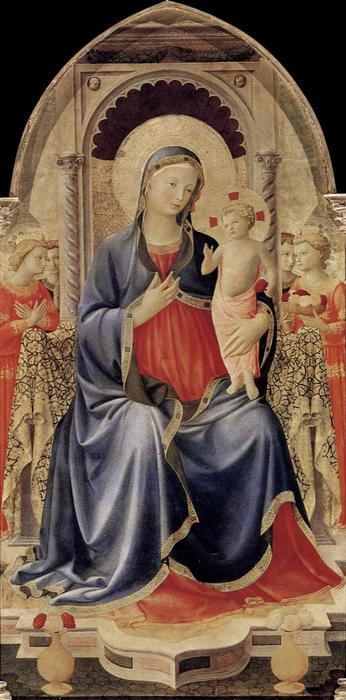
Discover Fra Angelico's masterpiece, the Cortona Polyptych (central panel), a stunning Early Renaissance depiction of the Virgin Mary and Christ Child. Explore its symbolism, artistic techniques, and historical context at ArtsDot.
美しい聖書画と色彩で知られるイタリアの画家、フラ・アンジェリコは、ルネサンス初期において信仰と芸術を融合させた傑作です。サンマルコ修道院の壮麗な壁画や聖母マリアと天使たちを描いた作品群が特に有名であり、彼の芸術への深い情熱と宗教的な視点は後世の画家たちに大きな影響を与えました。
コルトーナの司教区博物館を探索しましょう。フラ・アンジェリコやルカ・シニョレッリによるルネサンス美術、ローマ時代の遺物、そしてトスカーナの聖なる至宝に浸る体験があなたを待っています。
Cortona Polyptych (central panel)
The Cortona Polyptych stands as an emblem of Early Renaissance artistic achievement, meticulously crafted by Fra Angelico between 1437 and 1438. Housed within the Museo Diocesano in Cortona, Italy—a testament to Tuscan cultural heritage—this tempera painting on panel transcends mere visual representation; it embodies profound spiritual contemplation and masterful artistic execution. Measuring approximately 137 x 68 cm, the central panel depicts Mary cradling Jesus Child, enveloped by a serene tableau of angelic figures and saints, establishing a harmonious composition that speaks volumes about humanist ideals and religious devotion.
Composition and Symbolism
Fra Angelico’s genius lies in his ability to orchestrate visual elements into a narrative tapestry imbued with symbolic significance. The pyramidal structure dominates the scene, grounding Mary at its apex—a deliberate allusion to Virgin Mary's divine grace and centrality within Christian theology. Surrounding her are six angels, positioned strategically to illuminate the sacred space and convey messages of divine protection and benediction. Each angel is rendered with exquisite detail, reflecting Angelico’s meticulous attention to naturalism – a hallmark of Renaissance art—yet imbued with ethereal beauty. The saints flanking Mary represent various virtues—faith, hope, charity—serving as guides for contemplation and embodying the spiritual aspirations of the medieval Church. Notably, St John the Evangelist and St John the Baptist stand on either side of Mary, symbolizing repentance and divine grace.
Artistic Style and Technique
Fra Angelico’s distinctive style is characterized by a luminous tempera paint application—a technique favored for its ability to achieve vibrant colors and subtle gradations—combined with an unparalleled command of perspective and spatial illusion. The artist skillfully employs atmospheric haze, creating depth and enhancing the sense of serenity within the chapel. Color palettes are restrained yet harmonious, dominated by blues—representing Mary’s purity and divine majesty—and golds—symbolizing Christ’s divinity and spiritual illumination. Angelico's meticulous brushwork captures the delicate textures of drapery and flesh, demonstrating his mastery of anatomical accuracy while prioritizing expressive beauty. The predella beneath the central panel expands upon this narrative, depicting scenes from the life of Saint Dominic and other saints, furthering the polyptych’s didactic purpose—to inspire piety and illuminate Christian faith.
Historical Context
The Cortona Polyptych emerged during a pivotal moment in European artistic history—the Early Renaissance—a period marked by renewed interest in classical ideals and a burgeoning humanist spirit. Influenced by artists like Masaccio, Angelico embraced innovative techniques that challenged medieval conventions, prioritizing naturalism and psychological realism. The commission itself reflects the patronage of Lorenzo Medici—the Magnificent—who sought to elevate Florentine culture through artistic splendor. This artwork stands as an enduring symbol of Renaissance faith and artistic brilliance, continuing to captivate viewers centuries later with its ethereal beauty and profound spiritual resonance. Its preservation within the Museo Diocesano ensures that this masterpiece remains accessible to generations of art enthusiasts eager to experience the sublime artistry of Fra Angelico.
Relevance and Legacy
The Cortona Polyptych’s influence extends far beyond its immediate context, shaping artistic sensibilities across Europe and inspiring countless subsequent works. Its serene composition, luminous color palette, and masterful depiction of human form exemplify the Renaissance aspiration for harmony and beauty—values that continue to resonate in contemporary art and design. The painting serves as a poignant reminder of the transformative power of faith and artistry, demonstrating how creative expression can elevate the human spirit and convey timeless spiritual truths. Its enduring appeal testifies to Fra Angelico’s unparalleled artistic vision and his contribution to the canon of Western art—a legacy that continues to inspire awe and admiration.