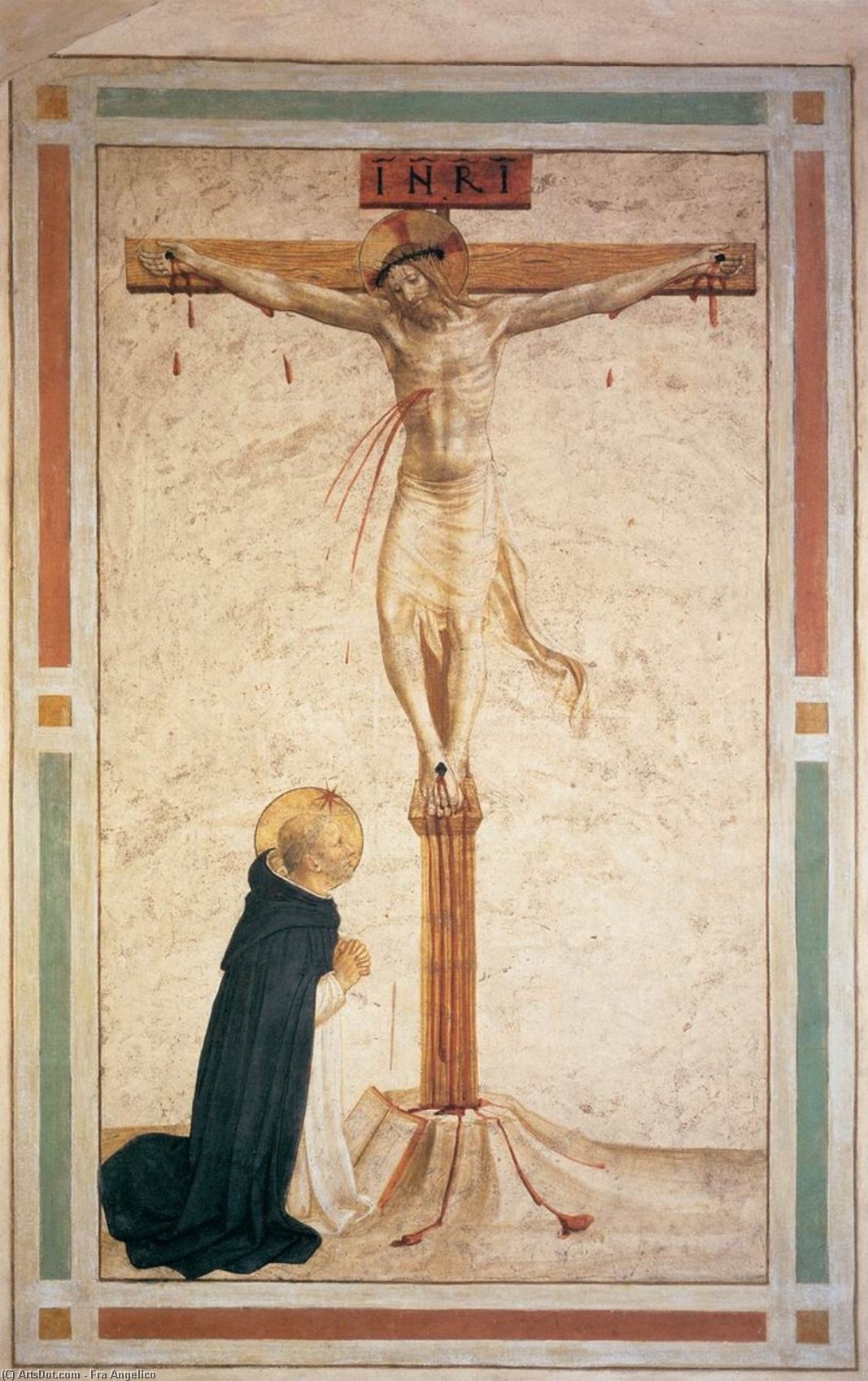
Crucifixion with St Dominic (Cell 17)
Fra Angelico, a renowned Early Renaissance Italian painter, left an indelible mark on the world of art with his frescoes at the San Marco Friary in Florence. Among these masterpieces is the poignant and spiritually charged painting titled
Crucifixion with St Dominic (Cell 17). This work, created in 1442, stands as a testament to Angelico’s skill in capturing the essence of religious devotion.
The Artistic Context
Fra Angelico, also known as Fra Giovanni da Fiesole and Fra Giovanni Angelico, was celebrated for his devout religious paintings. His contemporary monikers reflect his dual role as both an artist and a Dominican friar. The San Marco Friary, where this painting is located, houses a collection of his frescoes that adorn the cells of the monastery. These frescoes represent one of the most important artistic achievements of the Florentine Renaissance, reflecting the humanist ideals of the time while simultaneously upholding Christian piety. They stand as an exemplary illustration of how art could serve as a vehicle for spiritual contemplation and moral instruction.
Composition and Symbolism
The painting depicts the crucifixion of Jesus Christ with St. Dominic kneeling in front of it. The scene is set against a backdrop of a wall with a decorative design, adding an element of solemnity to the overall atmosphere. The colors used are predominantly red, white, and black, which symbolize sacrifice, purity, and mourning, respectively. The crucified figure on the cross, with blood dripping from his wrists and feet, is a powerful representation of Christ’s ultimate sacrifice for humanity. St. Dominic, kneeling in reverence, signifies the deep devotion and respect that the saint had for the Lord. The presence of another figure standing near the bottom left corner adds to the sense of community and shared religious experience. The meticulous attention to detail—the expressive faces of Jesus and St. Dominic, the drapery folds—underscores Angelico’s mastery of artistic technique and his ability to convey profound emotion.
Artistic Technique
Fra Angelico employed frescoes as his medium, a technique that requires precision and skill. Fresco painting involves applying pigment onto wet plaster, ensuring that it adheres permanently to the wall surface. This method demanded considerable patience and meticulous planning, reflecting the artist’s dedication to achieving visual perfection. His mastery over this technique is evident in the detailed expressions and the emotional depth conveyed by the figures in the painting. The use of tempera—pigments mixed with egg yolk—combined with glaze techniques created luminous colors and enhanced textural richness. Angelico's innovative approach to fresco painting distinguished him from his contemporaries, establishing him as a pioneer of Renaissance art.
Relevance and Legacy
The Uffizi Gallery, located in Florence, Italy, houses a vast collection of priceless works from the Italian Renaissance period and beyond. While "Crucifixion with St Dominic (Cell 17)" is not part of this gallery, it shares the same historical and artistic significance as many pieces found there. Fra Angelico's work continues to inspire artists and art enthusiasts alike. His ability to capture the essence of religious devotion through his paintings has made him a revered figure in the world of art. The painting’s enduring beauty and spiritual depth resonate with viewers today, demonstrating the timeless power of artistic expression. You can find more information about Fra Angelico and his other masterpieces at
Fra Angelico on ArtsDot.com. For those interested in exploring more of Fra Angelico's work, the following paintings are also noteworthy:
These works, like "Crucifixion with St Dominic (Cell 17)", are testaments to Fra Angelico's enduring legacy as a painter of profound religious and artistic significance.