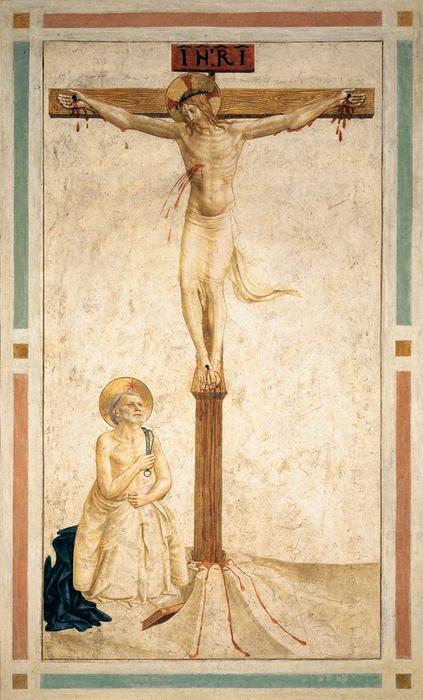
Crucifixion with St Dominic Flagellating Himself (Cell 20)
Fra Angelico’s masterpiece,
Crucifixion with St Dominic Flagellating Himself (Cell 20), stands as a testament to the profound spiritual artistry of the Early Renaissance. Painted in 1442 for the Convento di San Marco in Florence, Italy—a site revered for its artistic heritage—this fresco transcends mere depiction; it embodies an emotional and theological depth that continues to resonate with viewers centuries later. Commissioned by Cosimo de’ Medici during a period of fervent piety and artistic patronage, Cell 20 exemplifies Fra Angelico's mastery of perspective and color alongside his unwavering devotion to Christian iconography.
The Composition and Symbolism
At the heart of the scene is the crucifixion of Jesus Christ—a cornerstone of Christian belief—presented with meticulous detail against a stark white background that amplifies its solemn impact. However, what distinguishes Cell 20 from countless other depictions of Christ’s suffering is the inclusion of St. Dominic Flagellating Himself. This gesture, deeply rooted in medieval asceticism and penitence, symbolizes the saint's fervent desire for purification and his empathy with Christ’s agony. The artist skillfully portrays St. Dominic holding a whip, meticulously rendered to convey texture and movement—a deliberate choice intended to communicate the physical exertion of self-mortification alongside its spiritual significance. Beside him rests a book, likely representing Holy Scripture or liturgical texts, reinforcing the theme of prayerful contemplation and divine revelation. The overall composition is carefully balanced, guiding the viewer’s gaze towards the central figure while simultaneously emphasizing the surrounding elements—a testament to Fra Angelico's understanding of visual storytelling.
Artistic Technique and Influence
Fra Angelico’s technique—specifically fresco painting—demanded exceptional skill and precision. Applying pigments directly onto wet plaster necessitated meticulous planning and execution, resulting in vibrant colors and remarkably realistic textures that endure to this day. The fresco medium allowed for an unparalleled level of luminosity and permanence, mirroring the artist's aspiration to capture not merely visual likeness but also spiritual essence. Cell 20’s stylistic characteristics align closely with those prevalent during Fra Angelico’s time—influenced by Masaccio’s pioneering use of linear perspective and imbued with a serene elegance characteristic of Florentine art. His influence extended far beyond the walls of San Marco, inspiring subsequent generations of artists and shaping the aesthetic sensibilities of the Renaissance. The Uffizi Gallery in Florence houses numerous masterpieces reflecting Fra Angelico's legacy—a pilgrimage for any admirer of Early Renaissance art.
Relevance and Preservation
Today,
Cruifixion with St Dominic Flagellating Himself remains a poignant reminder of Fra Angelico’s artistic genius and his unwavering faith. Its preservation at the Convento di San Marco ensures that future generations can contemplate this extraordinary work—a beacon of spiritual beauty and artistic innovation within the broader context of Renaissance culture. To delve deeper into Fra Angelico's oeuvre, explore
Fra Angelico on ArtsDot—a comprehensive resource for discovering his paintings and understanding their significance. Furthermore, a visit to the Uffizi Gallery offers an unparalleled opportunity to immerse oneself in the splendor of Florentine Renaissance art.