Portrait of Matilde Juva Branca – A Masterpiece of Romantic Dignity
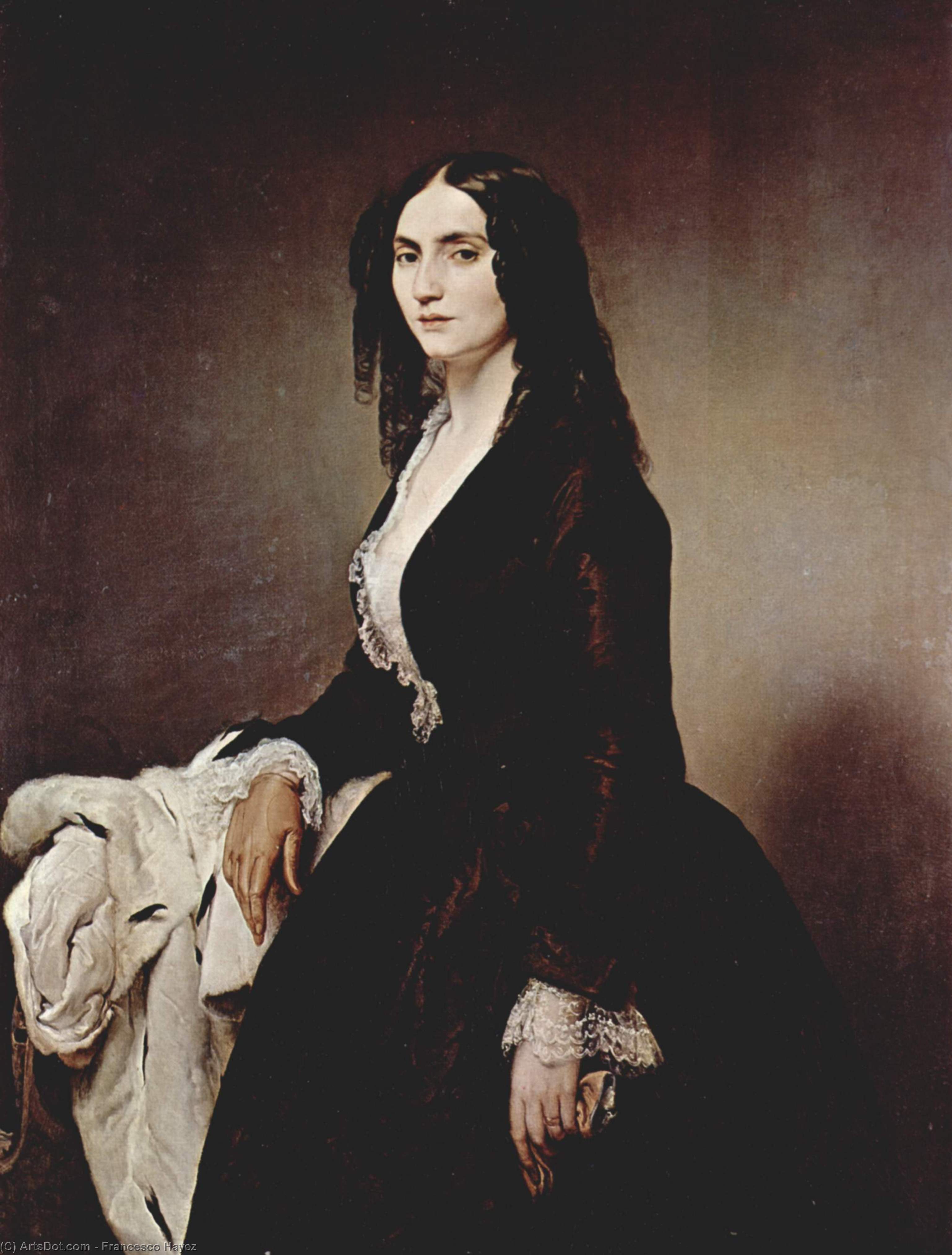
Francesco Hayez’s “Portrait of Matilde Juva Branca” (1851) stands as an emblem of Italian Romanticism, capturing a moment of quiet contemplation within the opulent setting of Milanese aristocratic society. Painted in oil on canvas, this artwork resides prominently in the Galleria d'Arte Moderna, offering visitors a chance to immerse themselves in Hayez’s masterful execution and profound artistic vision. The painting depicts Matilde Juva Branca, a celebrated opera singer known for her captivating performances alongside her father, Luigi Juva Branca – a prominent musical figure of his time.
- Style: Romanticism – Hayez skillfully blends realism with elements of romantic idealism, prioritizing emotional expression and dramatic lighting over strict adherence to Neoclassical conventions.
- Composition: The portrait’s central focus is Matilde Juva Branca herself, positioned prominently within the frame, creating a sense of dignified composure and conveying an aura of inner serenity.
- Technique: Hayez employed meticulous brushwork—particularly in rendering the fabric of Matilde's gown—to achieve remarkable textural detail and luminosity. The subtle blending of colors contributes to the painting’s atmospheric depth and enhances its visual impact.
The muted gray-brown background serves as a deliberate counterpoint to the vibrant hues of Matilde’s dress, emphasizing her presence and directing the viewer's gaze toward her face—a focal point illuminated by soft, diffused light that casts delicate shadows, adding dimensionality and conveying an impression of intimacy. The artist’s careful attention to detail extends beyond mere representation; it aims to evoke a feeling of profound emotion and contemplation.
Symbolism: The dress worn by Matilde Juva Branca symbolizes wealth and social status—a hallmark of aristocratic life in 1850s Milan. Simultaneously, her gaze suggests introspection and perhaps melancholy, inviting viewers to ponder the complexities of human experience. Hayez’s masterful portrayal transcends mere likeness; it aspires to capture a timeless essence of grace and dignity.
Historical Context: Created during the height of Romanticism—a movement characterized by an emphasis on emotion, imagination, and individualism—the portrait reflects the artistic sensibilities of its era. It aligns with broader trends in Italian art at the time, where artists sought to express profound psychological states and explore themes of beauty, passion, and moral contemplation. Hayez’s work stands as a testament to the enduring power of Romantic ideals and continues to inspire admiration for its artistic merit.