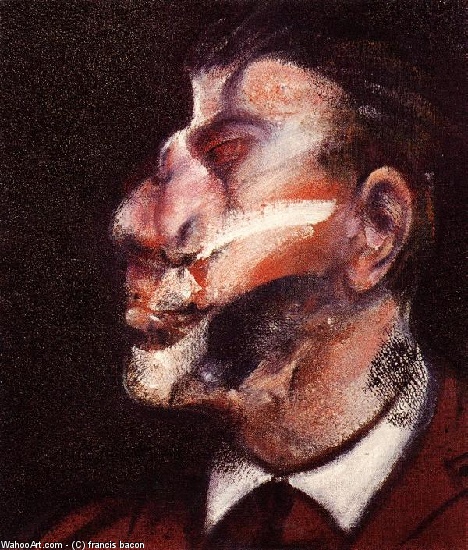
Three Studies of George Dyres, 1966 C - Francis Bacon
A haunting depiction of violence and psychological torment, this painting captures the essence of Bacon's signature style – fragmented figures rendered in unsettling colors against a dark backdrop. The man’s face is painted white, red, and black, conveying immense pain and vulnerability.
Meta Description: Explore Francis Bacon's masterpiece -
A Portrait of Trauma: Examining Francis Bacon’s “Three Studies of George Dyres”
Francis Bacon’s “Three Studies of George Dyres,” completed in 1966, stands as a chilling testament to the artist's preoccupation with violence and psychological torment. More than just a depiction of a man covered in paint—though that visual element is undeniably arresting—the painting delves into the depths of human experience, confronting viewers with uncomfortable truths about vulnerability and suffering.
Painted in Bacon’s signature style – characterized by distorted figures rendered in muted hues – “Dyres” exemplifies his masterful technique. He employed encaustic paint, a method combining beeswax resin and pigment, layering thin washes of color onto prepared wood panels. This process lends an unparalleled luminosity to the canvases, capturing subtle nuances of texture and tone that would elude more conventional mediums.
Historical Context: The Shadow of Nuclear Anxiety
The painting emerged during a period profoundly shaped by anxieties surrounding the Cold War. The Cuban Missile Crisis had brought the world to the brink of nuclear annihilation, fostering a pervasive sense of dread and prompting artists like Bacon to explore themes of fear, aggression, and disintegration. Dyres himself was a British actor known for portraying characters grappling with inner demons—a subject matter that resonated powerfully with Bacon’s artistic vision.
Symbolism: Layers of Pain and Vulnerability
Beyond its immediate visual impact, “Dyres” is laden with symbolic significance. The fragmented figure embodies the shattered psyche, reflecting the artist's own struggles with mental illness. The splashes of paint—particularly the crimson – represent bloodshed and trauma, mirroring the psychological wounds inflicted upon Dyres’ character. Bacon deliberately eschewed idealized representations, opting instead for grotesque distortions that expose the raw nerve of human emotion.
Technique: Encaustic Wax Resin Paint - A Masterful Illusion
Bacon's meticulous application of encaustic wax resin paint is crucial to understanding the painting’s emotive power. The technique allows for incredible depth and luminosity, creating an illusionistic surface that seems to pulsate with life—yet beneath this veneer lies a disturbing vulnerability. The artist painstakingly built up layers of pigment onto beeswax, achieving remarkable tonal gradations and capturing subtle variations in texture.
Emotional Impact: Confronting Darkness Within
"Three Studies of George Dyres" isn’t merely aesthetically pleasing; it demands engagement on an emotional level. It compels viewers to confront their own anxieties about mortality, vulnerability, and the darker aspects of human nature. Bacon's unflinching portrayal of suffering serves as a powerful reminder that beauty can coexist with pain—and that art has the capacity to illuminate the complexities of the human condition.
This haunting masterpiece continues to captivate audiences today, offering an unparalleled glimpse into the artist’s tormented psyche and cementing his place among the most influential figures in 20th-century art. Its enduring appeal lies not only in its technical brilliance but also in its profound exploration of human emotion—a testament to Bacon's unwavering commitment to confronting darkness within.