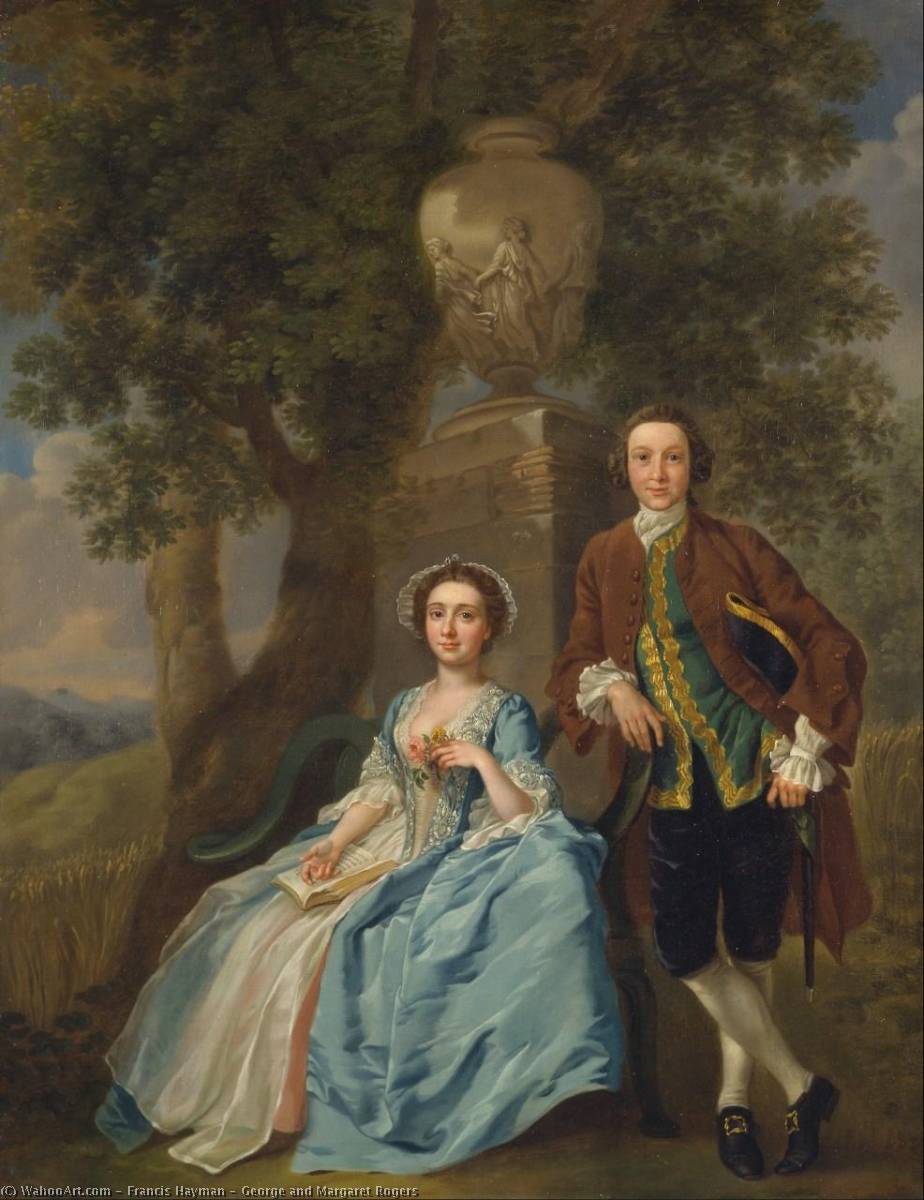
George Rogers and His Wife Margaret and His Sister Margaret Rogers
Francis Hayman’s “George Rogers and His Wife Margaret Rogers (née Tyers), and His Sister Margaret Rogers” is a captivating portrait that embodies the elegance and refinement characteristic of Rococo art. Executed in 1748-1750, this masterpiece resides within Yale Center for British Art's impressive collection, offering viewers an intimate glimpse into the lives of prominent figures during the mid-18th century.
The painting depicts George Rogers and his wife Margaret Tyers seated on a bench beneath a blossoming tree – a motif frequently employed in Rococo interiors to symbolize prosperity and familial harmony. Margaret Rogers herself is dressed in a serene blue gown, reflecting the prevailing pastel palette of the era, which prioritized softness and delicacy over bold hues.
Hayman’s masterful technique showcases his command of oil paint on canvas. He skillfully captures subtle nuances of light and shadow, creating a luminous effect that enhances the portrait's realism while simultaneously conveying an atmosphere of quiet contemplation. The artist’s meticulous attention to detail—from the folds of Margaret Rogers’ dress to the texture of the tree bark—demonstrates his dedication to artistic precision.
Beyond its aesthetic beauty, “George Rogers and His Wife Margaret Rogers” carries symbolic weight. The inclusion of Margaret's sister reinforces the importance of familial bonds within aristocratic society during this period. Furthermore, the tranquil setting suggests a desire for stability and contentment—values deeply ingrained in Rococo ideals.
This artwork exemplifies Hayman’s contribution to British art history and stands as a testament to the enduring appeal of Rococo portraiture. Its serene composition and masterful execution continue to inspire admiration and provide insight into the cultural sensibilities of the time, making it a treasured piece within Yale’s collection.