A Portrait of Dignity Amidst Shadow
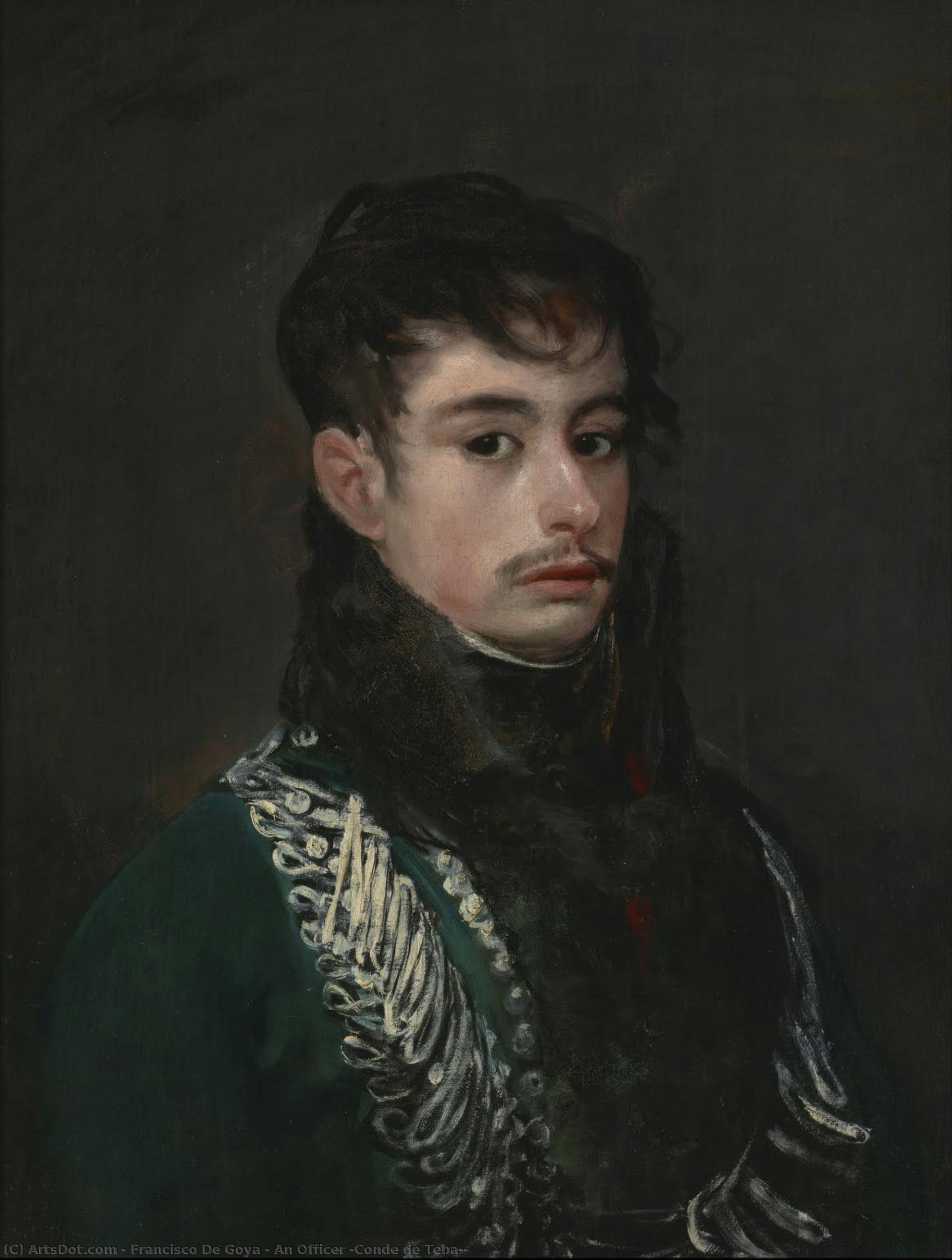
In the hauntingly beautiful realm of Francisco José de Goya y Lucientes, few works capture the tension between public duty and private introspection as poignantly as An Officer (Conde de Teba?). Painted around 1804, this masterpiece serves as a profound testament to the Romantic spirit, blending a rigorous realism with an expressive, almost psychological depth. The portrait transcends a mere military depiction; it invites the viewer into a silent dialogue with a man caught in the gravity of his station. Through Goya’s masterful hand, we do not simply see a figure of authority, but rather a soul navigating the complexities of an era defined by both Enlightenment ideals and the encroaching shadows of conflict.
The composition is anchored by a classic bust-length format, a tradition rooted in the Baroque era that Goya brilliantly reinterprets through a modern lens. By positioning the subject against a dark, indeterminate background, the artist strips away all worldly distractions, forcing an intimate encounter with the sitter's gaze. The use of chiaroscuro is nothing short of dramatic; light spills from an unseen source to the left, sculpting the contours of the officer’s face and illuminating the intricate textures of his uniform while allowing other features to recede into mystery. This interplay of light and shadow does more than create volume—it mirrors the dualities of the human condition: the visible strength of the soldier versus the hidden vulnerabilities of the man.
Technique, Texture, and the Romantic Brush
Goya’s technical execution in this piece is a masterclass in controlled spontaneity. Eschewing the meticulous, polished finish of his earlier courtly works, he employs a looser, more gestural brushwork that priorits the essence of the subject over photographic precision. One can almost feel the tactile variety within the oil paint; the soft, slightly disheveled strands of the man's hair contrast sharply with the rugged, heavy texture of the fur collar. The silver embroidery on his jacket and the fine lines of his military regalia are rendered with a sketchy, immediate quality that lends the portrait a sense of living breath, as if the officer has just paused for a moment of reflection.
The color palette is intentionally restrained, dominated by a somber symphony of greens, deep browns, and blacks, punctuated only by subtle hints of silver and white. This muted tonality contributes to an atmosphere of solemnity and weight. For the discerning collector or interior designer, this piece offers a sophisticated anchor for a room. Its subdued colors allow it to integrate seamlessly into elegant, moody spaces—such as a private study, a library, or a formal gallery—where its quiet intensity can command attention without overwhelming the surrounding decor.
A Legacy of Emotion and Historical Resonance
To look upon this portrait is to witness Goya at a pivotal moment in his career. Created during a period of immense political upheaval in Spain, the painting carries the weight of historical anxiety. The military uniform symbolizes power, hierarchy, and the rigid structures of authority, yet the officer's expression suggests a deeper, more personal struggle with the burdens of command and the uncertainties of a changing world. There is a palpable sense of gravitas that resonates long after one turns away from the canvas.
For those seeking to bring a piece of art history into their homes, a high-quality reproduction of An Officer offers more than just aesthetic beauty; it provides a window into the very soul of Spanish Romanticism. It is an acquisition for the lover of fine art who appreciates works that provoke thought, evoke emotion, and stand as enduring symbols of human dignity amidst the inevitable shadows of time.