A Portrait of Anxiety: Decoding Goya’s “Bad Night”
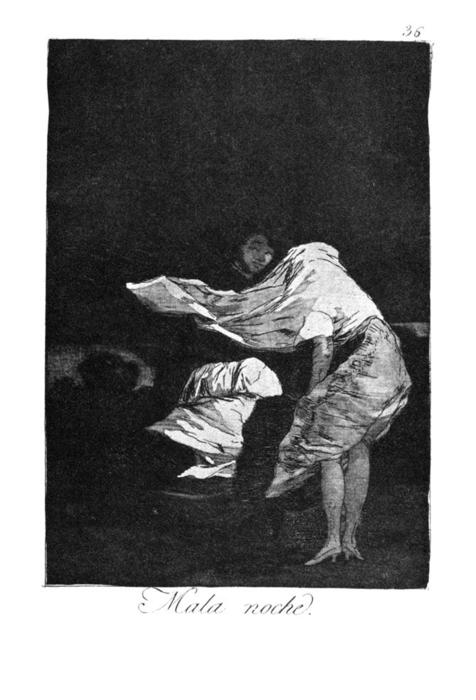
Francisco José de Goya y Lucientes's etching, "Bad Night," is more than just a depiction of a woman caught in a tempestuous wind; it’s a profound exploration of psychological turmoil and a masterful demonstration of Romantic artistic principles. Created in 1799 during his prolific period—specifically as part of “Los Caprichos,” Goya's ambitious series aimed at satirizing societal ills—the artwork transcends its formal elements to deliver a visceral experience of unease and introspection.
- Composition & Narrative: The diagonal thrust of the woman’s body against the billowing fabric immediately establishes a dynamic tension, mirroring the internal struggle conveyed by the image. Two indistinct figures in the background serve as anchors, grounding the scene but simultaneously emphasizing the woman's isolation—a deliberate tactic to heighten emotional impact.
- Technical Brilliance: Goya’s etching technique—employing copper plates treated chemically to create a raised surface—allowed for unparalleled tonal control and textural detail. Extensive hatching and cross-hatching dominate, meticulously rendering the fabric’s folds and hair with astonishing accuracy. This painstaking process underscores Goya's commitment to realism while simultaneously channeling his expressive vision.
- Color Palette & Mood: Stripped bare of color, “Bad Night” operates entirely within shades of gray—a conscious choice that amplifies the artwork’s melancholic atmosphere. The monochromatic palette reinforces the sense of despair and vulnerability at the core of the composition.
Symbolism Beyond Surface Appearance
The etching's title itself – “Bad Night” – speaks volumes about its thematic concerns. It transcends a literal description of weather, functioning as a metaphor for nightmares, anxieties, and repressed emotions—a hallmark of Romantic art’s preoccupation with the subconscious mind. The woman’s obscured face adds to this enigmatic quality, inviting viewers to contemplate her inner state and projecting their own fears onto her visage.
Furthermore, Goya's deliberate use of perspective contributes to the artwork’s unsettling effect. The flattened background figures subtly diminish their importance, directing attention solely to the central figure—a technique designed to intensify our empathy for her predicament and heighten the drama of the scene.
Historical Context & Artistic Legacy
"Bad Night" resides firmly within Goya's broader artistic project – “Los Caprichos.” This series served as a scathing critique of Spanish society, tackling issues ranging from superstition to aristocratic decadence. By portraying human vulnerability and psychological distress with unflinching honesty, Goya challenged the conventions of Neoclassical art and paved the way for Impressionism and Expressionism centuries later.
Its influence can be seen in subsequent artists who sought to capture emotional truth through masterful technique—a testament to Goya’s enduring legacy as one of the most innovative and emotionally resonant figures in European art history. Reproductions of “Bad Night” continue to captivate audiences today, offering a glimpse into the artist's profound understanding of human experience.
Interior Design Inspiration
The stark simplicity of "Bad Night"—its muted palette and dramatic composition—provides invaluable inspiration for interior designers seeking to evoke mood and atmosphere. Consider incorporating textures reminiscent of Goya’s etching technique, such as linen or wool fabrics in shades of gray, to create spaces that resonate with introspection and understated elegance.