Can't Anyone Untie Us.: A Romantic Struggle for Liberation
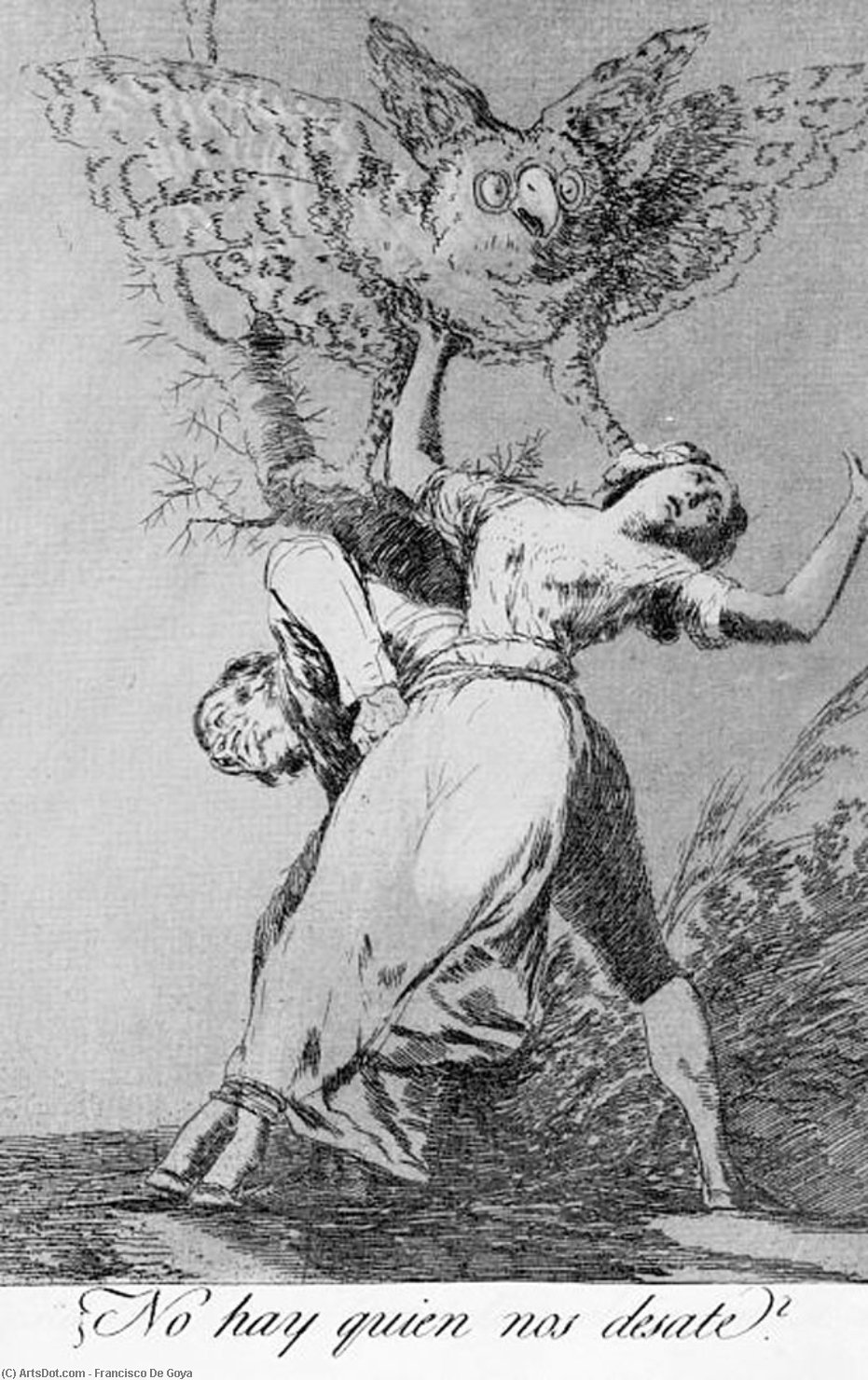
Francisco José de Goya y Lucientes’s “Can’t Anyone Untie Us,” etched in 1799, transcends mere visual representation; it embodies the anxieties and fervent idealism of Romanticism. This arresting print captures a moment of profound disorientation—a woman suspended aloft by a colossal bird, its wings bearing another bird laden with a branch—a tableau that speaks volumes about vulnerability and the relentless pursuit of freedom amidst oppressive forces.
- Artist’s Background: Born in Fuendetodos, Aragon, Goya’s journey from provincial artist to court painter and ultimately, to chronicler of human suffering cemented his place as Spain's most influential artistic voice of the late 18th century. His formative years at fourteen under José Luzán y Martinez instilled a mastery of traditional techniques before he honed his skills with Anton Raphael Mengs, shaping him into a figure destined for greatness.
- Composition & Technique: The print’s asymmetrical composition—dominated by the bird and bisected diagonally by the woman—creates palpable dynamism. Goya's meticulous etching technique, incorporating aquatint for tonal variation, meticulously renders feathers and drapery folds, utilizing hatching and crosshatching to generate depth and volume. This masterful execution reflects the Romantic preoccupation with dramatic expression and emotional intensity.
- Symbolism & Interpretation: “Can’t Anyone Untie Us?” operates on multiple symbolic levels. The bird figures represent both liberation and constraint—a paradoxical duality mirroring humanity's struggle against external pressures. The woman embodies vulnerability, trapped in a precarious position, prompting contemplation about resilience and defiance.
- Historical Context: Created during the turbulent Napoleonic Wars, Goya’s “Los Caprichos” series served as a scathing critique of societal ills—ignorance, vanity, and injustice—reflecting the Romantic spirit's disillusionment with Enlightenment ideals. The print’s haunting atmosphere captures the pervasive sense of unease that characterized the era.
- Emotional Resonance: Viewing “Can’t Anyone Untie Us.” evokes feelings of anxiety and frustration, mirroring the woman’s palpable distress. Goya’s artistic vision compels us to confront uncomfortable truths about human condition—a testament to his enduring legacy as a pioneer of Romantic art.
Detailed Examination: Line and Tone
Goya's unparalleled skill lies in his ability to convey emotion through line and tone. The etching’s delicate lines meticulously delineate textures, capturing the intricate details of avian plumage and fabric folds with astonishing precision. Aquatint shading creates subtle gradations of tone—a technique that lends depth and luminosity to the image—enhancing its dramatic impact. This masterful manipulation of tonal values underscores Goya's commitment to realism while simultaneously amplifying the print’s expressive power.
Further Exploration: Artistic Influences & Legacy
Inspired by artists like Rembrandt and Caravaggio, Goya pushed the boundaries of artistic convention, forging a path toward modern art. His unflinching portrayal of human suffering—evident in his monumental paintings such as “Saturn Devouring Its Own Son”—established him as a prophet of despair and a champion of compassion. "Can't Anyone Untie Us." stands alongside these masterpieces as an emblem of Romantic artistic innovation, securing Goya’s place as one of the most significant figures in European art history.