A Window into the Soul: Unveiling Goya’s Portrait of Martín Zapater
Francisco José de Goya y Lucientes, a name synonymous with both profound observation and unsettling vision, gifted us with an extraordinary body of work that continues to resonate across centuries. Within his vast oeuvre lies the “Portrait of Martín Zapater” (1797), a remarkably intimate piece that transcends mere likeness and offers a glimpse into the complexities of friendship, social standing, and the burgeoning Romantic sensibility of early 19th-century Spain. This painting isn’t simply a depiction of a man; it's an invitation to contemplate the quiet dignity and subtle emotions held within a single gaze.
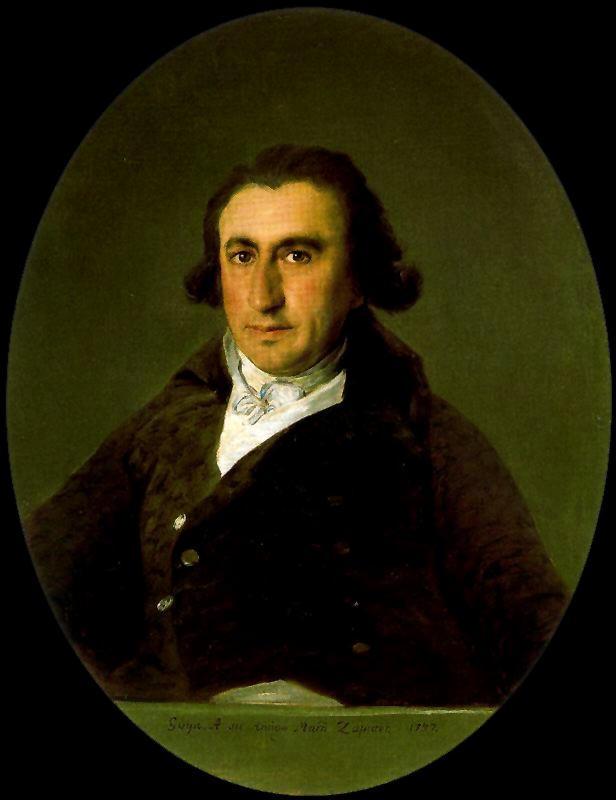
The portrait itself is rendered in oil on canvas, measuring a modest 83 by 65 centimeters – a size that lends it an immediate sense of intimacy. Goya’s masterful use of chiaroscuro immediately draws the viewer's eye to Martín Zapater’s face, bathed in a dramatic light emanating from the left side of the composition. This technique—the skillful manipulation of light and shadow—creates a powerful three-dimensionality, imbuing the sitter with an almost palpable presence. The dark background serves not as mere backdrop but as a deliberate device to amplify the luminosity focused on Zapater’s features, emphasizing his intelligence and affability.
The Man Behind the Brush: Martín Zapater and His Connection to Goya
Martín Zapater y Clavería (1747-1803) was a prominent Aragonese merchant, a man of considerable wealth and influence within his community. His life, as revealed through surviving correspondence with Goya, offers a fascinating insight into the social circles of the time. The two men forged a deep friendship, documented in over 140 letters exchanged between them – a testament to their shared intellectual curiosity and mutual respect. This personal connection is crucial to understanding the painting; it wasn’t commissioned for royal patronage but rather painted as a heartfelt gift from Goya to his friend, reflecting a genuine affection and desire to capture Zapater's essence.
Zapater’s attire—a dark coat adorned with silver buttons and a crisp white neckcloth—is characteristic of the late 18th-century elite. These details ground the portrait in its historical context, providing clues about the sitter’s social standing and the prevailing fashions of the era. However, it's not merely the clothing that speaks to Zapater’s character; it is his expression – a subtle smile playing on his lips, combined with a direct, intelligent gaze—that truly captivates the viewer. Goya has skillfully captured a sense of quiet confidence and approachable charm.
Romanticism in Miniature: Symbolism and Emotional Depth
The “Portrait of Martín Zapater” is undeniably a product of the Romantic movement, a period characterized by an emphasis on emotion, individualism, and the sublime. Goya’s decision to place Zapater within a dark, undefined space—a deliberate departure from the formal portraits of earlier eras—reflects this shift in artistic sensibility. The painting isn't about showcasing opulent wealth or rigid social hierarchy; it’s about exploring the inner life of an individual. The letter he holds, subtly visible in the composition, is a symbolic gesture – a representation of communication and connection, further reinforcing the bond between the artist and his subject.
Beyond its historical context, the portrait possesses a remarkable emotional depth. Goya’s ability to convey Zapater's intelligence, warmth, and perhaps even a hint of melancholy is truly exceptional. The painting invites contemplation, prompting us to consider not just who Martín Zapater was, but also what he represented – a symbol of friendship, intellect, and the quiet dignity of human experience. It stands as a poignant reminder of Goya’s genius in capturing the complexities of the human spirit.