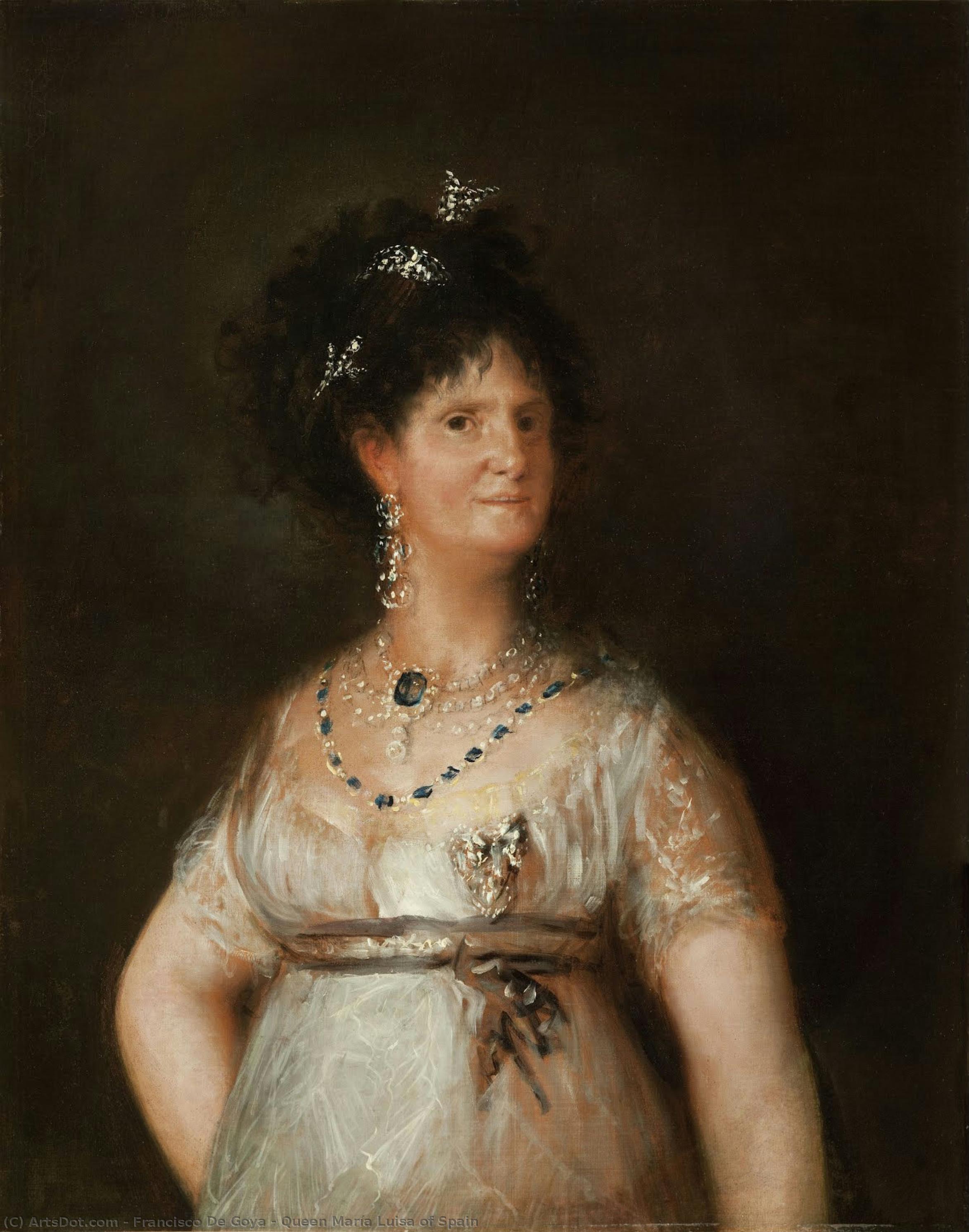
A Portrait Steeped in Tradition: María Luisa of Spain by Francisco Goya
Francisco José de Goya y Lucientes’s “María Luisa of Spain” transcends mere portraiture; it embodies the spirit of Enlightenment aristocracy and foreshadows the anxieties of Romanticism. Painted in 1799, during Charles IV’s reign, this monumental canvas captures Queen María Luisa's regal presence against a backdrop of austere elegance—a deliberate contrast to the opulent excesses of previous monarchs. Goya, already grappling with personal illness and disillusionment, channeled his artistic genius into crafting an image that simultaneously celebrates royal dignity and subtly hints at vulnerability.
- Subject Matter: The portrait depicts María Luisa seated on a throne draped in black velvet, adorned with ermine fur—a symbol of imperial authority and nobility. Her gaze is direct, unwavering, conveying confidence and composure despite the melancholic undertones of the era.
- Style & Technique: Goya employed a masterful blend of Rococo and Neoclassical influences. The meticulous rendering of fabrics and textures—particularly the velvet drapery—demonstrates his unparalleled skill in capturing realistic detail. However, unlike traditional portraits of the time, Goya eschewed idealized beauty, opting instead for a nuanced portrayal that reflects María Luisa’s inner life.
- Historical Context: Painted amidst the turbulent Napoleonic Wars and the decline of Habsburg dominance, “María Luisa” speaks to anxieties about stability and succession. The somber palette—dominated by blacks, grays, and muted reds—mirrors the pervasive mood of pessimism that characterized Goya’s artistic output during this period.
- Symbolism: Beyond its formal grandeur, the portrait is laden with symbolic significance. The black velvet symbolizes mourning for the deceased Habsburg monarchs, reflecting the anxieties surrounding dynastic succession. The ermine fur represents imperial power and purity—a deliberate assertion of royal legitimacy in a time of crisis.
Goya’s Mastery of Light and Shadow
Goya's innovative use of chiaroscuro – dramatic contrasts between light and dark – elevates the portrait beyond mere representation, imbuing it with emotional depth. Notice how Goya skillfully illuminates María Luisa’s face, highlighting her features while simultaneously obscuring parts of her body in shadow. This technique creates a sense of intimacy and vulnerability, subtly undermining the idealized image prevalent in aristocratic art. It's a deliberate departure from the polished surfaces of earlier portraits, reflecting Goya’s evolving artistic vision.
- Composition: The pyramidal composition reinforces María Luisa’s dominance and conveys stability—yet it simultaneously draws attention to her gaze, inviting contemplation about her inner thoughts.
- Color Palette: The muted color palette contributes to the portrait's melancholic atmosphere. Goya eschewed vibrant hues, favoring shades of gray and brown that evoke a sense of solemnity and introspection.
A Legacy Enduring Through Time
“María Luisa of Spain” remains one of Goya’s most celebrated works—a testament to his artistic genius and his ability to capture the complexities of human emotion within a formal framework. Its enduring appeal lies in its masterful technique, its profound psychological insight, and its evocative portrayal of a pivotal moment in European history. Reproductions of this iconic painting continue to inspire interior designers and collectors alike, offering a glimpse into the artistic sensibilities of the Enlightenment and foreshadowing the dramatic upheavals of the Romantic era—a timeless masterpiece that speaks volumes about power, vulnerability, and the enduring fascination with portraiture as a form of artistic expression.