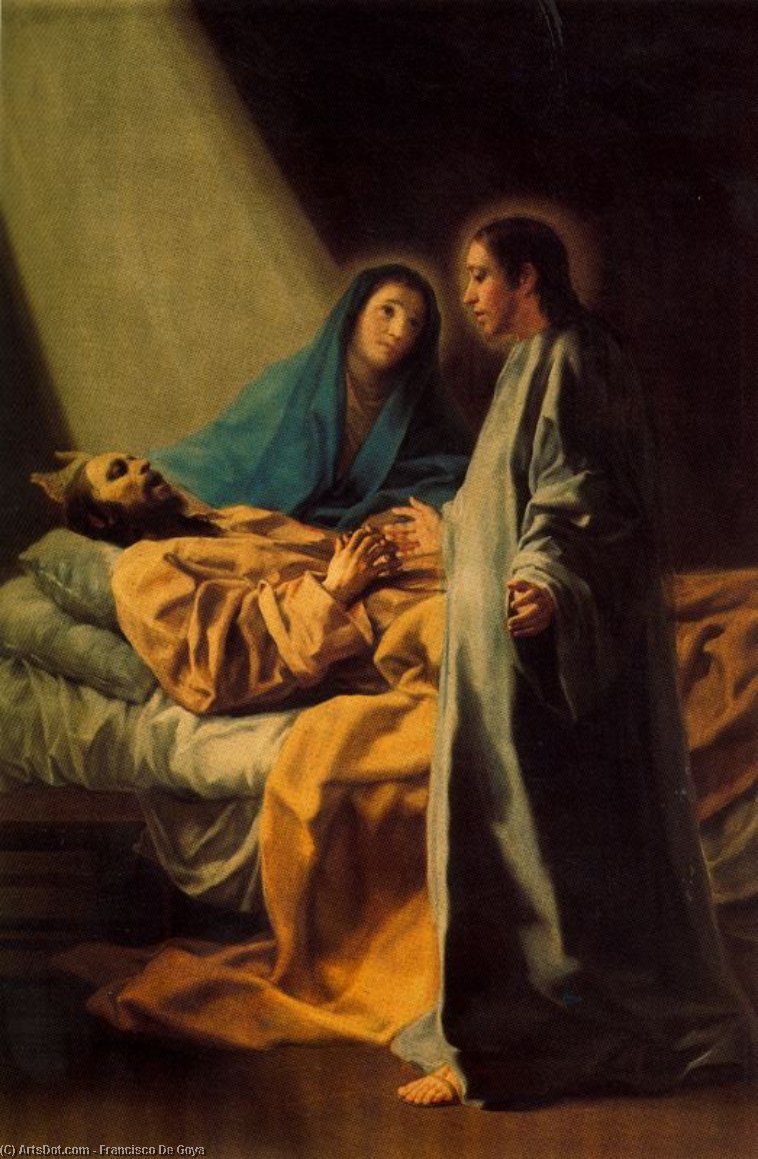
Saint Joseph's Dream (El Sueño de San José) is a baroque masterpiece commissioned for Zaragoza's chapel, depicting Saint Joseph in bed with Mary and Jesus. Goya’s meticulous attention to detail captures the solemnity of the scene, utilizing chiaroscuro lighting to heighten emotional impact. The painting reflects Goya's artistic prowess and his engagement with religious iconography.
Saint Joseph's Dream: A Baroque Meditation on Faith and Family
Francisco José de Goya y Lucientes’ “Saint Joseph’s Dream” stands as a poignant emblem of the Baroque era, capturing not merely a biblical narrative but also the profound anxieties simmering beneath the surface of Spanish society in the late 18th century. Commissioned for the private chapel of Duke Sobradiel Palace in Zaragoza, this painting transcends mere illustration; it's an immersive experience into a moment of spiritual contemplation rendered with masterful skill and imbued with emotional depth.
- Subject Matter: The scene depicts Saint Joseph, Mary, and Jesus asleep in bed—a familiar motif representing divine protection and familial devotion. However, Goya’s portrayal deviates from conventional depictions, prioritizing psychological realism over idealized beauty.
- Style & Technique: Executed in the Baroque style, “Saint Joseph’s Dream” showcases Goya's signature chiaroscuro lighting – dramatic contrasts between light and dark—creating a palpable sense of intimacy and highlighting the figures’ expressions. The artist skillfully employs oil paint on canvas, layering textures to convey both solidity and vulnerability.
- Historical Context: Zaragoza during Goya’s time was experiencing significant social and political upheaval following Napoleon's invasion. This turbulent period fueled anxieties about faith and morality, themes powerfully reflected in Goya’s oeuvre. The chapel commission itself speaks to the Duke’s desire for a spiritually uplifting space amidst uncertainty.
- Symbolism: Beyond the biblical narrative, the painting resonates with broader symbolic meanings. The dog symbolizes vigilance and guardianship—a comforting presence alongside the sleeping figures—while the dining table represents earthly sustenance and domestic tranquility. Goya's deliberate inclusion of these elements underscores the importance of both spiritual contemplation and everyday life in achieving wholeness.
- Emotional Impact: “Saint Joseph’s Dream” evokes a feeling of serene solemnity, yet beneath the surface lies an unspoken tension—a recognition of human fragility confronted by divine grace. Goya's masterful manipulation of light and shadow compels viewers to confront their own beliefs and contemplate the mysteries of faith.
The painting’s meticulous detail – from the folds of Joseph’s robe to the subtle shading on Mary’s face – exemplifies Goya’s dedication to capturing human emotion with unparalleled accuracy. It's a testament to his ability to transform religious iconography into an emotionally resonant artwork that continues to captivate audiences centuries later.