A Glimpse into Baroque Life: Francisco de Goya’s “The Pottery Merchant”
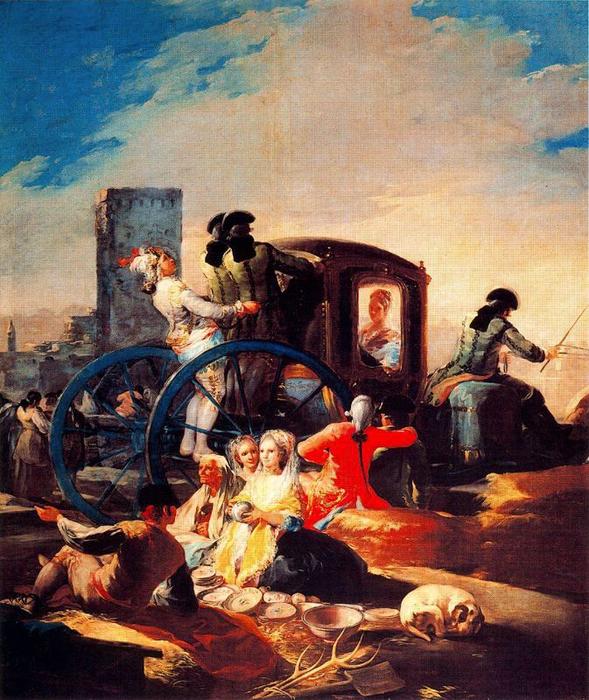
This dynamic painting by Francisco de Goya offers a captivating snapshot of 18th-century urban life, brimming with the energy and theatricality characteristic of the Baroque style. “The Pottery Merchant” isn't merely a depiction of a bustling street scene; it’s a carefully constructed narrative about society, wealth, and human interaction.
Subject Matter & Narrative
At its heart, the painting centers around a wealthy gentleman being conveyed in a carriage – a clear symbol of status and privilege. He is surrounded by a throng of figures: onlookers captivated by his presence, humble street vendors attempting to ply their trade, and beggars pleading for assistance. The scene unfolds with a sense of immediacy, drawing the viewer directly into the heart of the action. Goya masterfully captures the diverse tapestry of life, highlighting both its grandeur and its hardships.
Artistic Style & Technique
Goya’s technique is immediately recognizable in his loose, expressive brushwork and dramatic use of light and shadow – *chiaroscuro*. The painting exhibits a flattened perspective, common in Baroque compositions, which intensifies the sense of immediacy and draws the eye towards the central figures.
Oil paints on canvas are expertly layered to create texture and volume, particularly noticeable in the clothing and faces of the characters. Warm tones – yellows, reds, and browns – dominate the palette, evoking a sense of warmth and vitality, while cooler blues in the sky provide contrast and depth. The impasto technique adds a tactile quality, making the scene feel almost tangible.
Historical Context & Goya’s Evolution
Francisco de Goya (1746-1828) was a pivotal figure bridging the gap between the Old Masters and modern art. Initially trained in the traditional style, he evolved throughout his career, absorbing influences from Rococo and Neoclassicism before forging his own unique path. This work reflects his early period as a court painter, showcasing his ability to depict scenes of aristocratic life with both skill and subtle social commentary. However, even within this seemingly conventional subject matter, hints of the darker, more critical themes that would come to define his later works are present.
Symbolism & Social Commentary
“The Pottery Merchant” is rich in symbolic meaning. The stark contrast between the opulence of the gentleman’s carriage and the poverty of the beggars serves as a potent commentary on social inequality. Goya doesn't offer easy answers or moral judgments; instead, he presents a complex portrayal of society, inviting viewers to contemplate the disparities of wealth and power.
The pottery merchant himself, though not central, represents the working class striving for livelihood within this stratified system.
Emotional Impact & Aesthetic Appeal
The painting evokes a sense of both excitement and unease. The bustling energy of the scene is captivating, yet the underlying tension created by the social contrasts adds a layer of complexity. It’s a work that rewards close observation, revealing new details and nuances with each viewing. For interior designers, “The Pottery Merchant” offers a striking focal point – its warm color palette and dynamic composition would complement both traditional and contemporary spaces. Collectors will appreciate it as a prime example of Goya's early mastery and his ability to capture the spirit of an era.
Key Features
- Style: Baroque
- Artist: Francisco de Goya
- Medium: Oil on Canvas
- Themes: Social Commentary, Wealth & Poverty, Urban Life