A Descent into Darkness: Analyzing “Trials” by Francisco José de Goya
Francisco José de Goya y Lucientes’s etching print, “Trials,” stands as a chilling testament to the artist's unflinching gaze upon human folly and societal corruption. Executed in 1799 during his tumultuous period of artistic experimentation—a time marked by an increasingly profound engagement with psychological torment and grotesque imagery—the artwork transcends mere visual representation; it’s a deliberate provocation designed to unsettle the viewer and confront them with uncomfortable truths.
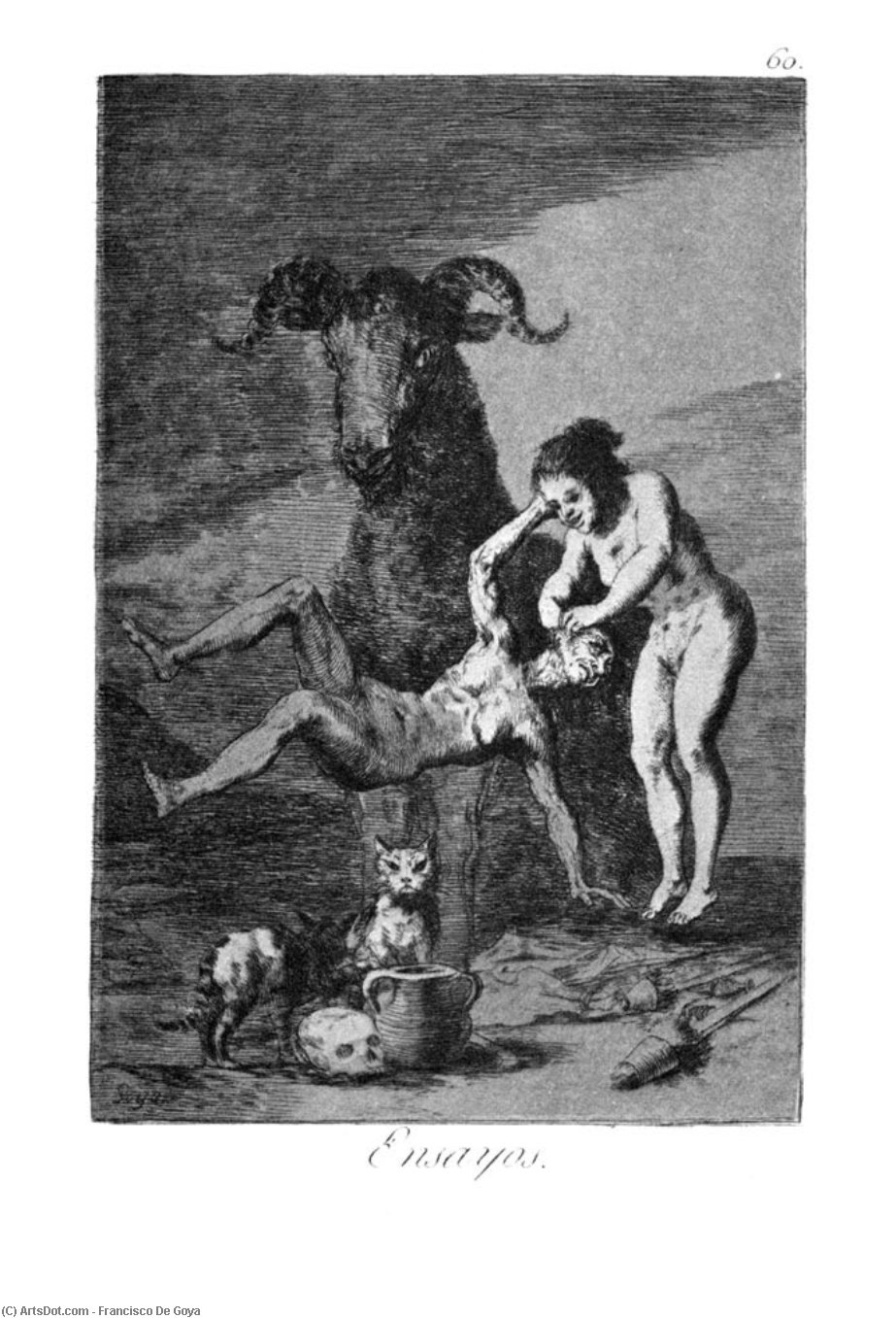
- Subject Matter & Context: The print depicts a disturbing tableau featuring human figures intertwined with animals in what appears to be a ritualistic scene, drawing heavily from pagan traditions and hinting at anxieties surrounding religious dogma. It’s a direct response to the intellectual ferment of the Enlightenment, where Goya questioned established beliefs and championed individual liberty—a stance that would ultimately lead him into exile and solidify his reputation as a prophet of despair.
- Composition & Technique: The densely packed composition contributes to an overwhelming sense of claustrophobia. Dominating the background is a colossal goat’s horn, symbolizing paganism and temptation – a deliberate juxtaposition against the human figures. Goya's masterful use of etching—a technique involving transferring ink onto a copper plate and pressing it onto paper—creates remarkable tonal variations and textures through meticulous hatching and cross-hatching. These lines aren’t merely decorative; they convey palpable tension and contribute to the unsettling atmosphere.
- Symbolism & Emotional Impact: Beyond its formal elements, “Trials” resonates with profound symbolic significance. The distorted figures embody vulnerability and moral decay, mirroring Goya's own disillusionment with the aristocracy and his preoccupation with themes of suffering and death. The print’s emotional impact is undeniable—a visceral reaction to the horror and psychological complexity it presents.
- Style & Influence: Goya’s style exemplifies the Romantic movement’s rejection of Neoclassical ideals, prioritizing expressive emotion over rational order. His influence extends far beyond his immediate contemporaries, shaping subsequent artistic explorations into darkness and psychological realism—a legacy that continues to inspire artists today.
The artwork's monochromatic palette reinforces its bleakness, emphasizing the stark contrasts between light and shadow and amplifying the textural qualities achieved through etching. Consider commissioning a high-quality reproduction to bring Goya’s haunting vision into your home—a striking piece that speaks volumes about humanity’s capacity for both beauty and barbarity.