A Moment of Joy: Frans Hals’ “Laughing Child”
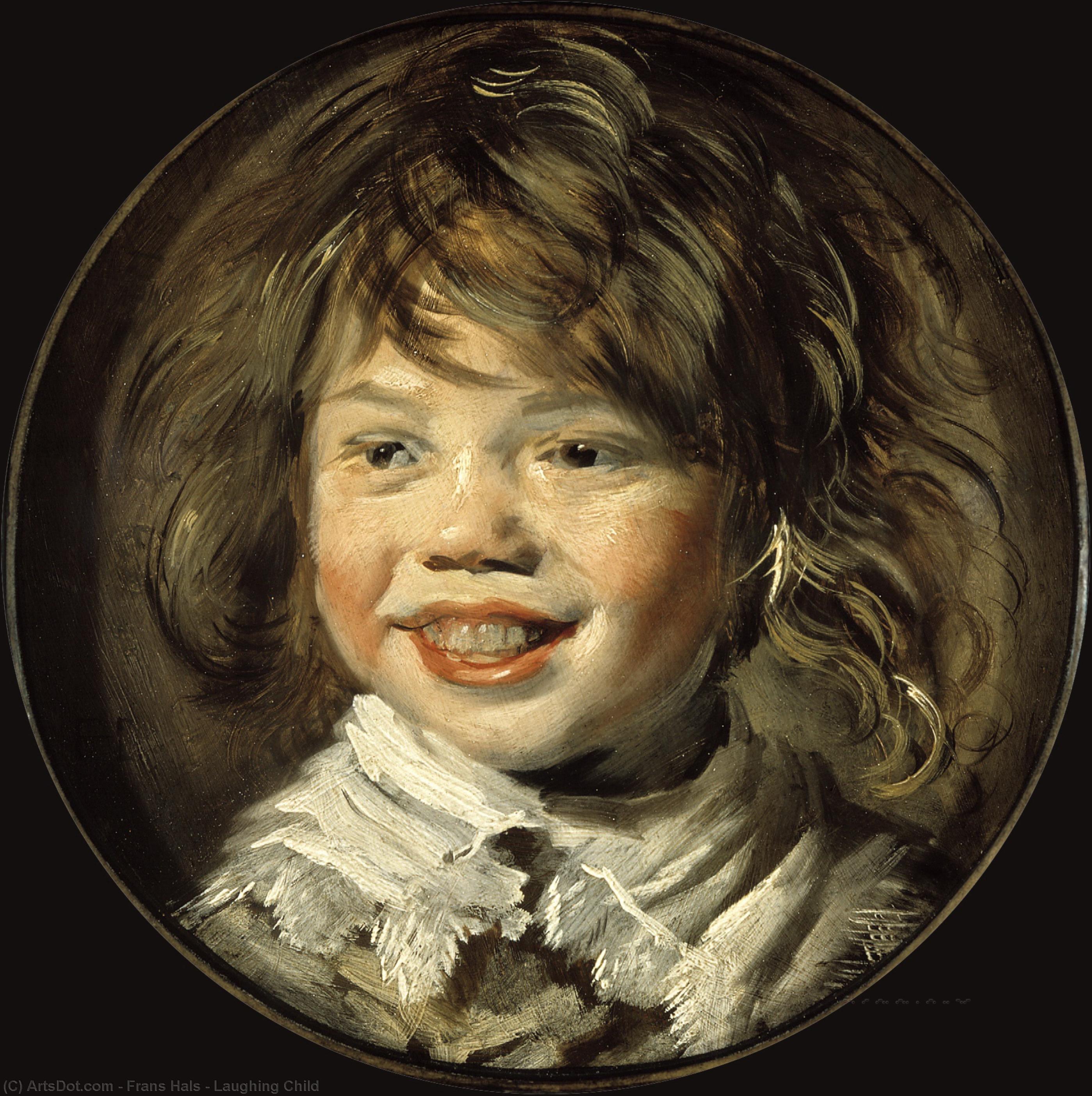
Frans Hals' "Laughing Child," painted around 1620-1625, isn’t merely a portrait; it’s a fleeting capture of pure, unadulterated joy. This small panel painting, measuring just 29 x 29 cm, radiates an immediacy and vitality rarely achieved in the formal portraits of its time. It's a testament to Hals’ revolutionary approach – his ability to distill personality and emotion onto canvas with remarkable speed and spontaneity.
The subject is a young boy, likely a member of Hals’ circle in Haarlem, caught mid-laughter. His face, illuminated by an unseen light source, is tilted upwards, revealing a wide, open mouth frozen in a blissful grin. The details are remarkably rendered: the slightly ruffled white shirt, the delicate collar, and the loose strands of his dark hair all contribute to a sense of tangible realism. Yet, it’s not the meticulous detail that captivates; it's the *feeling* conveyed – an infectious delight that seems to spill out from the canvas itself.
The Revolutionary Brushstroke
Hals was a master of the loose brushstroke, a technique deliberately eschewed by many of his contemporaries who favored painstaking detail and polished surfaces. In “Laughing Child,” this is most evident in the handling of the hair and clothing. The brushstrokes are visible, energetic, and almost impulsive – they mimic the movement of laughter itself. This approach wasn’t about perfect representation; it was about capturing the *essence* of the subject, imbuing the painting with a sense of immediacy and life.
Unlike the carefully constructed poses typical of court portraits, this boy is presented in an informal, almost candid manner. He isn't posed for the camera; he’s simply *being*. This relaxed posture, combined with Hals’ distinctive brushwork, creates a remarkably intimate connection between the viewer and the subject – as if we too are privy to his moment of happiness.
A Window into Haarlem Society
"Laughing Child" offers a fascinating glimpse into 17th-century Haarlem society. Hals was deeply embedded in the city’s vibrant artistic community, and his portraits often depicted members of the merchant class – a prosperous group that fueled Haarlem's burgeoning economy. The boy’s attire suggests a comfortable upbringing, hinting at a family with modest wealth.
The painting’s small size also speaks to its purpose: likely a private commission intended for display within a domestic setting. It wasn’t designed for grand public exhibition; rather, it was meant to bring joy and warmth to a particular home. The inclusion of the dark frame further emphasizes this intimacy, creating a framed vignette that draws the viewer into the scene.
Symbolism and Emotional Resonance
While seemingly simple, “Laughing Child” is rich in symbolic meaning. Laughter itself represents innocence, joy, and freedom – qualities highly valued during the Renaissance and Baroque periods. The boy’s open expression suggests a lack of inhibition, a willingness to embrace life's pleasures without reservation.
Hals’ ability to capture such a potent emotion with such economy is truly remarkable. “Laughing Child” isn’t just a portrait; it’s an invitation – an invitation to remember the simple joys of childhood and to appreciate the beauty of unadulterated happiness. It remains one of Hals' most beloved works, celebrated for its infectious energy and timeless appeal.