A Moment Frozen in Silk and Spirit
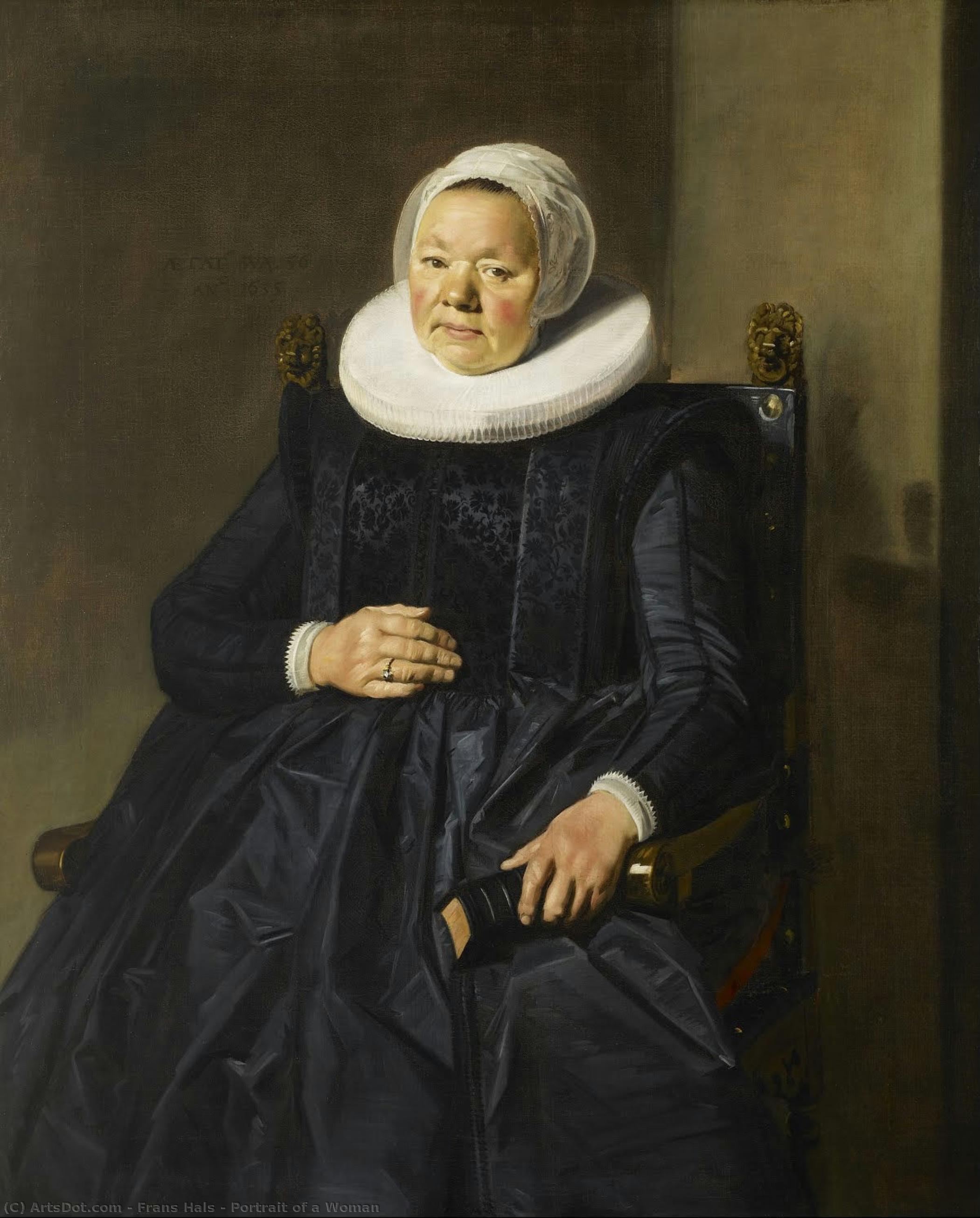
To stand before Frans Hals’s Portrait of a Woman is to encounter a soul captured with startling immediacy. Painted in 1635, this masterpiece transcends the mere recording of a face; it offers a profound window into the quiet dignity of the Dutch Golden Age. The sitter, an unidentified woman recorded as being fifty-six years of age, sits with a presence that is both commanding and serene. Dressed in the somber yet luxurious textures of black silk and a brocaded bodice, she embodies the prosperity of her era. There is a palpable weight to her form, a solidness that suggests a life built on stability and social standing. As she holds her Bible or prayerbook, the painting whispers tales of devotion and a well-established existence, inviting the viewer to contemplate the intersection of earthly wealth and spiritual depth.
The brilliance of this work lies in Hals’s revolutionary approach to the brush. Eschewing the stiff, overly polished finishes favored by many of his contemporaries, Hals employed a vigorous, blunt brushwork that breathes life into the canvas. His technique is characterized by a spontaneous energy—a loose, expressive application of paint that allows light to dance across the folds of her ruffled collar and the sheen of her dark attire. This "alla prima" style creates an illusion of movement, as if the sitter has only just settled into her pose. For the discerning collector or interior designer, this technique provides a dynamic focal point; the painting does not merely sit on a wall but actively engages with the light and atmosphere of the room it inhabits.
The Art of Character and Composition
Beyond the technical mastery, the emotional resonance of the portrait is found in its unflinching objectivity. Hals does not seek to idealize his subject through soft-focus romanticism; instead, he captures her features with a raw, honest vitality. The ruddy cheeks and steady gaze suggest a woman of character—resilient, perhaps even formidable. This sense of authenticity is bolstered by the unadorned, plain background, a hallmark of Hals’s portraiture that directs all psychological weight toward the subject herself. By stripping away distracting scenery, the artist ensures that the viewer's connection to the sitter remains intimate and uninterrupted.
For those looking to integrate such a profound piece into a curated space, the Portrait of a Woman offers unparalleled versatility. Its palette—dominated by deep blacks, rich textures, and subtle skin tones—complements both classical and contemporary interiors. Whether placed in a sunlit gallery or a moody, library-style study, the painting serves as an anchor of historical elegance. It is more than a reproduction; it is an invitation to experience the vibrant energy of 17th-century Haarlem, bringing a sense of timelessness and intellectual depth to any collection.