A Window into Elizabethan Dignity
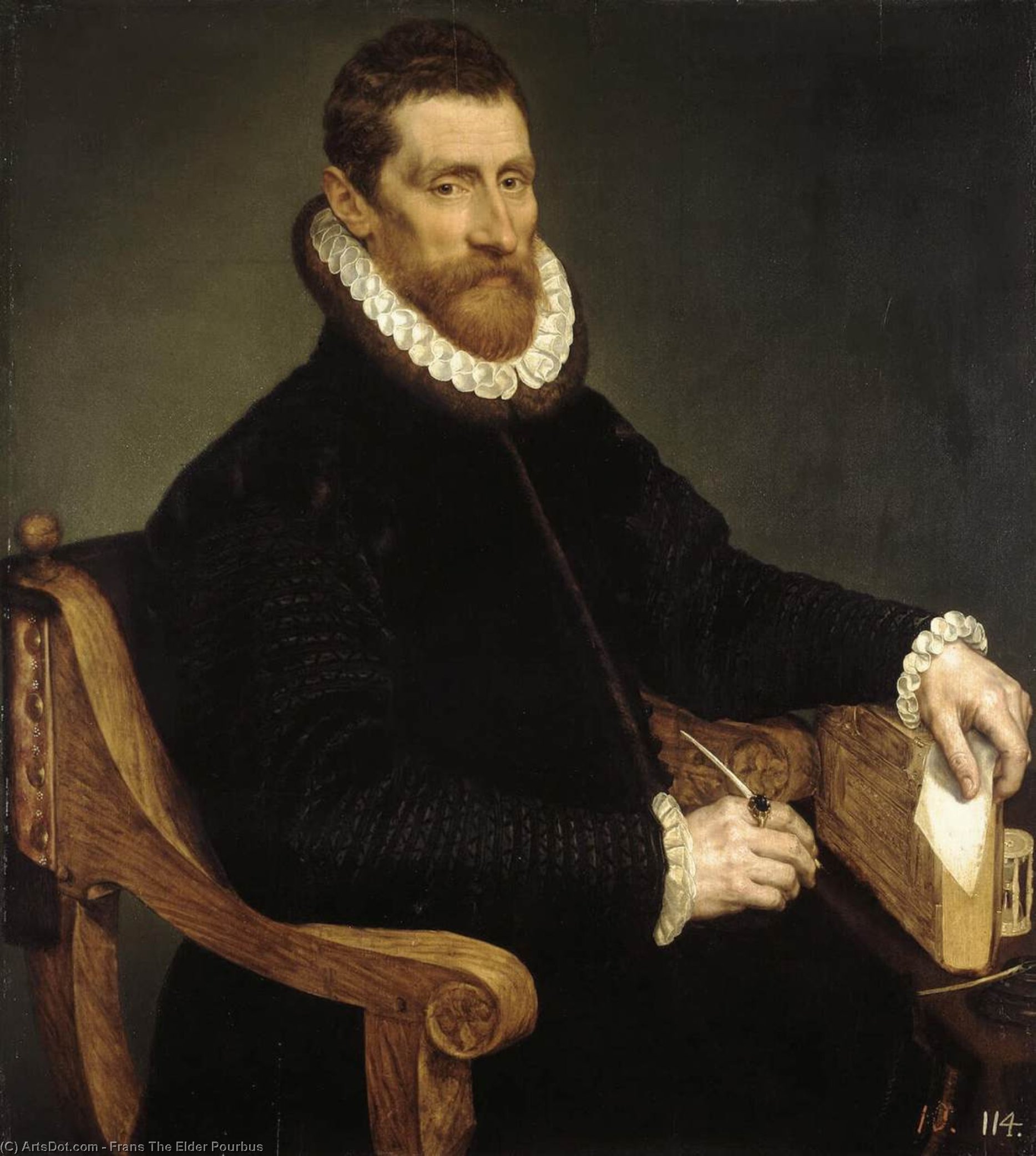
In the quiet intensity of Frans Pourbus the Elder’s Portrait of a Man, we encounter more than just a likeness; we enter a meticulously crafted world of sixteenth-century prestige. As a master of the Flemish Renaissance, Pourbus possessed an uncanny ability to translate the physical weight of status into the visual language of oil on canvas. The subject, seated with a profound and steady composure, serves as a vessel for the era's aristocratic ambitions. Dressed in the opulent textures of the Elizabethan period, he wears a richly embroidered ruff collar that frames his face like a halo of lace, paired with a heavy doublet and fine gloves that speak to a life of refined leisure and authority. Every thread and fold seems to pulse with the quiet confidence of a man who understands his place within the social hierarchy of Bruges.
The brilliance of this work lies in its masterful command of light and shadow, a technique that breathes life into the stillness of the portrait. Pourbus utilizes a dramatic chiaroscuro effect, where a singular, focused light source illuminates the subject's weathered yet noble features and his steady hands, while the background recedes into an atmospheric, dark void. This deliberate use of negative space ensures that nothing distracts from the sitter’s presence, forcing the viewer into an intimate encounter with his gaze. The artist’s brushwork is nothing short of extraordinary; one can almost feel the tactile contrast between the crisp, starched linen of the ruff, the soft grain of the leather gloves, and the subtle, realistic rendering of the subject's prominent beard and mustache.
Symbolism and the Intellectual Spirit
Beyond the mere display of wealth, the painting is imbued with a deeper layer of humanist symbolism. The inclusion of a book and a quill within the composition suggests a man of profound intellect—a scholar, a lawyer, or perhaps a high-ranking administrator whose power is derived not just from lineage, but from literacy and law. These objects act as silent witnesses to his character, transforming the portrait from a simple record of appearance into a tribute to the Renaissance ideal of the learned gentleman. The interplay between the physical opulence of his attire and the intellectual tools he holds creates a compelling tension, suggesting that true nobility is found in the balance of worldly status and mental acuity.
For the discerning collector or interior designer, this piece offers an unparalleled opportunity to introduce a sense of historical gravity and timeless elegance into a contemporary space. A high-quality reproduction of this masterpiece does not merely decorate a wall; it anchors a room with its somber, dignified mood. Whether placed in a private library, a formal study, or a sophisticated gallery setting, the Portrait of a Man invites contemplation and serves as a conversation piece that bridges the gap between the golden age of Flanders and the modern aesthetic. It is an investment in atmosphere, bringing the enduring spirit of the Flemish Renaissance into the heart of the home.