Franz Ritter von Stuck (February 23, 1863 – August 30, 1928), born Franz Stuck, was a German painter, sculptor, printmaker, and architect. Stuck was best known for his paintings of ancient mythology, receiving substantial critical acclaim with The Sin 1892.
A Descent Into Mythic Chaos
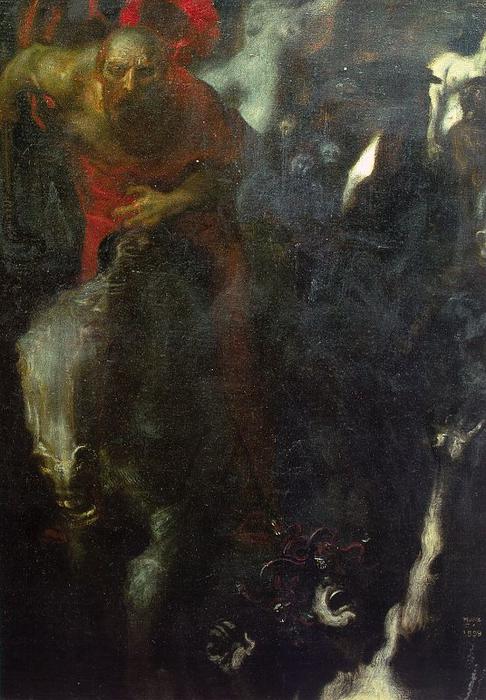
Franz Ritter von Stuck’s “The Wild Hunt” is far more than a mere depiction of folklore; it is a visceral immersion into the primal anxieties of Germanic mythology and the haunting depths of Symbolism. Executed in 1899, this monumental canvas captures a moment ripped from the fabric of ancient legend. A lone figure, draped in striking crimson robes, ascends a desolate and windswept hillside toward an ominous, churning sky. Beside him rides a horse possessed of demonic features—a creature that embodies both a terrifying specter of death and an irresistible, dark allure. The painting serves as a visual echo of a late 19th-century world grappling with the burgeoning uncertainties of modernity, looking backward to the shadows of ancient belief to find expression for contemporary psychological unrest.
The atmosphere of the piece is thick with tension, achieved through Stuck’s masterful command of chiaroscuro. The dramatic interplay between light and shadow sculpts the forms of the rider and his beast, pulling them out of the gloom with a startling, almost sculptural intensity. Much like his predecessor Arnold Böcklin, Stuck prioritized mood over photographic precision, utilizing thick, impasto brushstrokes to create a palpable sense of movement and uneating texture. This technique allows the viewer to feel the ruggedness of the terrain and the frantic energy of the hunt, making the descent into mythic chaos feel less like a distant story and more like an immediate, breathing reality.
The Language of Symbolism and Shadow
Every element within this composition is laden with profound symbolic weight, designed to stir the subconscious. The rider’s upward gaze suggests a desperate aspiration toward the divine or perhaps a fatalistic acceptance of destiny, while his vibrant red robe acts as a focal point of passion, sacrifice, and blood. The demonic horse serves as a powerful metaphor for the untamed forces of nature and the relentless pursuit of fate that no mortal can escape. Even the inclusion of a solitary dog, positioned within the periphery, adds a layer of predatory tension to the scene, reinforcing the theme of a hunt that is both physical and spiritual.
For the discerning collector or interior designer, "The Wild Hunt" offers an unparalleled opportunity to introduce a sense of drama and intellectual depth into a space. As a high-quality reproduction, this piece functions as a profound conversation starter, bringing with it the weight of German Symbolist history. It is an ideal selection for those seeking to anchor a room with a work that possesses both monumental scale and emotional gravity. Whether placed in a study filled with classical literature or a contemporary gallery space, the painting’s ability to evoke the sublime ensures it remains a captivating centerpiece, inviting all who behold it to contemplate the eternal struggle between light and darkness.