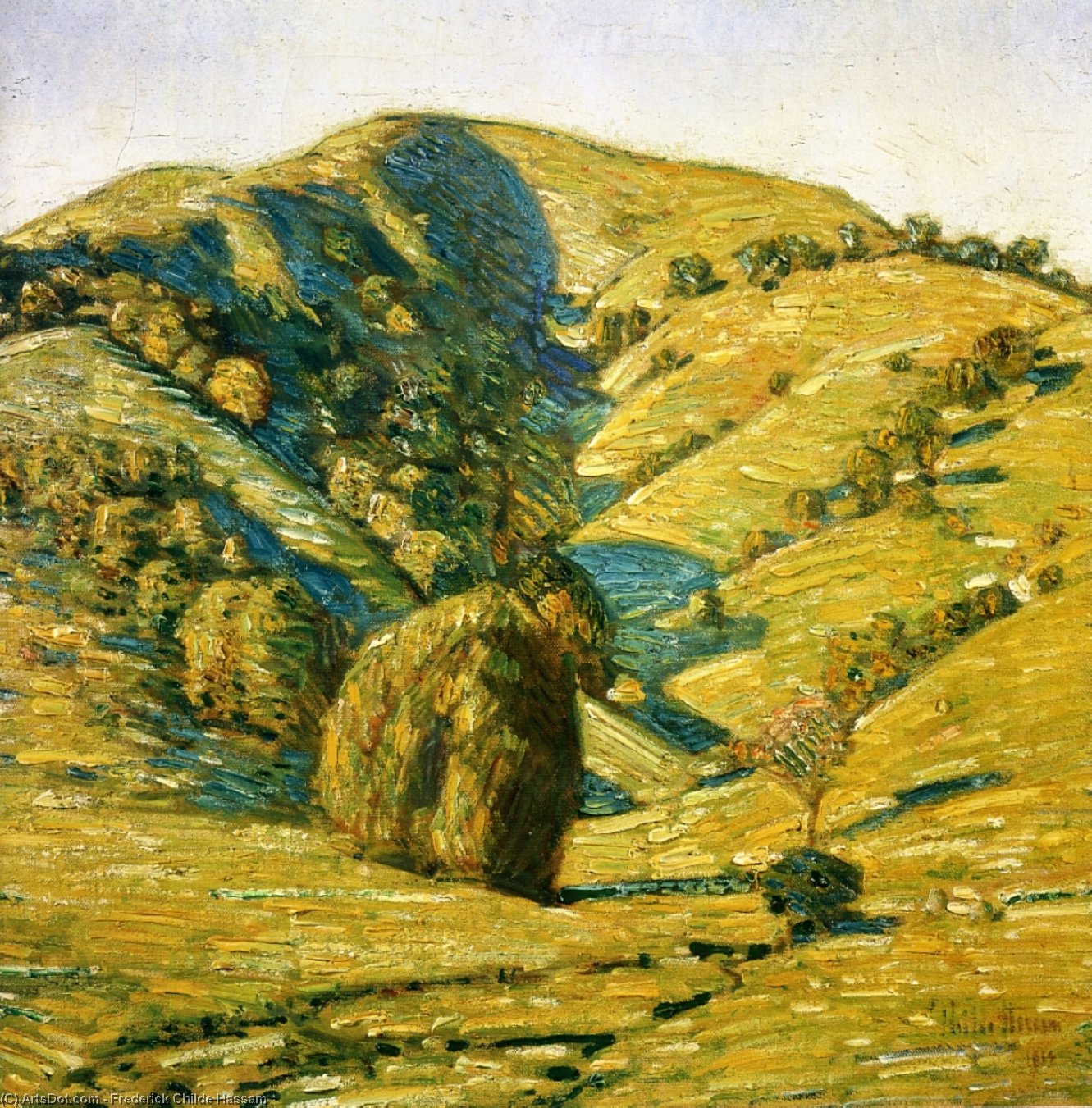
Frederick Childe Hassam’s Impressionist Hill of the Sun captures serene California landscapes bathed in warm light—a timeless masterpiece reflecting the era's fascination with capturing fleeting moments and blending nature’s beauty with architectural harmony. Explore exquisite reproductions at ArtsDot.com.
アメリカン・インプレッション主義を牽引したフレデリック・チャイルド・ハッサム(1859-1935)。ニューヨークやボストンの都市風景、海岸線を鮮やかな色彩で描き出し、時代の活気と美しさを捉えました。「勝利の日」などの作品は、アメリカの芸術史に重要な足跡を残しています。
A Moment Frozen in Time: Exploring Frederick Childe Hassam’s Hill of the Sun
Frederick Childe Hassam's *Hill of the Sun*, painted in 1914, isn’t merely a depiction of California scenery; it’s an embodiment of Impressionist ideals—a deliberate attempt to capture fleeting moments of light and atmosphere rather than striving for photographic realism. Executed in oil on canvas, this artwork resides within the Oakland Museum of California's collection, securing its place as a significant piece of American art history. Hassam’s artistic vision prioritized conveying emotion and sensation above meticulous detail, aligning perfectly with the broader movement that championed subjective experience.
Composition and Technique: Embracing Light and Texture
The painting’s visual impact begins immediately with its harmonious arrangement. A gently sloping hill dominates the canvas, densely populated with grasses and trees—a carefully considered selection designed to maximize textural variation. Hassam skillfully blended brushstrokes of muted greens and yellows, layering them to create a palpable sense of depth and luminescence. Notice how he utilizes broken color – applying pigment in small patches rather than blending it seamlessly – characteristic of Impressionist technique. This method allows light to bounce off the surfaces of the foliage, resulting in shimmering highlights that animate the scene. The inclusion of a modest building nestled near the lower left corner serves as an intriguing counterpoint, grounding the landscape and subtly hinting at human presence within this tranquil environment.
Historical Context: The Dawn of American Impressionism
Painted during the early 20th century, *Hill of the Sun* arrived on the heels of a transformative period in European art—the rise of Impressionism spearheaded by artists like Monet and Renoir. Hassam’s embrace of this style represents a crucial step in establishing Impressionism as a distinct artistic voice within the United States. Unlike their European counterparts who often focused on grand historical narratives or mythological subjects, Hassam turned his gaze inward, exploring the beauty and immediacy of everyday life—specifically, the Californian landscape. This decision reflects a broader cultural shift toward valuing natural beauty and capturing transient impressions.
Symbolism Beyond Landscape: Tranquility and Observation
Beyond its picturesque depiction of California’s hillsides, *Hill of the Sun* carries symbolic weight. The hillside itself represents stability and permanence amidst the ephemeral nature of light and color—a visual metaphor for Hassam's artistic philosophy. Furthermore, the artist’s meticulous observation of his surroundings speaks to a deeper appreciation for the natural world and its ability to inspire contemplation. Hassam wasn’t simply recording what he saw; he was striving to convey *how* he felt when confronted with this serene vista—a testament to Impressionism's commitment to emotional resonance.
Relevance Today: Bringing Artistic Beauty Home
ArtsDot.com offers exceptional reproductions of Hassam’s masterpiece, allowing art enthusiasts and collectors alike to experience the captivating allure of *Hill of the Sun*, San Anselmo, California firsthand. These handcrafted oil paintings capture the essence of Hassam's vision with remarkable fidelity, preserving the painting’s luminous colors and textural subtleties. Consider incorporating this evocative artwork into your interior design—a beautiful reminder of Impressionist artistry and the enduring power of capturing moments of sublime beauty.