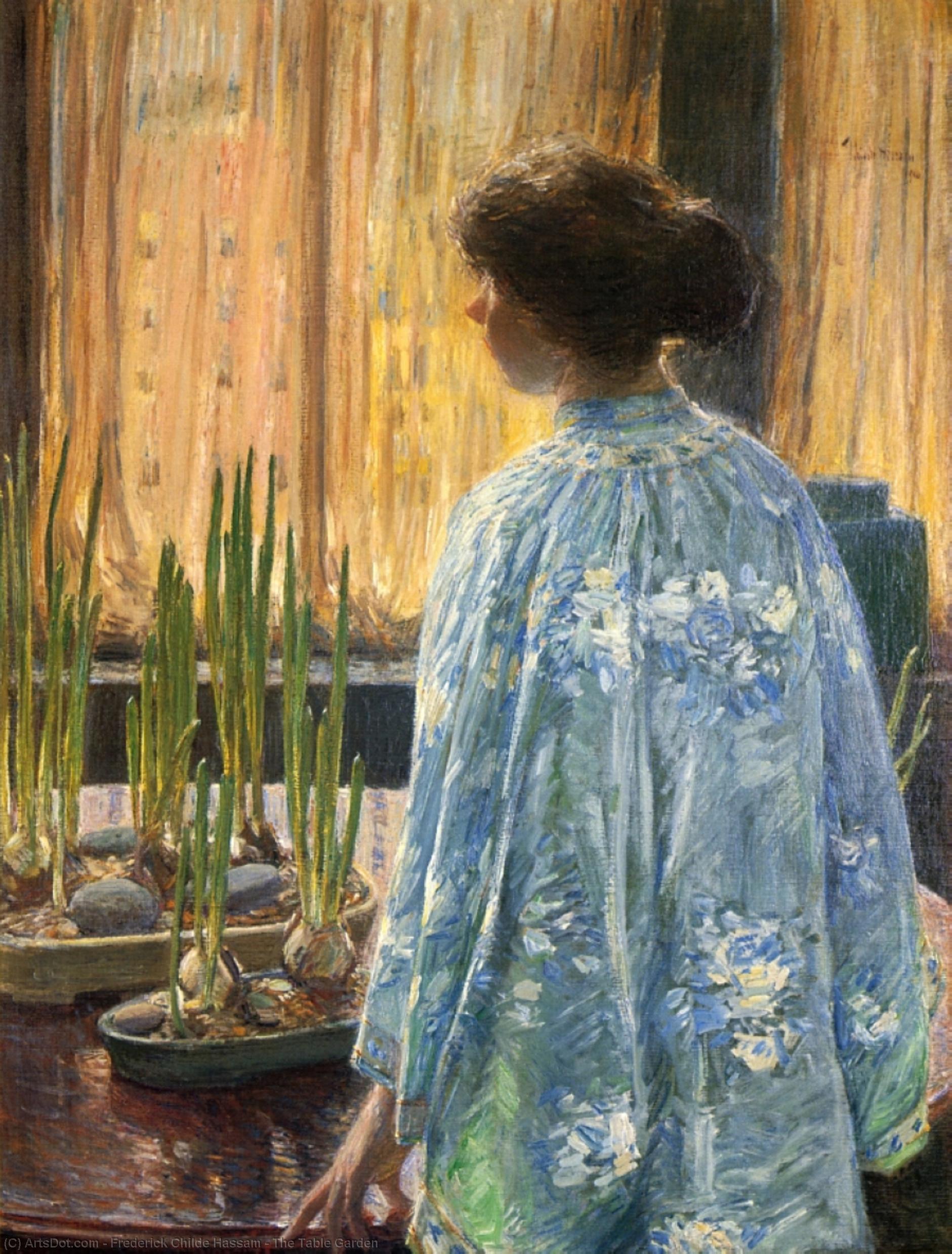
Frederick Childe Hassam’s serene ‘The Table Garden,’ a captivating Impressionist oil painting from 1910, depicts a woman lost in thought amidst flowers and light. Discover this beautiful reproduction and bring timeless artistry to your home.
A Moment of Quiet Contemplation: Exploring Frederick Childe Hassam’s *The Table Garden*
Frederick Childe Hassam's 1910 painting, *The Table Garden*, is more than just a depiction of a woman and flowers; it’s an invitation to pause, to breathe, and to find solace in the simple beauty of domestic tranquility. Executed with the hallmark sensitivity that defined Hassam’s career as a pioneer of American Impressionism, this piece resonates with a profound sense of peace and introspection, qualities that continue to captivate viewers over a century later. The painting's quiet elegance stems from Hassam’s masterful manipulation of light and color, creating an atmosphere so palpable you can almost feel the warmth radiating from the windowpane.
The Impressionist Vision: Light, Color, and Observation
Hassam’s artistic approach was deeply rooted in the tenets of Impressionism, a movement that prioritized direct observation of light and its effects on color. Unlike traditional academic painting which focused on precise detail and historical narrative, Hassam sought to capture fleeting moments – the way sunlight filtered through leaves, the subtle shifts in hue as shadows lengthened. His technique—characterized by soft, feathery brushstrokes—allows for a remarkable luminosity within the scene. The muted palette, dominated by gentle greens, blues, and browns, contributes significantly to the painting’s serene mood, evoking a sense of nostalgia and quiet reflection. This deliberate choice reflects his focus on capturing the essence of everyday life rather than grand historical or mythological subjects.
Symbolism Within the Stillness: A Portrait of Domesticity
The woman in *The Table Garden* is not merely a subject; she embodies a particular mood and state of mind. Standing before the window, lost in thought with a vase of flowers in her hand, she represents a moment of private contemplation – a common theme in Hassam’s work. The inclusion of potted plants further reinforces this sense of domesticity and connection to nature, suggesting an appreciation for beauty and tranquility within the confines of the home. The carefully arranged objects—the bowls on the windowsill, the varied textures of the foliage—create a harmonious composition that speaks to the values of comfort and refinement prevalent in early 20th-century American society.
A Legacy of Impressionism: Hassam’s Enduring Influence
Frederick Childe Hassam's contribution to American art is undeniable. His dedication to capturing the beauty of the American landscape and urban scenes, coupled with his innovative use of light and color, established him as a leading figure in the burgeoning Impressionist movement in the United States. Works like *The Table Garden* demonstrate his ability to translate personal observation into emotionally resonant paintings that continue to inspire admiration and appreciation. Hassam’s legacy extends beyond individual masterpieces; he paved the way for future generations of American artists to explore their own unique visions of the world around them.