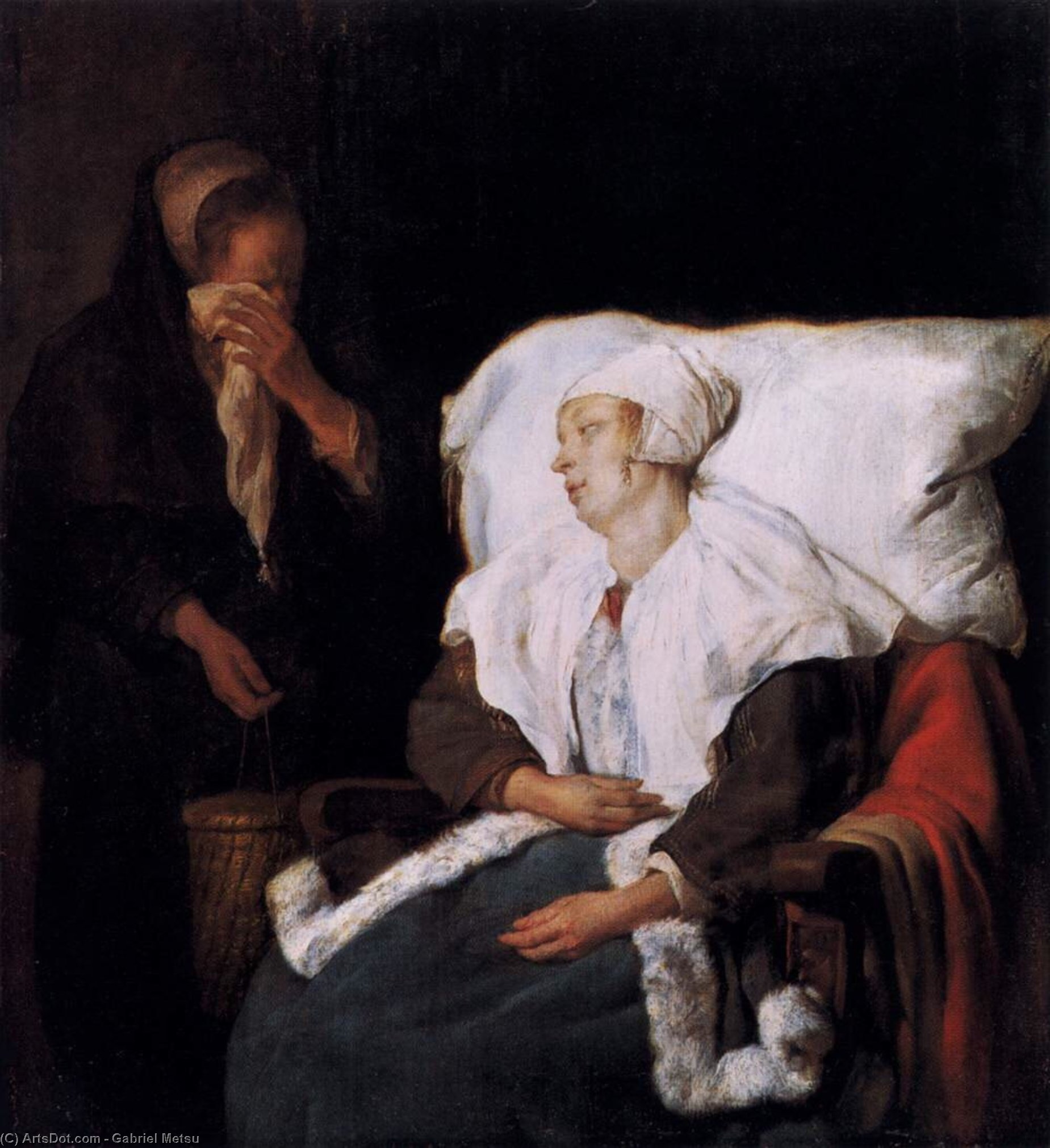
Gabriel Metsu’s haunting ‘The Sick Girl,’ painted in 1658 during the Dutch Golden Age, captures profound vulnerability with masterful tenebrismo and meticulous realism—a timeless portrait reflecting compassion amidst domestic tranquility. Explore this masterpiece and bring its beauty home.
A Portrait of Vulnerability and Care: Exploring Gabriel Metsu’s “The Sick Girl”
Gabriel Metsu (1629–1667), a Dutch Golden Age painter, stands as an enigmatic figure whose artistic legacy continues to captivate scholars and admirers alike. Unlike his contemporaries Rembrandt and Vermeer who achieved widespread fame, Metsu's oeuvre remains relatively small—approximately 133 works—yet profoundly influential in capturing the nuanced realities of domestic life during the Baroque period. This essay delves into the intricacies of “The Sick Girl,” examining its artistic merits, symbolic resonance, and enduring appeal as a masterpiece of genre painting.
- Subject Matter: The painting depicts a young woman lying in bed, her eyes closed in repose—a poignant portrayal of illness or perhaps peaceful slumber. Her serene expression contrasts sharply with the palpable concern radiating from the man standing beside her, highlighting themes of compassion and familial devotion.
- Style & Technique: Metsu’s distinctive style is characterized by meticulous realism combined with a subtle atmospheric haze—a technique known as *tenebrismo*, which was heavily influenced by Rembrandt’s masterful use of chiaroscuro. The artist skillfully renders the textures of the bed linen, drapery, and woman's dress with remarkable precision, conveying an impression of palpable warmth and intimacy.
- Historical Context: Created in 1658 during the height of Dutch artistic innovation, “The Sick Girl” reflects the broader cultural preoccupation with mortality and spiritual contemplation prevalent at the time. It aligns perfectly with the burgeoning interest in portraying everyday life with psychological depth—a trend that distinguished Dutch painting from its counterparts in other European nations.
Symbolism Within Domestic Tranquility
Beyond its technical brilliance, “The Sick Girl” is laden with symbolic significance. The woman’s closed eyes represent vulnerability and surrender to illness, while the attentive gaze of the man symbolizes paternal care and unwavering support. The inclusion of a basket—likely containing medicinal herbs or remedies—underscores the importance of natural healing and reinforces the painting's overarching message of compassion and familial responsibility. These elements speak to broader humanist ideals that permeated Dutch society during Metsu’s lifetime.
Metsu’s Legacy: An Eclectic Vision
Gabriel Metsu’s artistic approach defied categorization, earning him the moniker “a highly eclectic artist.” He excelled in diverse genres—history paintings, still lifes, portraits, and genre scenes—demonstrating an unparalleled versatility that distinguishes him from many of his peers. While only 14 of his works bear dates, their enduring beauty and psychological insight attest to Metsu’s profound understanding of human emotion and experience. His influence can be discerned in the work of subsequent generations of Dutch painters who embraced similar stylistic conventions.
Resources for Further Exploration