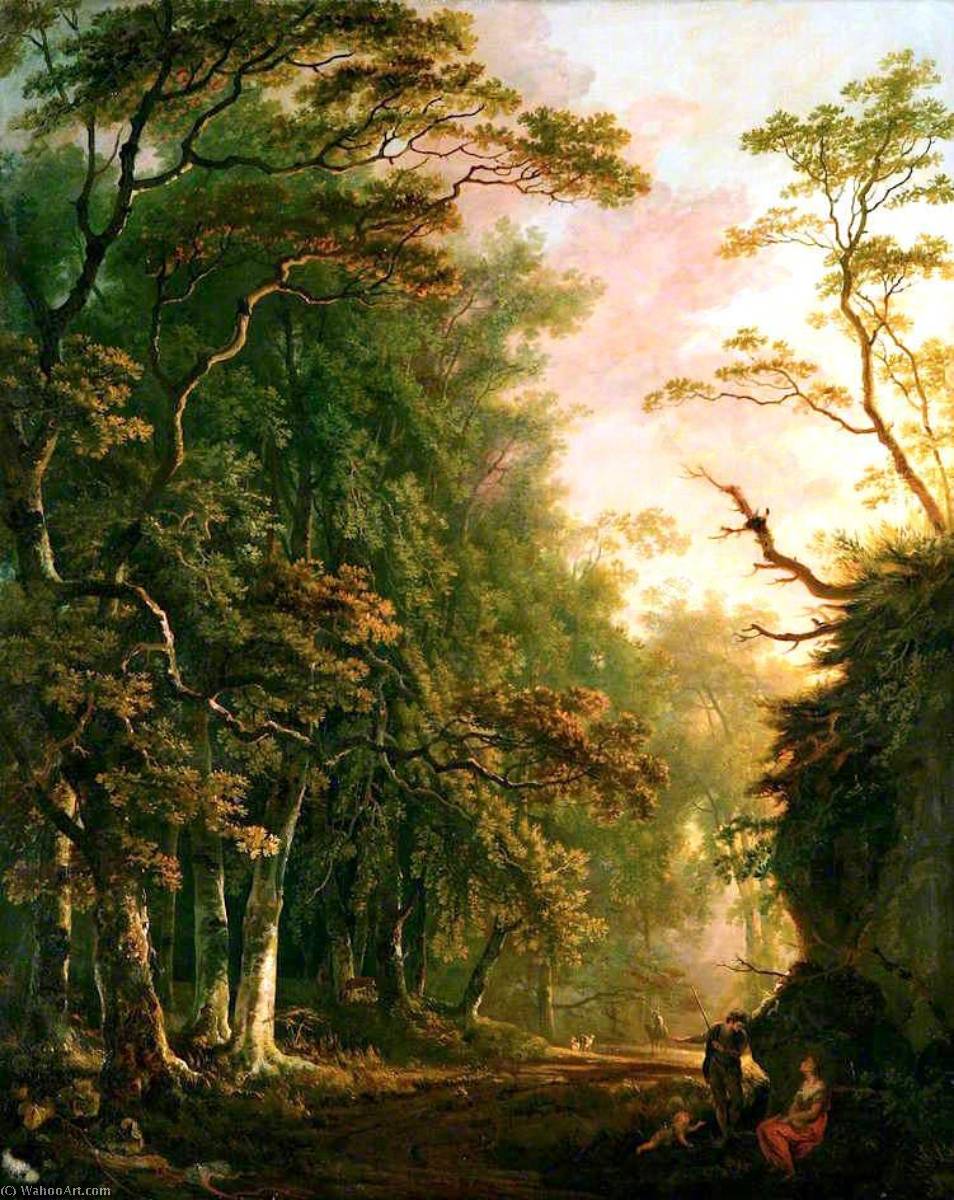
The Drive, Norbury Park – A Window into Romantic England
George Barret the Elder’s “The Drive, Norbury Park,” painted in 1775, stands as a quintessential example of British Romantic landscape art. More than just a depiction of scenery, it embodies the philosophical currents of its time—specifically Edmund Burke's influential *A Philosophical Enquiry into the Origin of Our Ideas of the Sublime and Beautiful*, which championed emotion and imagination as pathways to understanding nature’s grandeur.
- Subject Matter: The painting captures a tranquil scene within Norbury Park, focusing on a winding path leading towards a misty hillside. Figures seated beside a stream subtly introduce human presence into the expansive landscape, creating a harmonious balance between observation and immersion.
- Style & Technique: Executed in oil paint with meticulous layering, Barret’s technique prioritizes capturing atmospheric perspective—the gradual fading of detail as distance increases—resulting in a convincingly realistic portrayal of depth and luminosity. Brushstrokes are visible, lending texture to the foliage and bark, mirroring the Romantic preoccupation with sensory experience.
- Color Palette: Dominated by shades of emerald green and earthy browns, the palette evokes feelings of serenity and connection to the natural world. Delicate touches of gold illuminate patches of sky and highlight the vibrancy of the vegetation, reflecting Burke’s belief in beauty as a source of sublime awe.
- Composition & Perspective: A prominent diagonal path directs the viewer's gaze into the misty distance, reinforcing the Romantic impulse to explore uncharted territories—both physical and psychological. Careful placement of figures anchors the scene while emphasizing the scale of the landscape.
Symbolism – Beyond Mere Representation
The dense forest path symbolizes not only a journey but also an invitation to contemplation, mirroring Burke’s assertion that beauty stimulates profound emotional responses. The misty hillside represents mystery and obscurity—challenges to rational understanding—complementing the Romantic fascination with confronting unsettling truths through imaginative engagement. Barret's masterful rendering captures this duality, inviting viewers to contemplate the sublime power of nature.
Historical Context – Burke’s Influence & Patronage
Painted during a period marked by intellectual ferment and artistic experimentation, “The Drive” reflects the broader Romantic movement’s rejection of Enlightenment formalism. George Barret Sr.’s friendship with Edmund Burke profoundly shaped his artistic vision, inspiring him to prioritize emotional resonance over purely decorative considerations. The painting was commissioned by influential patrons who appreciated Barret's ability to convey both visual splendor and philosophical depth—a testament to the enduring legacy of Romantic landscape art.
Emotional Impact – Tranquility & Melancholy
“The Drive, Norbury Park” succeeds in evoking a palpable sense of tranquility alongside subtle undertones of melancholy. The soft lighting and muted color palette contribute to this mood, prompting viewers to reflect on the fleeting beauty of nature and the complexities of human experience—themes central to Romantic aesthetics.