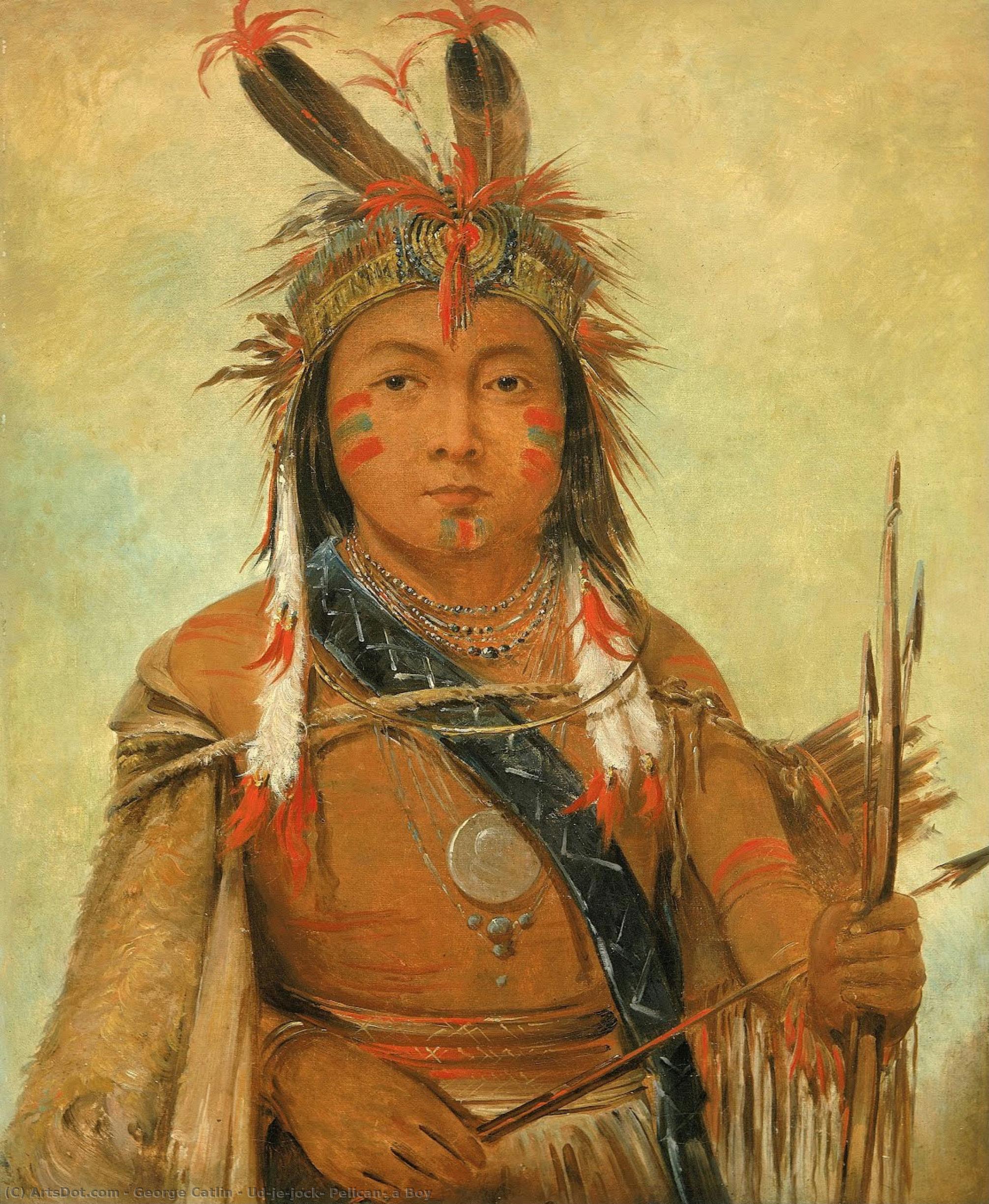
George Catlin’s ‘Ud-je-jock, Pelican, a Boy’ (1845) is a striking portrait of an Indigenous man in realistic oil painting. Admire the textured headdress & arrows, embodying strength & tradition. A captivating piece by a Hudson River School master.
George Catlin’s Vision of Indigenous Dignity: Ud-je-jock, Pelican, a Boy
George Catlin's “Ud-je-jock, Pelican, a Boy,” painted in 1845, stands as a pivotal work within the Hudson River School tradition and a testament to his unwavering commitment to documenting Native American culture before its irreversible decline. More than just a portrait, it’s an embodiment of Catlin's artistic philosophy—a desire not merely to depict but to elevate the dignity and spirit of Indigenous peoples onto the canvas.
- Subject Matter: The artwork portrays Ud-je-jock, a young Ojibwe man adorned in traditional attire. Catlin meticulously captured his likeness, emphasizing facial features and upper body posture—a deliberate choice reflecting the artist’s belief that portraying individuals authentically was paramount to conveying their cultural significance.
- Style & Technique: Executed in oil on canvas with visible brushstrokes, “Ud-je-jock” adheres to the realist style championed by the Hudson River School. Catlin skillfully employed impasto—thickly applied paint—particularly prominent in the headdress and shirt fabric—creating a tactile surface that invites contemplation and mirroring the rugged beauty of the American frontier.
- Historical Context: Catlin undertook extensive expeditions across North America during the 1840s, primarily driven by a mission to establish an “Indian Gallery” in Europe. These journeys coincided with a period of intense debate regarding Native American rights and representation within mainstream society. Catlin’s work served as both documentation and advocacy, attempting to counteract prevailing stereotypes and fostering appreciation for Indigenous traditions.
The composition itself is carefully considered. The muted background serves to isolate the subject, directing the viewer's gaze directly onto Ud-je-jock’s face—a gesture that underscores Catlin’s intention to convey respect and admiration. Lines delineate facial contours, clothing details (the headdress, beaded necklace), and arrows held by the man, contributing to a sense of precision and detail.
Symbolism permeates every element of “Ud-je-jock.” The headdress—a symbol of tribal leadership and prestige—represents Ud-je-jock’s status within his community. Similarly, the arrows signify hunting prowess and warrior spirit—values deeply ingrained in Ojibwe culture. Catlin's masterful use of light enhances these symbolic representations, illuminating the subject’s face and highlighting textures without resorting to dramatic shadows.
Emotionally, “Ud-je-jock” resonates with a profound sense of dignity and strength. It speaks to a connection with ancestral traditions—a reminder of a disappearing world viewed through Catlin's empathetic gaze. This artwork continues to inspire collectors and interior designers alike who seek pieces that embody both artistic excellence and cultural significance.