The Dignity Captured on Canvas
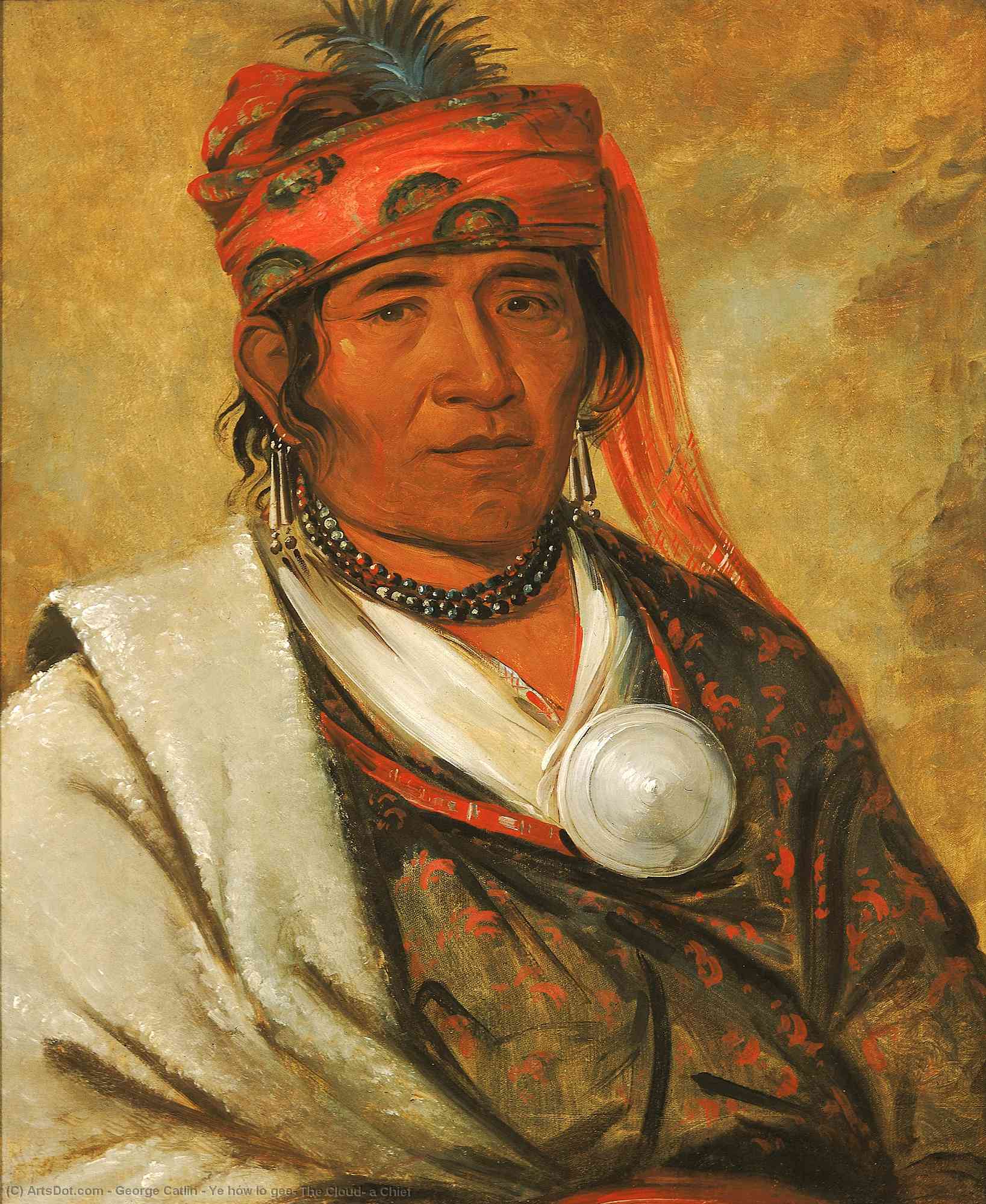
To gaze upon George Catlin's depiction of Ye hów lo gee, The Cloud, a Chief, is to encounter not merely a portrait, but a profound historical moment suspended in oil paint. This work, executed in 1838, transcends the boundaries of simple representation; it is a testament to endurance, cultural richness, and the poignant intersection of two worlds. Catlin, whose life was marked by an almost obsessive desire to document vanishing ways of life, gifted us this vision—a powerful gaze that seems to look directly into the soul of the modern observer. The subject stands with an undeniable bearing, his presence commanding attention against a dramatic backdrop of swirling, cloudy skies.
Mastery in Technique and Subject
The technical brilliance evident in this oil on canvas piece is breathtaking. Catlin employed rich, saturated pigments to build up the textures—from the intricate arrangement of feathers adorning the magnificent headdress to the deep folds of the red scarf encircling his neck. The artist’s skill allowed him to capture not just the likeness of the Chief, but the very spirit animating it. His face is rendered with meticulous care; every line and contour speaks of a life lived under an expansive sky. It is this combination of technical virtuosity and deep observational empathy that makes the piece so enduringly compelling.
A Window into a Vanishing World
Understanding the context of 1838 adds layers of poignant depth to the viewing experience. Catlin was positioned as an observer at a critical juncture in American history, documenting cultures he felt were rapidly receding before his very eyes. This painting serves as such a record—a vibrant, dignified memorial. The Chief himself, described by sources as a man who distinguished himself in conflict and possessed a good nature, embodies the resilience of his people. Owning a reproduction allows one to connect with this narrative weight, bringing a piece of documented history into contemporary living spaces.
Symbolism and Emotional Resonance
The symbolism within the artwork is rich and multilayered. The headdress itself speaks volumes of status, honor, and connection to tradition. Meanwhile, the vast, cloudy sky behind him acts as more than mere background; it mirrors the epic scope of his identity and the sweeping narrative of his people's journey. Emotionally, the painting resonates with a powerful sense of quiet dignity. It invites contemplation on themes of cultural preservation, the passage of time, and the enduring strength found in heritage. For collectors and designers alike, this piece offers an unparalleled focal point—a conversation starter imbued with artistic gravitas.