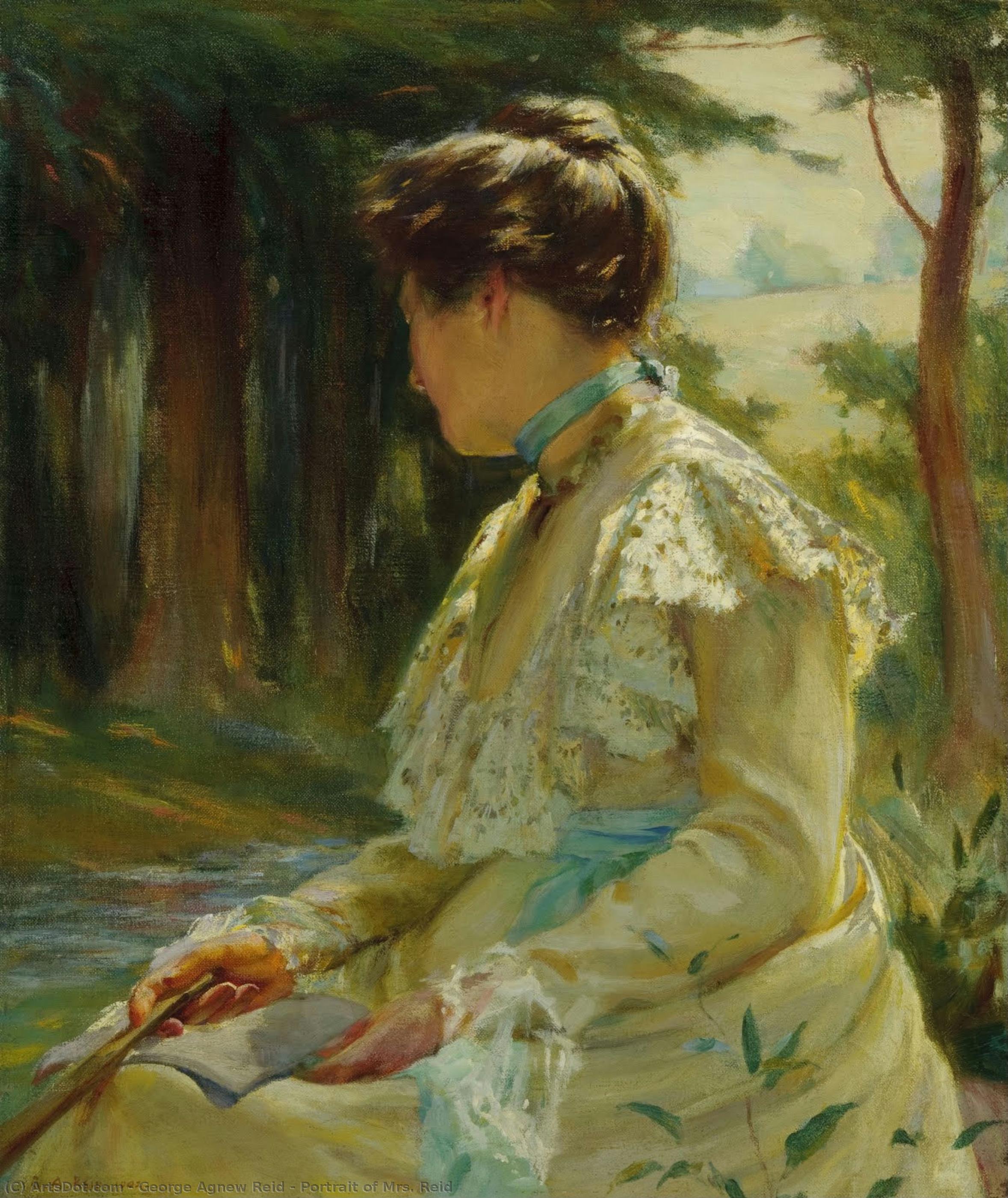
Inspired by Impressionistic techniques, Reid’s masterful brushstrokes convey a sense of tranquility and observation.
カナダを代表する画家、ジョージ・アグニュー・リード(1860-1947)。農村生活の感情豊かな風景や「抵当流しの場面」など、カナダ独自の芸術的アイデンティティを確立。写実主義と印象派の影響を受け、カナダ美術史に大きな足跡を残しました。
Reading Public Museumでアート、科学、文明を探索しましょう!アメリカの傑作、古代の遺物、そして美しい植物園を発見できます。あらゆる世代が楽しめる、ユニークな文化の目的地です。
A Victorian Portrait Steeped in Quiet Contemplation
The painting “Portrait of Mrs. Reid,” executed by George Agnew Reid in 1902, stands as a testament to the meticulous craftsmanship and evocative storytelling characteristic of Victorian art. Created during a period marked by social conservatism yet brimming with artistic innovation, this piece transcends mere likeness—it captures a profound moment of inner life within a beautifully rendered exterior.
Subject Matter and Composition
At its core lies a portrait of Mrs. Alexander Hay Moncur, a woman whose gaze meets the viewer’s with an understated dignity. Reid skillfully employs a pyramidal composition, anchoring the figure centrally while subtly directing the eye upwards towards her face—a deliberate gesture intended to convey serenity and introspection. The inclusion of a delicate lace collar and a ribbon around her neck speaks volumes about Victorian fashion sensibilities and underscores Mrs. Moncur's refined taste. Behind her sits a tree, its branches reaching skyward, mirroring the woman’s upward gaze and symbolizing resilience and growth amidst stillness.
Style and Technique: Impressionistic Influences
Despite adhering to traditional portraiture conventions, Reid demonstrates an undeniable fascination with Impressionistic techniques—a movement that prioritized capturing fleeting moments of light and color over precise anatomical detail. Noticeable brushstrokes create a textured surface, subtly blurring edges and lending the painting an ethereal quality. The muted palette—primarily blues and greens—harmoniously blends with the natural surroundings, fostering a sense of tranquility and conveying the emotional atmosphere of the scene. Reid’s masterful blending of pigments achieves remarkable luminosity, illuminating Mrs. Moncur's face with soft radiance.
Historical Context: Victorian Society and Artistic Expression
The painting emerged from Victorian society, where domestic interiors were considered spaces of comfort and refinement—a reflection of prevailing ideals concerning femininity and family life. Artists like Reid sought to portray women not merely as decorative objects but as individuals possessing inner depth and emotional complexity. Furthermore, the burgeoning interest in psychological realism within art circles fueled a desire to explore the subtleties of human experience beyond outward appearances. Reid’s work exemplifies this trend, inviting viewers to contemplate the quiet beauty of contemplation and the enduring power of visual storytelling.
Symbolism: The Tree and Serenity
The tree itself serves as a potent symbol—representing strength, stability, and connection to nature. Its upward reaching branches echo Mrs. Moncur's gaze, suggesting an aspiration for spiritual enlightenment and inner peace. Simultaneously, the tranquil setting reinforces this theme, creating an immersive experience that transports the viewer into a realm of contemplative serenity. Reid’s careful attention to detail—from the lace collar to the ribbon around her neck—further enhances the painting’s symbolic resonance.
Emotional Impact: A Moment Frozen in Time
Ultimately, “Portrait of Mrs. Reid” succeeds in conveying an emotional depth rarely achieved in Victorian portraiture. The woman's gaze invites empathy and contemplation, prompting viewers to consider themes of resilience, grace, and inner harmony. Reid’s artistic vision captures a fleeting moment frozen in time—a testament to the enduring beauty of simplicity and the transformative power of visual art. It remains an inspiring example of how artists can communicate profound ideas through masterful technique and evocative composition.