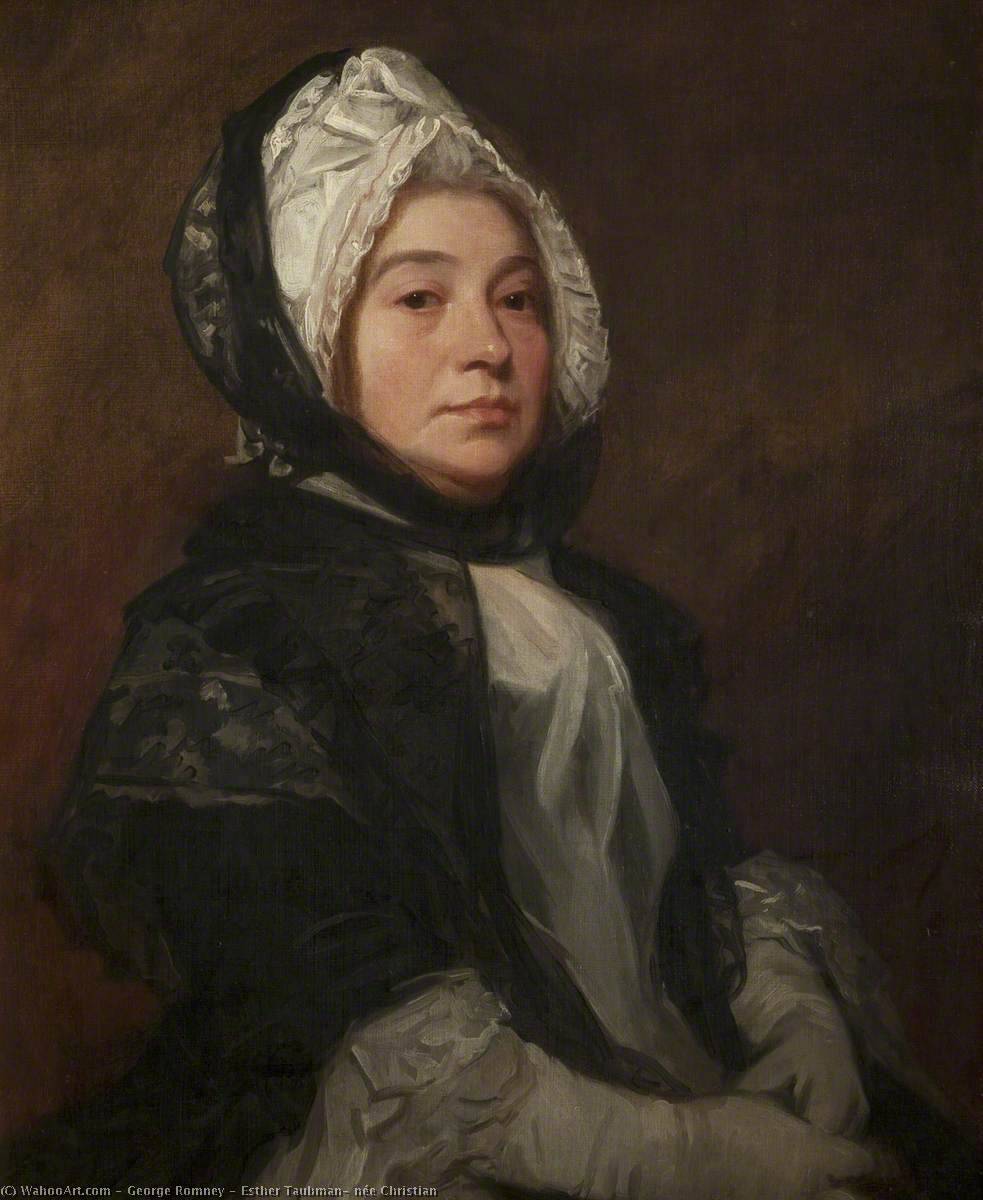
George Romney’s Elegant Portrait of Esther Taubman
George Romney (1734–1802), arguably Britain's most fashionable portrait painter during the Georgian era, captured the essence of aristocratic life with remarkable sensitivity and skill. His depiction of Esther Taubman, née Christian, completed in 1786 exemplifies his signature style—a blend of Rococo grace and meticulous realism—making it a treasured piece within Manx National Heritage’s collection.
A Study in Light and Texture
Romney's masterful technique hinges on layering glazes of oil paint, achieving luminous color palettes and subtle tonal variations that imbue the canvas with depth. Lines are employed with precision to delineate facial contours and fabric folds, creating a detailed representation of Taubman’s likeness. The artist’s keen observation extends beyond mere accuracy; he captures the nuances of skin texture—particularly the delicate wrinkles on Taubman's hands and face—demonstrating an unparalleled dedication to capturing the subtleties of human form.
The Rococo Influence: Form and Ornamentation
Painted during a period marked by opulent decoration and refined sensibilities, Romney’s work aligns seamlessly with the Rococo aesthetic. The composition centers around Taubman herself, positioned prominently within a richly textured velvet cloak and adorned with a lace cap—symbols of status and femininity characteristic of the time. Decorative elements are carefully considered, contributing to an overall impression of elegance and refinement.
Symbolism Beyond Beauty: Dignity and Reflection
While outwardly beautiful, Romney’s portrait transcends mere visual appeal. Taubman's gaze directs upwards, conveying a sense of quiet dignity and contemplative introspection—a hallmark of Romantic ideals gaining traction during Romney’s lifetime. The subdued lighting emanating from the left side casts shadows that accentuate her features, fostering an atmosphere of solemn beauty.
Rediscovering Romney’s Legacy
A Life in Portraiture: The World of George Romney chronicles Romney's extraordinary journey from a humble craftsman’s son to a celebrated artist recognized by royalty and nobility. His enduring influence on British art continues to inspire admiration for his ability to convey emotion and intellect through meticulously crafted canvases like ‘Esther Taubman, née Christian,’ ensuring its place as an iconic masterpiece of the eighteenth century.