A Window into Georgian Society Through Romney’s Vision
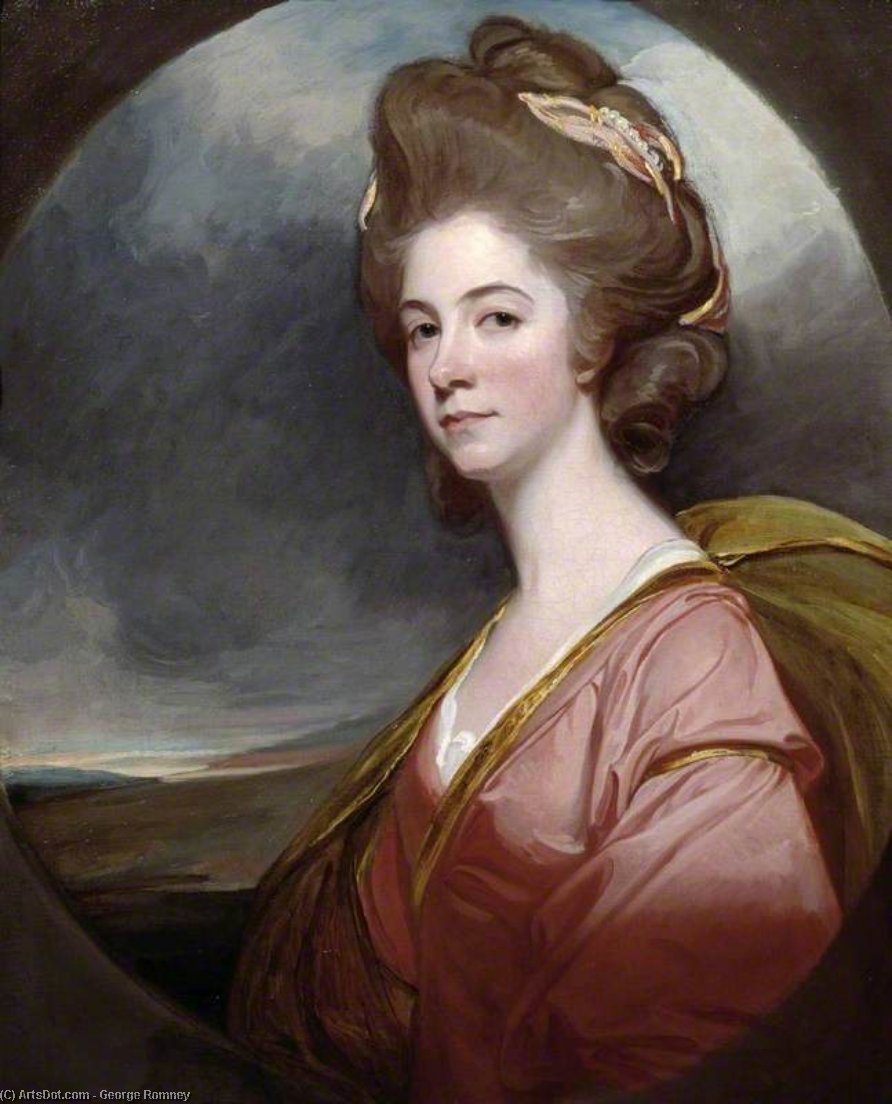
George Romney's “Lady Emilia Kerr,” painted in 1779-80, stands as a quintessential emblem of the Georgian era’s obsession with refined beauty and aristocratic portraiture. More than just a likeness, it’s a carefully constructed tableau designed to convey status, grace, and an unspoken aura of sophistication—a testament to Romney's mastery of capturing not merely appearance but also character.
- Subject Matter: The painting depicts Lady Emilia Kerr, a prominent figure in Georgian society, presented in a three-quarter pose against a backdrop that elevates her image beyond mere physicality.
- Style & Influence: Romney’s work firmly anchors itself within the Neoclassical tradition, mirroring the artistic sensibilities of his time—a movement striving for balance and harmony inspired by classical ideals.
Composition and Technique: Orchestrating Light and Atmosphere
Romney skillfully employs compositional principles to draw the viewer’s eye inward toward Lady Kerr's face, establishing a central focus that commands attention. The expansive cloudscape serves as a dramatic counterpoint, injecting dynamism into the scene while simultaneously emphasizing the sitter’s stillness—a deliberate choice reflecting the prevailing aesthetic of restraint and composure.
- Brushwork: Romney's technique is characterized by smooth, layered brushstrokes that achieve subtle tonal gradations and luminous effects. Notice the meticulous rendering of skin texture and drapery folds, demonstrating a dedication to realism tempered with artistic embellishment.
- Color Palette: The muted palette—dominated by pinks, creams, and browns—creates an atmosphere of understated elegance, mirroring the restrained colors favored in aristocratic interiors.
Symbolism Beyond Appearance
The turbulent sky is arguably more than just a scenic element; it symbolizes emotional depth and grandeur – hinting at Lady Kerr’s inner life and reflecting the broader anxieties of the period. Romney's masterful use of light—soft, diffused—illuminates her face with a gentle glow, conveying serenity and dignity.
- Emotional Impact: “Lady Emilia Kerr” transcends mere representation, evoking feelings of quiet contemplation and admiration for feminine beauty. It’s a portrait that invites viewers to consider not just what is seen but also what is felt—a hallmark of Romantic art's influence on Georgian aesthetics.
Historical Context: Romney’s Place in Georgian Artistic Landscape
Painted during the reign of George III, “Lady Emilia Kerr” reflects the broader cultural preoccupation with aristocratic patronage and idealized beauty. Romney’s success as a portrait painter solidified his reputation as one of the era's foremost artists, securing his legacy as a chronicler of Georgian society’s aspirations for refinement and distinction.
- Further Exploration: For those interested in delving deeper into Romney’s artistic world, Tate Britain offers an invaluable resource—allowing visitors to experience the artwork firsthand alongside complementary exhibitions exploring the broader context of Neoclassical portraiture.