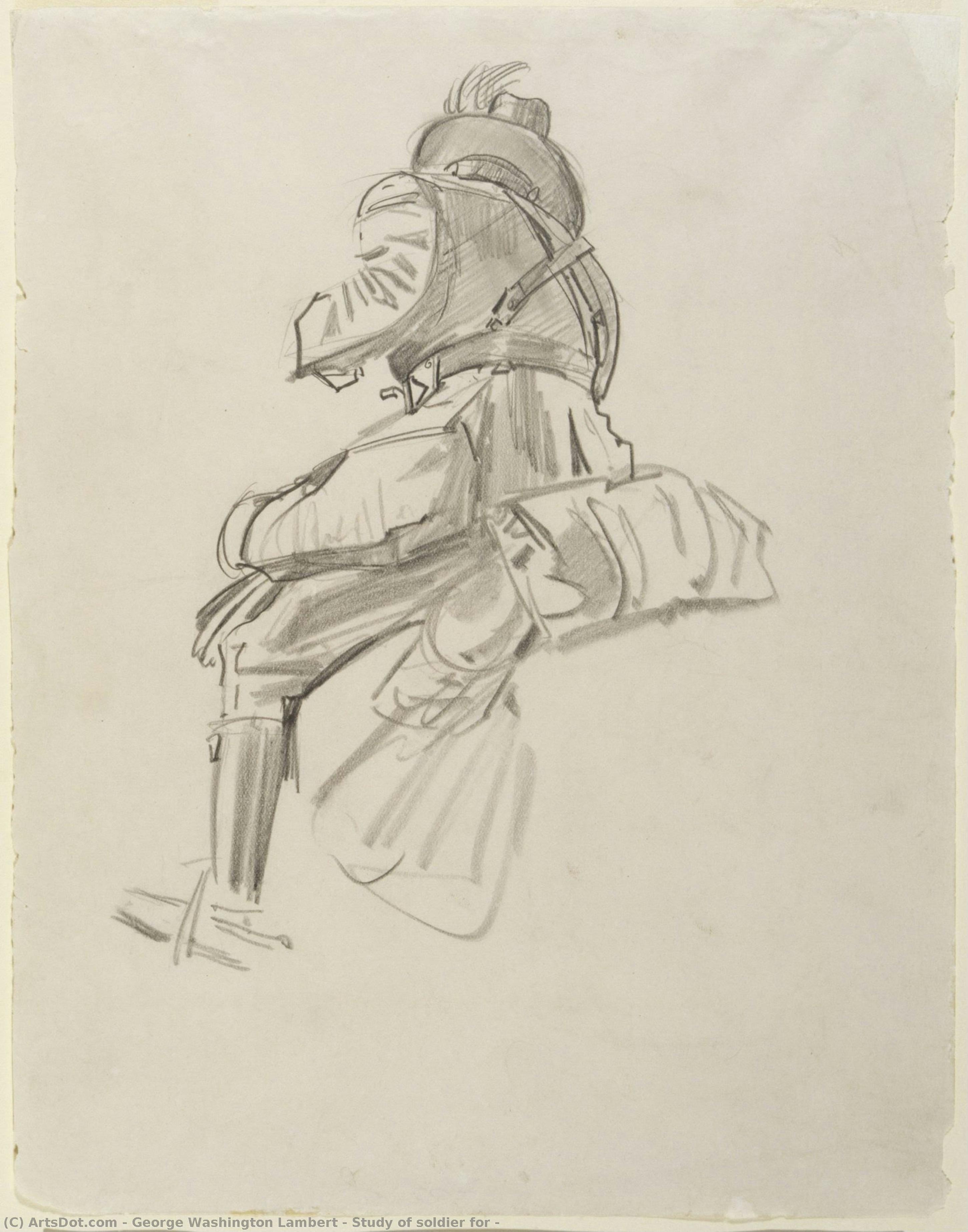
Study of Soldier for George Washington Thomas Lambert – A Portrait of Resilience
George Washington Thomas Lambert’s “Study of Soldier,” painted in 1920, is more than just a depiction of a young man in uniform; it's a poignant meditation on the burdens and quiet dignity of military service. Created during the twilight years of World War I, this intimate portrait captures a moment of introspection within the broader context of a nation grappling with the profound consequences of conflict. Lambert, an Australian artist who rose to prominence as a war correspondent and official painter, masterfully utilizes a muted palette of browns, greys, and ochres – colors evocative of dust, earth, and the somber realities of wartime – to establish a mood of quiet contemplation.
The subject, likely a recruit or perhaps a seasoned soldier awaiting deployment, is rendered with remarkable sensitivity. Lambert’s technique leans heavily on loose brushstrokes and subtle gradations of tone, creating an effect that feels both immediate and deeply considered. The figure sits slightly off-center, his gaze directed downwards, suggesting a moment of private reflection amidst the chaos of preparation. Note the careful attention to detail in the rendering of his uniform – the crisp lines of the jacket, the worn leather boots, and the subtle folds of fabric—elements that speak to both discipline and hardship. The artist’s use of light is particularly noteworthy; it falls softly across the soldier's face, illuminating his features without harshness, highlighting a sense of vulnerability beneath the surface of military preparedness.
Lambert’s War Art: A Reflection of Australian Identity
Lambert’s artistic journey was inextricably linked to Australia’s involvement in World War I. Appointed as an official war artist in 1917, he travelled extensively throughout Palestine and Gallipoli, documenting the experiences of Australian troops. This experience profoundly shaped his artistic vision, leading him to explore themes of courage, sacrifice, and the psychological toll of conflict. “Study of Soldier” can be viewed as a microcosm of this larger narrative—a quiet study in resilience within the face of uncertainty.
His most famous work, "Anzac," depicting the landing at Gallipoli, cemented his place in Australian art history. However, works like this intimate portrait demonstrate Lambert’s ability to capture the individual stories and emotions embedded within the larger historical event. The painting reflects a growing trend in early 20th-century art—a shift away from grand, heroic narratives towards more nuanced and psychologically complex portrayals of human experience.
Symbolism and Emotional Resonance
Beyond its technical merits, “Study of Soldier” is rich in symbolic meaning. The soldier’s downcast gaze suggests a burden of responsibility, perhaps reflecting the anxieties and uncertainties associated with entering military service. The muted color palette reinforces this sense of melancholy, while the simple composition draws attention to the subject's humanity. The posture itself—a slight slouch, a relaxed but watchful stance—conveys a quiet strength, hinting at the resilience required to endure hardship.
Lambert’s ability to evoke such profound emotion through seemingly understated imagery is a testament to his artistic skill and sensitivity. The painting resonates with viewers not just as a historical record, but as a deeply personal exploration of human vulnerability and fortitude. It's a reminder that even in the midst of war, individual lives continue—marked by moments of quiet contemplation and enduring hope.
A Legacy of Australian Art
George Washington Thomas Lambert’s legacy extends far beyond his wartime paintings. He was a prolific portraitist, capturing the likenesses of prominent figures across Australia. His work is characterized by its realism, technical skill, and emotional depth—qualities that have earned him recognition as one of Australia's most important artists. Reproductions of “Study of Soldier” offer a valuable window into this era, allowing us to connect with the experiences of those who served during World War I and appreciate Lambert’s enduring contribution to Australian art history.